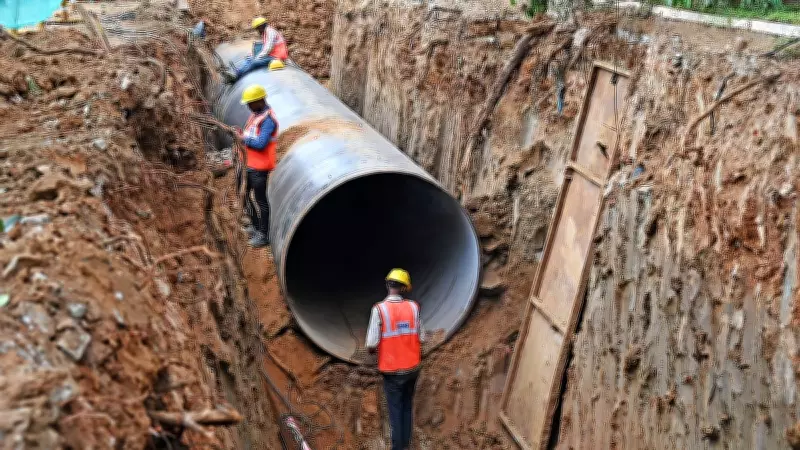
Bengaluru's ambitious Cauvery Stage V water supply project has achieved a significant milestone with the laying of underground pipes, but thousands of household connections are still pending, causing frustration among residents. The project, aimed at providing water to the city's expanding outskirts, has seen major pipeline work completed, yet the final connections to individual homes are lagging behind schedule.
Underground Pipes Laid, But Connections Delayed
Officials confirmed that the main pipelines have been successfully laid underground across several areas. However, the task of connecting these pipes to individual households has not kept pace. Many residents in areas like Kengeri, Ullal, and Nagarabavi are still waiting for water connections, despite the pipelines passing through their neighborhoods.
Reasons for the Delay
The delay is attributed to a combination of factors, including administrative hurdles, shortage of labor, and coordination issues between the Bangalore Water Supply and Sewerage Board (BWSSB) and local contractors. Additionally, some roads need to be dug up again to make the connections, causing further disruption.

Residents' Frustration
Residents have expressed their discontent, stating that they have been paying for the project through taxes and fees but have not received the promised benefits. "We see the pipes, but we don't have water. It's been months of waiting," said a local resident. The delay has forced many to continue relying on private water tankers, which are expensive and unreliable.
BWSSB's Response
BWSSB officials have acknowledged the delays and assured that efforts are being made to expedite the remaining connections. They cited the complexity of the work and the need to ensure quality as reasons for the slow progress. A timeline for completion has not been provided, but officials claim that the majority of connections will be done within the next few months.
Project Overview
The Cauvery Stage V project is designed to supply 775 million liters of water per day to Bengaluru's peripheral areas. It involves laying over 1,000 kilometers of pipelines and constructing several reservoirs and pumping stations. The project has been plagued by cost overruns and delays since its inception.
Impact on Daily Life
The lack of water connections has affected daily life, with residents struggling to meet their basic needs. Schools and businesses have also been impacted, with some forced to reduce operations due to water scarcity. The situation highlights the challenges of urban infrastructure development in rapidly growing cities.
As the project moves forward, all eyes are on the BWSSB to deliver on its promises and bring relief to thousands of households eagerly awaiting tap water.