

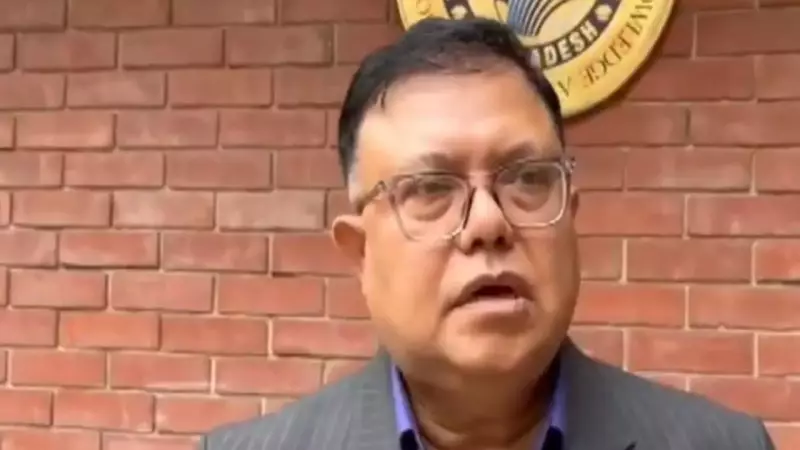
A prominent Bangladeshi editor has issued a strong condemnation of the violent unrest that shook parts of the capital Dhaka following the death of young political activist Osman Hadi. Reaz Ahmad, editor of the Dhaka Tribune, stated that the incidents highlight serious failures in law and order and present a worrying scenario just weeks before the country's national election.
Violence Erupts Amid Grief and Anger
Osman Hadi, a leader associated with the Inqilab Moncho group linked to last year's July uprising, was shot in the head by masked assailants on December 12. The attack occurred while he was travelling in a rickshaw in Dhaka's Bijoynagar area. He was later airlifted to Singapore for advanced medical treatment but succumbed to his injuries on December 18.
His death triggered widespread protests across Dhaka as supporters demanded justice. The situation intensified on Friday, December 22, when Hadi's body was brought back to the capital. While many gatherings were peaceful, several turned violent. Protesters set fire to the offices of multiple media houses and attacked cultural institutions.

A Failure of Pre-emptive Measures
In an interview with ANI, Reaz Ahmad expressed understanding for the public's grief and anger but sharply criticized the violent turn of events. He asserted that fringe elements within the massive crowds exploited the emotional situation. "Taking that as an excuse, some fringe elements within the massive crowd expressing their grief and sympathies turned extremely violent," Ahmad said.
He placed partial blame on the authorities, suggesting the violence was preventable. "The government would have done a better job had there been pre-emptive measures; we could definitely avoid such developments," he stated, labeling the assaults on newspapers and cultural offices as "a really bad example" for the nation.
Election Implications and a Call for Action
With Bangladesh's general election scheduled for February 12, Ahmad warned that the timing and nature of the attacks are particularly alarming. He fears such incidents could intimidate journalists and undermine press freedom during the critical electoral period.
"Our election is just around the corner," he noted. "If such attacks are meant to actually infect fear among the free press advocates, to some extent the attackers thought that they had been successful." He emphasized that public support for a free media must be backed by decisive government action.
Ahmad called for more than just condemnation from both domestic and international quarters. He urged the state to identify and punish the perpetrators to restore confidence. "The state should not tolerate it… the government has to actually take the law and order situation under complete grip," he insisted.
Osman Hadi was laid to rest on Saturday, December 23. In accordance with his family's wishes, he was buried next to the grave of Bangladesh's national poet, Kazi Nazrul Islam. The incident continues to cast a shadow over the nation's political climate as it approaches a pivotal democratic exercise.






