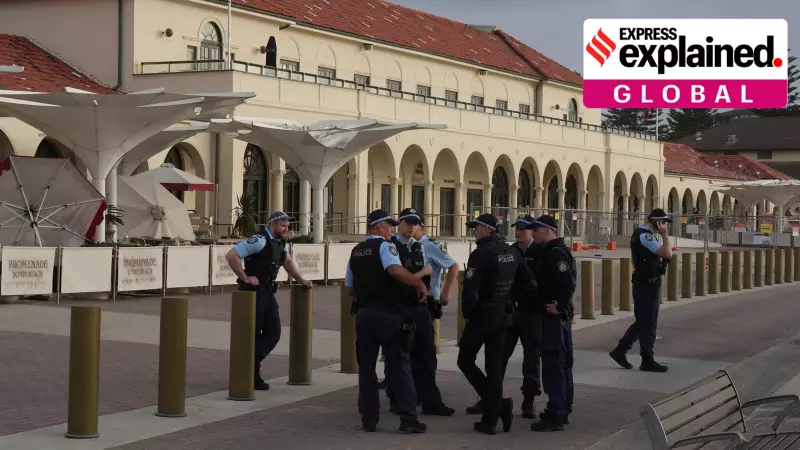
The horrific mass shooting at Sydney's crowded Bondi Beach on Sunday has sent shockwaves through a nation that has long considered itself a global exemplar of effective gun control. The attack, which left at least 15 people dead and 41 injured, marks Australia's worst such incident since the 1996 Port Arthur massacre and has triggered a profound national reckoning.
From Port Arthur to Bondi: A Success Story Under Scrutiny
Australia's modern gun control framework was forged in the fire of the Port Arthur tragedy, where 35 people were killed and 23 wounded. In a decisive move, the then conservative government led by Prime Minister John Howard confronted the powerful gun lobby to enact the landmark National Firearms Agreement (NFA). This suite of measures included a ban on semi-automatic assault rifles, a massive government buyback of newly prohibited weapons, a mandatory 28-day waiting period for purchases, and stricter licensing rules.
The results were dramatic and celebrated worldwide. Gun deaths in Australia plummeted from 2.9 per 100,000 people in 1996 to just 0.88 per 100,000 by 2018, according to data from the Australian Gun Safety Alliance. For nearly three decades, the absence of a major mass shooting stood as a powerful testament to the policy's success, especially when contrasted with the United States, which recorded a staggering 14 gun deaths per 100,000 in 2023.

Promises Unfulfilled and a Growing Arsenal
However, beneath the surface of this success story, significant cracks had begun to appear. A recent report by the Canberra-based think tank The Australia Institute, titled 'Australian gun control: 29 years after Port Arthur', highlights critical failures in implementation. Key components of the 1996 agreement, such as a promised national firearm register, remain incomplete. Although the federal government committed $160 million in April 2024 to build this registry, progress has been sluggish.
Furthermore, enforcement has been inconsistent across Australia's states and territories, creating loopholes. As Australian Federal Police Association president Alex Caruana noted in 2024, softer laws in one jurisdiction inevitably weaken the overall framework. Most alarmingly, the number of privately-owned firearms has quietly surged back to pre-reform levels. Registered guns breached the 4 million mark in 2024, meaning there is now at least one licensed firearm for every seven Australians—more guns than before the NFA was introduced.
A Nation Forced to Grapple Again
The Bondi Beach attack has brutally exposed these vulnerabilities, shaking the nation's confidence and forcing a renewed and painful debate. The incident challenges the core narrative that Australia had "solved" the problem of gun violence through comprehensive legislation. Experts and policymakers are now compelled to examine why, despite the celebrated laws, such a devastating attack could still occur.
The conversation is no longer just about maintaining the legacy of the 1996 reforms but about urgently addressing their unfinished business and modern shortcomings. The country must confront whether its gun control model, once the 'gold standard', needs a fundamental upgrade to meet contemporary security challenges and prevent another tragedy. The path forward involves not just reflection on the past bravery of leaders like John Howard, but a new wave of political will to fully realize the promise of those original reforms.