Middle East Crisis Sparks Sharp Decline in Asian Stock Markets
The ongoing crisis in the Middle East has triggered a widespread sell-off in Asian equities, as investor sentiment is severely impacted by fears of a deepening global energy crisis. This market turmoil reflects heightened geopolitical tensions and uncertainties surrounding energy supply chains.
South Korea and Hong Kong Lead the Market Plunge
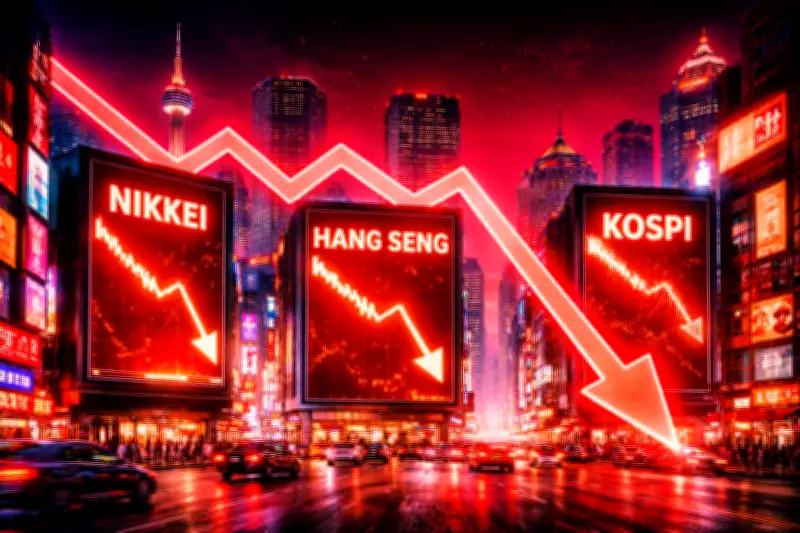
South Korea suffered the most significant losses, with the benchmark Kospi index tumbling approximately 6% at the open. The session began at 5,409 points, and by around 11:10 am IST, it was trading at 5,444.44, down 5.8% or 336 points. Broader indices in South Korea also showed substantial declines, with the KRX TMI falling 5.79% to 3,415 and the KRX 300 dropping 5.95% to 3,633.50. The sell-off extended across various segments, including the Kospi 200, which declined 6.05% to 810, and the tech-heavy KOSDAQ, which shed over 4% to 1,106. The KOSDAQ 150 slipped 4.98% to 1,922.
In Hong Kong, the Hang Seng Index (HSI) dipped 3.44%, losing 869 points to close at 24,407. Chinese equities were similarly under pressure, with the Shanghai Composite Index falling over 3% by midday and Shenzhen down 2.9%. These declines are pushing Chinese and Hong Kong markets toward their worst sessions in nearly a year, amid rising concerns about stagflation.

Broader Asian Market Impact and Expert Analysis
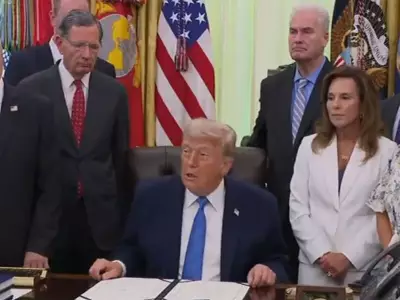
The sell-off was not limited to South Korea and Hong Kong. Japan's Nikkei 225 dropped more than 3% to 51,533, while Singapore's Straits Times Index declined 2.20% to 4,839. Market experts attribute this sharp fall to recent geopolitical developments and the uncertainty surrounding energy supply chains. Ajay Bagga commented on the broader sentiment, stating, "Asian Markets, A Sea of Red. Asian indices are seeing one of their worst opening sessions of the year as the '48-hour clock' ticks toward its Monday night expiration. The primary driver of today's market panic is the looming deadline set by U.S. President Donald Trump."
He added, "Over the weekend, the President issued a stern 48-hour ultimatum to Tehran: fully reopen the Strait of Hormuz—currently operating at just 5% of its pre-war volume—or face the 'obliteration' of Iran's power grid, starting with its largest plants." This ultimatum has escalated tensions, with Iran warning it would target energy and water infrastructure in neighboring Gulf nations if the U.S. follows through on threats to strike Iran's power grid.
Weak U.S. Cues and Sectoral Shifts
Adding to the cautious mood, weak cues from the U.S. contributed to the downturn. Wall Street ended lower on Friday, with the Dow Jones Industrial Average falling 0.96%, the S&P 500 declining 1.51%, and the Nasdaq Composite dropping 2%. Investors pulled out of sectors such as technology, travel, agriculture, and consumption, fearing the impact of rising oil prices and weaker demand. In contrast, energy-linked segments, including coal, oil, and electric vehicles, saw inflows as markets bet on a stronger push towards energy security.
Global Economic Outlook and Uncertainty
Goldman Sachs highlighted that the outlook for oil prices and global growth will depend heavily on how long the Strait of Hormuz remains closed, noting that the situation remains highly uncertain. This uncertainty is fueling market volatility and prompting investors to reassess risk exposures in light of potential disruptions to global energy flows.
The combination of geopolitical tensions, energy supply fears, and weak international market cues has created a perfect storm for Asian equities, leading to one of the most significant sell-offs in recent months. As the situation evolves, market participants are closely monitoring developments in the Middle East for further impacts on global financial stability.