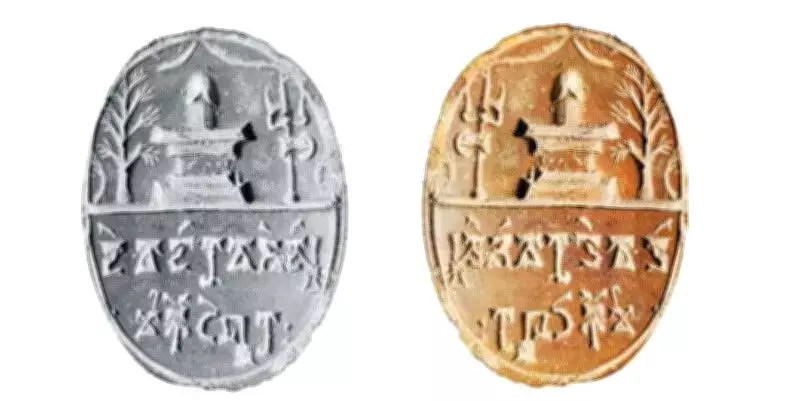
The Archaeological Survey of India's (ASI) epigraphy division has decoded a 5th century CE Sanskrit inscription in Brahmi characters on a seal from Pakistan, identifying it as belonging to a Saiva temple dedicated to Svami Kotesvara at Devadaruvana, the forest of Himalayan cedar trees.
Details of the inscription
ASI epigraphy wing head K Muniratnam Reddy said the inscription, incised on the seal, reads: "Devadaruvane Svami Kotesvarah." The seal was shared with ASI by Francoise Mandeville of Hong Kong.
According to the ASI epigraphy division, the seal could be regarded as the oldest inscriptional and artistic depiction of the legend of Siva roaming in the Devadaru forest as described in the Skandapurana. The finding adds to a set of Pakistan-origin inscriptions decoded by ASI epigraphy division in recent months.

Previous discoveries
In 2024, the division decoded a 4th century CE Sanskrit inscription in Brahmi script from outside Gilgit in Pakistan-occupied Kashmir. Muniratnam Reddy translated it as referring to Pushpasingha installing a Mahesvaralinga for the merit of his guru, whose name was partly lost.
Around five months before the Gilgit finding, ASI had also decoded a fragmentary 10th century CE inscription on a slab found near Peshawar. Reddy said it was in Sanskrit using Sharada characters and appeared to refer to Buddhist Dharani chants, with the sixth line mentioning "Da Dha rini".