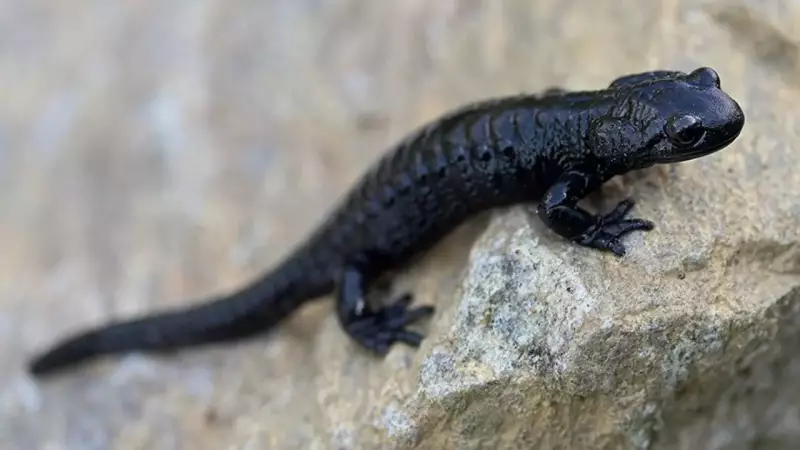
When considering the animal kingdom's most remarkable reproductive feats, one might instinctively think of majestic whales or massive elephants. However, the true record-holder for the longest pregnancy on Earth is a creature of much more modest stature: the Alpine salamander. This small, dark amphibian, residing in the high mountains of Europe, demonstrates a gestation period that can span multiple years, making it a fascinating subject of scientific study.
Nature's Marathon Pregnancy: Up to Five Years
The Alpine salamander's pregnancy is nothing short of extraordinary. At lower altitudes within its habitat, gestation typically lasts between two to three years. However, as one ascends to colder, higher elevations, this period extends dramatically. Some female salamanders carry their developing young for an astonishing four to five years. On average, these creatures experience a gestation of 37 to 38 months, far surpassing the nine-month human pregnancy and even the lengthy pregnancies of elephants or frilled sharks.
A Unique Reproductive Strategy
Unlike most amphibians, which lay eggs in water, Alpine salamanders employ a viviparous reproductive method. They bypass the egg stage entirely, giving birth to fully formed, live young. This adaptation is particularly advantageous in their harsh mountain environment, where traditional egg-laying would be risky due to cold temperatures and limited resources.
During their prolonged gestation, embryos develop completely inside the mother, receiving nourishment directly from her. This process eliminates the need for a larval stage, allowing the offspring to be born ready to survive independently. The extended development time results in larger, stronger babies, better equipped to compete for resources and evade predators in their challenging habitat.
Environmental Influence on Gestation
Gestation, defined as the period between conception and birth, varies significantly across species due to factors like metabolism, body size, and developmental requirements. For the Alpine salamander, temperature plays a crucial role. In colder climates, metabolic rates slow down, leading to slower embryonic development and consequently, longer gestation periods. This adaptation ensures that embryos have ample time to mature fully, increasing their chances of survival post-birth.
A study titled "Epitheliophagy: intrauterine cell nourishment in the viviparous alpine salamander, Salamandra atra (Laur.)", published in PubMedCentral, highlights how this extended gestation allows embryos to grow completely even in tough environments. This rare case exemplifies how environmental pressures can shape reproductive strategies in wildlife.
Habitat and Survival Adaptations
Alpine salamanders are endemic to the European Alps, thriving in rocky, cool habitats. The cold mountain climate not only slows their metabolism but also extends the development time of their young. This adaptation showcases how extreme environmental conditions can influence life cycles and survival strategies, enabling these amphibians to flourish where others might struggle.
Comparing Gestation Periods
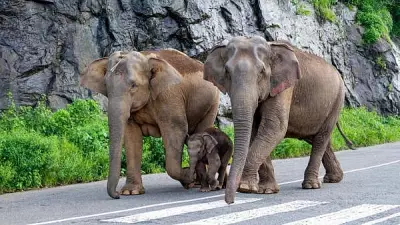
While elephants carry their young for nearly two years and frilled sharks for about three and a half years, the Alpine salamander's gestation period is unparalleled among land animals. This small amphibian challenges conventional notions that larger size correlates with longer pregnancy, proving that environmental factors can be more influential than physical stature in determining developmental timelines.
The Alpine salamander's reproductive strategy is a testament to evolutionary creativity, demonstrating that even small, cold-blooded creatures can exhibit some of the most remarkable biological traits. Its ability to sustain a pregnancy for years in harsh conditions makes it a true marvel of nature, captivating scientists and nature enthusiasts alike.