Groundbreaking Discovery: 38 New Marine Species Found in Japan's Deep Sea
A groundbreaking advancement in marine biology has been achieved with the identification of 38 new marine species collected from the deep waters around Japan. This remarkable research was conducted by the Nippon Foundation - Nekton Ocean Census and JAMSTEC as part of their ongoing expeditionary program, which began with the examination of the Nankai Trough and Shichiyo Seamount Chain in 2025.
The 'Glass Castle': A Delicate Deep-Sea Habitat
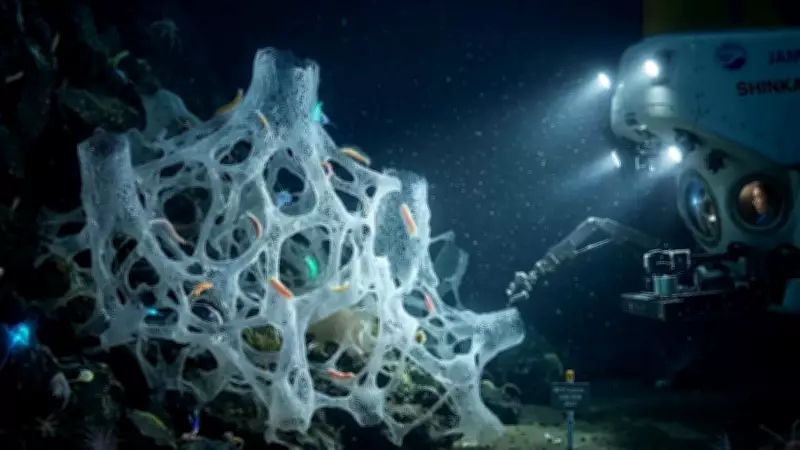
Approximately 5,000 meters below sea level, researchers discovered the 'Glass Castle,' comprised of the delicate silica skeletons of hexactinellid sponges. These shimmery sponges provide living space for organisms that had never been recorded before. Using cutting-edge submersibles, both manned and unmanned, along with DNA sequence technology, researchers were able to evaluate an area that represents one of the last frontiers of our planet for marine biodiversity - the deep sea. The results demonstrated that the complexity and abundance of life in the deep sea are far greater than anyone has ever anticipated. This study underscores the necessity for global ocean conservation, as the evidence of vulnerability in these ecosystems necessitates immediate global protection.
How 'Glass Castle' Sponges Support a Rare Deep-Sea Ecosystem
The 'Glass Castle' provides the physical foundation needed to support symbiotic relationships between hexactinellid sponges and lesser-known organisms. According to Ocean Census, these organisms include polychaete worms, with two new species discovered during this study: Dalhousiella yabukii and Leocratides watanabeae. The benefits provided by the sponges, such as protection, have resulted in the establishment of an incredibly rare and delicate invertebrate community that exhibits the ability to survive at great depths.

How DNA Sequencing Identified 38 New Species
According to the study published by JAMSTEC, the team used the Research Vessel Yokosuka and the Shinkai 6500 submersible to explore depths down to 5,000 meters underwater. They employed 'cyber-taxonomy,' which combines rapid DNA sequencing with high-resolution imaging, to quickly establish that they located 38 new species within a few weeks instead of the years typically required for such classification. This allowed them to explore five previously unilluminated volcanic peaks and abyssal trenches efficiently.
Why These Specimens Are Changing Marine Science
This mission was part of a larger effort to close the taxonomic gap in marine biology. Scientists found they recorded five times more species of biodiversity in these specific Japanese abyssal trenches than previously documented. In addition to the 38 new species, the team collected over 500 total organisms, as noted in the Ocean Decade initiative; many of these specimens are still being analyzed through genomic sequencing. Studies like this are crucial for discovering how forms of life exist in extreme conditions of pressure and total darkness.
How Life Coexists Inside Glass Sponges
Researchers specifically examined how species living in the abyss interact with each other. The investigators observed a variety of previously unknown worms and crustaceans that only live within the interior of glass sponges, indicating a high degree of specialized evolutionary function. These organisms have adapted to live under the immense pressure of the Nankai Trough by establishing very close biological relationships, where sponges afford them shelter, and in return, they may perform nutrient recycling or scavenging-related activities for the sponges.
This discovery not only expands our understanding of marine biodiversity but also highlights the urgent need for conservation efforts to protect these fragile deep-sea ecosystems from potential threats.