

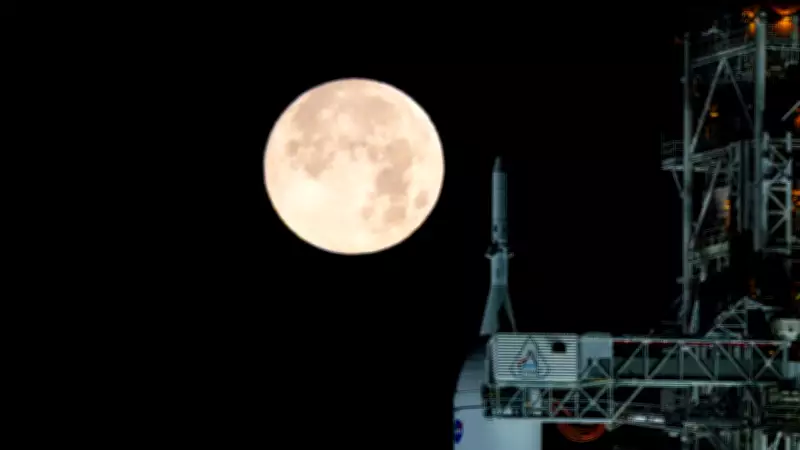
NASA Conducts Confidence Test for Artemis II Moon Mission, Reviews Data for Next Steps
The National Aeronautics and Space Administration (NASA) announced on Saturday that it successfully performed a confidence test for its Artemis II Moon mission vehicle on February 12. The space agency is currently analyzing the results from this critical trial before establishing a definitive timeline for the subsequent phase of testing. This development marks a pivotal moment in the preparations for the highly anticipated crewed lunar mission.
Update Shared on Social Media and Official Statement Details
In a recent post on X, NASA provided an update, stating: "Update on our Moon mission: Following a Feb. 12 confidence test, teams are reviewing data and will examine findings before setting a timeline for the next test, a second @NASAArtemis wet dress rehearsal this month. March remains the earliest potential launch window." This communication underscores the agency's commitment to transparency and rigorous testing protocols.
According to an official statement released by NASA, the confidence test involved partially filling the Space Launch System (SLS) core stage liquid hydrogen tank. This procedure was designed to assess newly replaced seals in an area utilized for loading propellant into the rocket. The test is part of a comprehensive strategy to ensure the vehicle's robustness and safety prior to its inaugural crewed flight.

Challenges Encountered and Engineering Responses
During the test, NASA teams encountered a technical issue with ground support equipment, which resulted in a slowed flow of liquid hydrogen into the rocket. Despite this setback, engineers were able to achieve several major test objectives and gather valuable data from the core stage interfaces. Notably, this data collection occurred at the same testing point where a leak had been identified during a previous wet dress rehearsal, allowing for direct comparison and analysis.
To address the flow reduction, NASA engineers plan to purge the line over the weekend to maintain optimal environmental conditions. They will also inspect the ground support equipment and replace a filter suspected to be the cause of the issue. These steps are crucial for ensuring the reliability and efficiency of the systems involved in the mission.
Artemis II Mission Overview and Significance
Artemis II is scheduled to carry astronauts Reid Wiseman, Victor Glover, Christina Koch, and Jeremy Hansen on a 10-day journey around the Moon. This mission represents the first crewed flight of the Artemis program and is a significant milestone in NASA's efforts to return humans to the lunar surface. Unlike the uncrewed Artemis I mission, Artemis II will test life-support systems and deep-space operations with astronauts aboard the SLS rocket and Orion spacecraft.
The success of Artemis II is expected to pave the way for Artemis III, which aims to land astronauts on the Moon and support future long-term exploration initiatives. With March identified as the earliest possible launch window, NASA continues to work diligently towards achieving this historic goal, emphasizing safety and precision in every phase of preparation.






