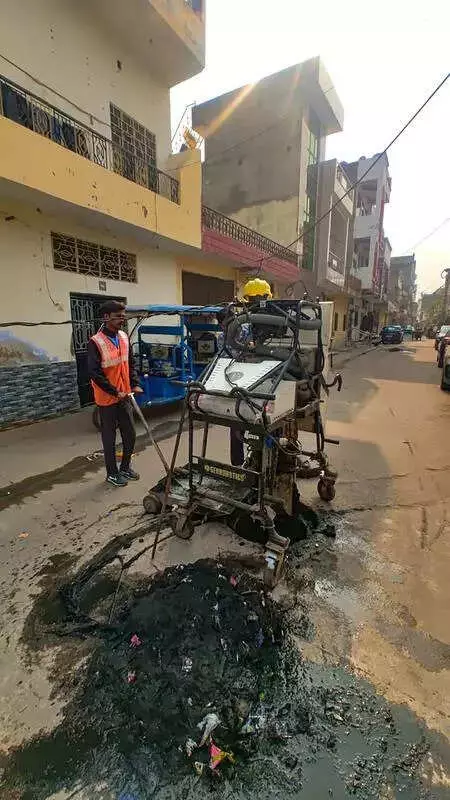
In a significant step towards modernizing urban sanitation and safeguarding its workers, the Jaipur Municipal Corporation (JMC) has successfully deployed a robotic machine to clean a clogged sewer line. This pioneering operation, carried out on Wednesday, marked the first-ever use of such technology in the historic Hawa Mahal zone, specifically in Ward 135.
A Technological Leap for Worker Safety
The primary goal of this initiative is to eliminate the need for humans to enter hazardous sewer lines, a practice known as manual scavenging. The JMC had acquired three of these robotic machines two years ago, investing a total of Rs 36 lakh as part of its broader strategy to curb this dangerous and demeaning practice. By using a machine, the civic body directly reduces the severe health and safety risks faced by sanitation workers during manual cleaning operations.
How the Robotic Cleaner Works
Explaining the mechanism, Deputy Commissioner (Garage) Atul Sharma stated that the robot is designed to operate autonomously once it is positioned over the manhole. "Once the robot is fixed over the sewer line, it carries out the entire cleaning process on its own," Sharma said. This hands-off approach ensures that no employee has to physically descend into the toxic and potentially fatal environment of the underground sewer.

Current Limitations and Operational Hurdles
Despite the promise, JMC officials have acknowledged certain limitations of the current robotic system. Sharma pointed out that the machine is specifically designed for vertical sewer cleaning and cannot be used for horizontal lines. Furthermore, the cleaning process is not swift. The robot can clean only four to five sewer lines in a single day, which may pose a challenge for a city requiring extensive sanitation coverage.
Another significant concern for the civic body is the high cost of operating and maintaining this technology. Maintaining a single robotic machine costs the JMC nearly Rs 1 lakh every year. This substantial ongoing expense presents a financial challenge for the municipal corporation as it seeks to scale up the use of such technology across more wards in the Pink City.
The Road Ahead for Urban Sanitation
The deployment in Ward 135 represents a crucial pilot project and a statement of intent from the Jaipur authorities. While the robots are slow and expensive at present, their use establishes a new benchmark for worker safety and technological intervention in public health infrastructure. The success and learnings from this first-of-its-kind initiative in the Hawa Mahal area will likely influence future procurement and deployment strategies, pushing Jaipur closer to its goal of fully eradicating manual scavenging.