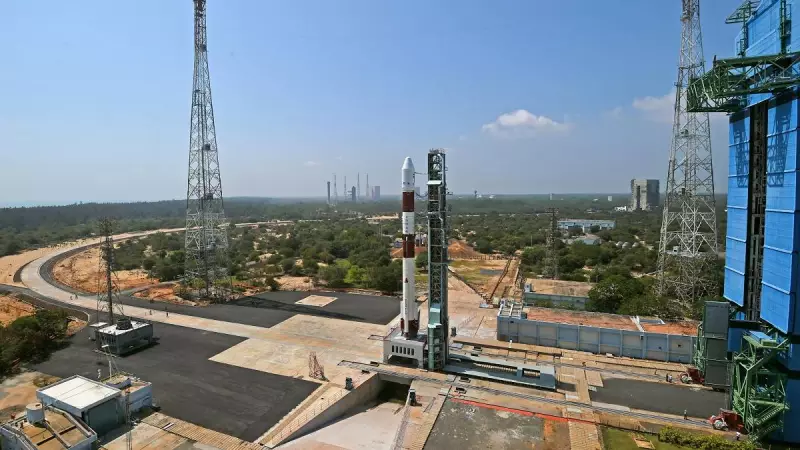
The Indian Space Research Organisation (ISRO) is set to begin its 2026 launch campaign with a significant mission scheduled for January 12. This launch will carry a satellite developed by the Defence Research and Development Organisation (DRDO) among its primary payloads, marking a collaborative effort in India's space and defence sectors.
Mission Details and Launch Schedule
The launch is planned for January 12, 2026, from the Satish Dhawan Space Centre (SDSC) SHAR in Sriharikota. The trusted Polar Satellite Launch Vehicle (PSLV) will be the workhorse for this mission, designated as PSLV-C58. The primary payload for this mission is a sophisticated satellite built by the DRDO, underscoring the growing synergy between India's space and defence research entities.
This mission is particularly notable as it represents ISRO's first launch of the new calendar year, setting the tone for an ambitious schedule ahead. The inclusion of a DRDO-developed spacecraft highlights the strategic importance of the mission, likely involving advanced surveillance or communication capabilities for national security.

Payloads and Strategic Importance
While the DRDO satellite is the star passenger, the PSLV-C58 mission will also deploy several other payloads. These are expected to include satellites from private Indian companies and possibly international customers, continuing ISRO's role as a reliable commercial launch service provider. The exact number and nature of these co-passenger satellites will be detailed closer to the launch date.
The integration of a major DRDO payload on a routine ISRO launch vehicle demonstrates a seamless operational partnership. It reflects a mature approach to utilizing space technology for dual-use applications, benefiting both scientific exploration and national defence infrastructure. This launch follows a series of successful missions in 2025, where ISRO demonstrated high launch frequency and technological prowess.
Broader Implications for India's Space Ambitions
The January 12 launch is more than just another entry in ISRO's logbook; it is a statement of intent for 2026. By starting the year with a mission carrying a strategically important payload, ISRO is reinforcing its commitment to supporting national objectives while maintaining its commercial and scientific launch commitments.
This mission will be closely watched by the global space community as an indicator of India's continued reliability and growing capabilities in the launch market. A successful launch will provide strong momentum for ISRO's planned activities for the rest of the year, which may include interplanetary missions, advanced Earth observation satellites, and tests for the human spaceflight program, Gaganyaan.
For the DRDO, the successful deployment and operation of its satellite will validate indigenous technologies in space-based surveillance, communication, or navigation. It represents a critical step in achieving greater self-reliance in defence-related space assets, reducing dependency on foreign systems for sensitive applications.
As the countdown begins, all eyes will be on Sriharikota, where ISRO's engineers and scientists are putting the final touches on the PSLV rocket. The January 12, 2026 launch is poised to be a landmark event, seamlessly blending defence needs with space exploration and commercial service in a single flight.