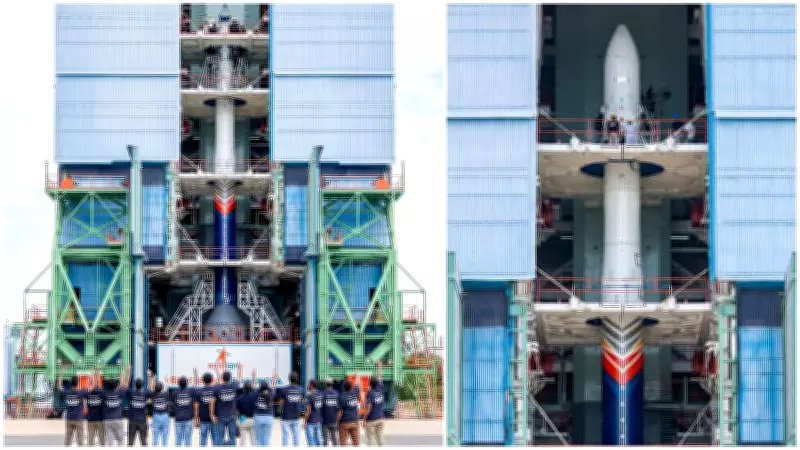
India's first private space rocket, Vikram-1, is set to launch within a month under Mission Agaman, marking a historic milestone for the country's private space sector. Designed to carry small satellites weighing up to 350 kg to Low Earth Orbit, the maiden mission will target an orbit at an altitude of 450 km.
Mission Agaman and Vikram-1 Details
The launch will take place from the Satish Dhawan Space Centre in Sriharikota, according to Kalyan Ray, who reported the development on July 2, 2026. Vikram-1 is built by Skyroot Aerospace, a Hyderabad-based startup, and represents the first privately developed orbital launch vehicle in India.
The rocket is named after Dr. Vikram Sarabhai, the father of India's space program. It is a three-stage solid-fueled vehicle capable of deploying multiple small satellites in a single mission. The payload capacity of 350 kg to a 450 km sun-synchronous orbit makes it ideal for Earth observation, communications, and technology demonstration satellites.

Impact on India's Space Industry
The launch under Mission Agaman is expected to boost India's private space ecosystem, which was opened to private players by the Indian Space Research Organisation (ISRO) in 2020. According to industry experts, this mission will demonstrate the capability of Indian private firms to build and launch rockets independently, reducing reliance on foreign launch providers.
Skyroot Aerospace has already conducted successful tests of its engines and stages. The company aims to offer affordable and reliable launch services for small satellites, catering to a growing global demand. The mission is also seen as a step towards India's goal of becoming a hub for space manufacturing and launch services.
Technical Specifications and Timeline
Vikram-1 stands at 18 meters tall with a diameter of 1.2 meters. It uses high-strength carbon composite structures and 3D-printed components to reduce weight and cost. The rocket's first stage is powered by a solid motor with a thrust of 200 kN, while the upper stages use advanced solid propellants for precision injection.
The launch window is expected within the next 30 days, pending final clearances from the Indian space regulatory authority. The mission will also carry payloads from domestic and international customers, though specific satellites have not been disclosed.
This development follows the successful suborbital test flight of Vikram-S in November 2022, which made Skyroot the first private Indian company to launch a rocket into space. Vikram-1 will be the first orbital attempt by a private Indian entity.