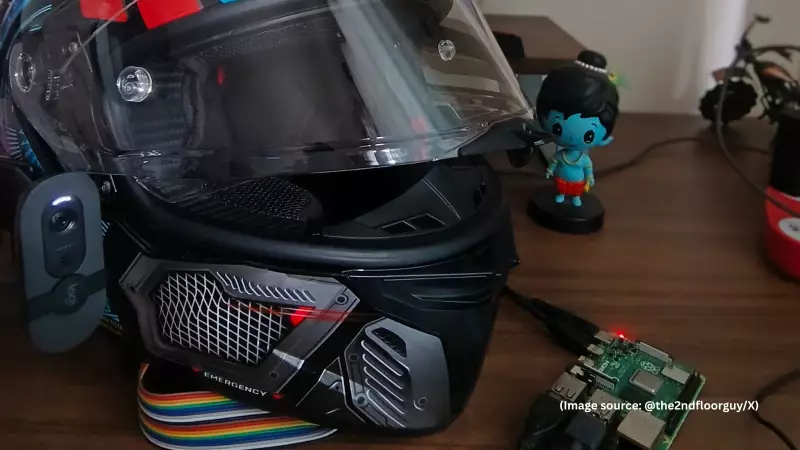
Frustrated by the daily chaos and disregard for rules on Bengaluru's roads, a local software engineer has taken traffic enforcement into his own hands—or rather, onto his own head. Pankaj Tanwar has successfully transformed a standard helmet into an intelligent, AI-powered device that acts as a personal traffic policeman, automatically flagging violations and reporting them to the authorities.
From Frustration to Innovation: The Birth of the AI Traffic Cop
The idea was born out of sheer exasperation. Pankaj Tanwar, a techie based in India's Silicon Valley, took to social media platform X on January 3, 2026, to announce his unique creation. "I was tired of stupid people on the road so I hacked my helmet into a traffic police device," he wrote in a now-viral post. He explained that while he rides, an AI agent runs in near real-time, identifies traffic violations, and sends proof complete with location and vehicle number plate details directly to the police.
His message to fellow Bengalureans was clear: "So now ride safe... or regret it." The accompanying video demonstration quickly captured the internet's imagination, amassing over two million views and sparking a flood of reactions from netizens.

How the Smart Helmet Works on Bengaluru's Streets
The AI system integrated into the helmet is designed to detect common traffic offences. In his demonstration, Tanwar shared images flagged by the device. One snapshot caught a man riding a scooter without wearing a helmet—a rampant and dangerous violation. Another image captured a car engaged in reckless stunt driving, posing a risk to everyone on the road.
The technology represents a significant leap in civic tech innovation. It moves beyond simple dashcam recording to an active, automated reporting system. The AI analyses the visual feed, identifies specific illegal activities, compiles the evidence with crucial metadata like GPS location and time, and can theoretically forward it to law enforcement databases for action.
Public and Police Reaction to the Groundbreaking Idea
The online response was overwhelmingly positive, with many users praising the ingenuity. One user suggested linking such systems to a cloud service with a financial incentive, proposing that states could share a percentage of the penalty collected with the person who reported the incident. Others expressed hope that this would spark a wider movement to solve Bengaluru's infamous traffic problems through user-driven technology.
The most significant validation, however, came from the authorities themselves. Following the viral post, the Bengaluru City Police formally reached out to Tanwar. On January 4, 2026, he shared a screenshot of a message from the Office of the Commissioner of Police, Bengaluru, with the caption "OMG. office of the commissioner of police, blr reached out."
The police message stated, "We have come across your recent post regarding the helmet-based traffic violation detection concept and found the idea innovative and interesting from a road safety perspective." This official recognition highlights the potential perceived by law enforcement in leveraging citizen-driven tech solutions for public safety.
While the project is currently a personal prototype, the overwhelming response and police interest open doors for potential collaboration or further development. Tanwar's invention underscores a growing trend where individual citizens, armed with accessible technology like AI, are creating solutions to long-standing urban issues, starting with the chaotic roads of Bengaluru.