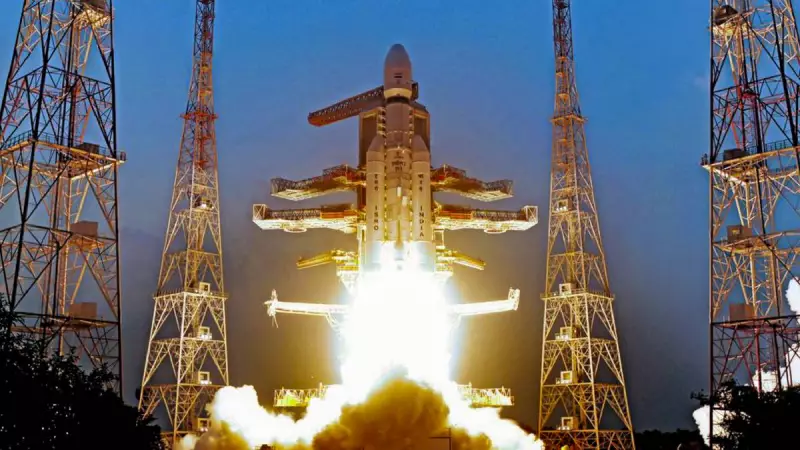
The year 2026 is poised to be a defining chapter for India's space ambitions, marked by a critical milestone in its human spaceflight program and an accelerating shift towards a commercial launch ecosystem. The national focus will be squarely on the Gaganyaan program's first uncrewed test flight, a mission that will validate the very systems designed to carry Indian astronauts, or 'Gagannauts', into orbit. Concurrently, the burgeoning private space sector is expected to achieve new heights with multiple rocket launches, collectively shaping a transformative period for the country's cosmic endeavours.
The Gaganyaan Program's Crucial Next Step
At the heart of India's 2026 space narrative is the Gaganyaan mission, the nation's prestigious first human spaceflight project. Following a series of successful precursor tests, including the landmark Test Vehicle Demonstration (TV-D1) flight in October 2023, the program is now gearing up for its most significant demonstration yet. The planned uncrewed test flight in 2026 will be a comprehensive dress rehearsal for the eventual manned mission.
This flight will involve launching a human-rated Launch Vehicle Mark-3 (LVM3) rocket from the Satish Dhawan Space Centre in Sriharikota. The mission's primary objective is to rigorously test the Crew Module (CM) and Crew Escape System (CES) in actual spaceflight conditions. The module will carry a humanoid robot, 'Vyommitra', to monitor the environment that future astronauts will experience. A successful completion of this uncrewed mission will pave the way for the final, historic crewed flight, potentially by 2025 or shortly thereafter, firmly establishing India as the fourth nation capable of independent human spaceflight.

The Rise of Private Launch Providers
Parallel to ISRO's flagship programs, 2026 is anticipated to be a breakout year for India's private space industry. The government's policy reforms and IN-SPACe's facilitation are bearing fruit, with several homegrown startups ready to transition from development to operational launches. Companies like Skyroot Aerospace and Agnikul Cosmos, which have already demonstrated their suborbital launch capabilities, are targeting their first commercial orbital launches.
This surge in private activity signifies a strategic evolution for India's space sector. It promises to increase launch frequency, reduce costs through innovation, and create a robust ecosystem for space-based services and manufacturing. The missions planned by these private entities will not only carry domestic satellites but also aim to attract global customers, positioning India as a competitive and reliable player in the international commercial launch market.
Broader ISRO Missions and Strategic Goals
Beyond Gaganyaan, the Indian Space Research Organisation (ISRO) has a packed slate for 2026 that underscores its multifaceted capabilities. Key interplanetary and scientific missions are on the agenda, contributing to global knowledge and national prestige. Furthermore, the year will see continued deployment of critical national assets, including satellites for navigation (NaviC constellation), earth observation, and communication, which are vital for security, disaster management, and digital connectivity across the country.
The strategic emphasis on developing a reusable launch vehicle technology is also expected to see progress, with further tests planned to master this cost-disruptive capability. This focus on next-generation technology ensures the long-term sustainability and competitiveness of India's access to space.
The convergence of a landmark government-led human spaceflight test and the operational rise of private launch companies makes 2026 a pivotal year. It represents the tangible outcome of India's dual-track space policy: pursuing sovereign strategic goals like Gaganyaan while actively fostering a commercial space economy. The successes and lessons of this year will not only determine the timeline for sending an Indian into space but will also set the trajectory for the country's role in the global space industry for decades to come.