The Unlikely Gamer: How Handheld Consoles Are Uniting Generations
In a New Delhi park, 64-year-old Sally Rana stands out among her fellow retirees. While others gather for morning gossip, she prefers the company of her PlayStation Portable. "I couldn't play on the phone, but this is less complicated and easy to carry," Rana explains. "I don't want my inner child to die." Her story exemplifies a growing trend across India and the world, where handheld gaming consoles are experiencing a remarkable resurgence.
Market Boom: Numbers Don't Lie
While handheld devices might appear niche compared to home consoles like PlayStation and Xbox, the data reveals a different reality. Two handheld consoles rank among the top five bestselling systems globally, with the hybrid Nintendo Switch potentially making it three. According to Global Media Insights, the global handheld gaming market reached USD 16.3 billion in 2024 and is projected to expand dramatically to USD 37.7 billion by 2034.
The appeal of dedicated gaming handhelds lies in their ability to provide immersive experiences without smartphone distractions. "Unlike standard gaming consoles, handhelds let users play games pretty much anywhere, putting entire virtual worlds right in their pockets," the original report noted. This convenience factor has proven particularly valuable in today's fast-paced world.

From Calculators to Cloud Gaming: The Evolution
The journey of portable gaming began with an observant Japanese businessman. Gaming legend suggests that Nintendo's Gunpei Yokoi, while riding the Shinkansen bullet train in the 1970s, noticed a bored businessman pressing calculator buttons to pass time. This inspired the Nintendo Game & Watch, featuring simple LCD displays similar to calculators and digital watches.
While not the first handheld—preceded by Mattel's Auto Race and Milton Bradley's Microvision—Nintendo's Game & Watch paved the way for iconic devices like the Game Boy and DS. Competitors including SEGA Game Gear and Atari Lynx emerged, but Nintendo dominated through simplicity, affordability, and extensive game libraries.
The landscape shifted in 2004 when Sony entered with the PlayStation Portable (PSP), offering superior hardware and analog stick controls. Nintendo responded with intuitive touch controls and strong game portfolios, beginning a decade-long competition that saw multiple iterations from both companies.
The Smartphone Challenge and New Generation
The rise of smartphones initially threatened dedicated handheld consoles. Karan Gaikwad, Lead of Product Team at KRAFTON India, notes: "Handheld devices laid the foundation for gaming on the go, but in India it is mobile that has carried that legacy into the mainstream." The numbers support this—India recorded over 15 billion mobile game downloads in FY24, with BGMI alone surpassing 240 million installs.
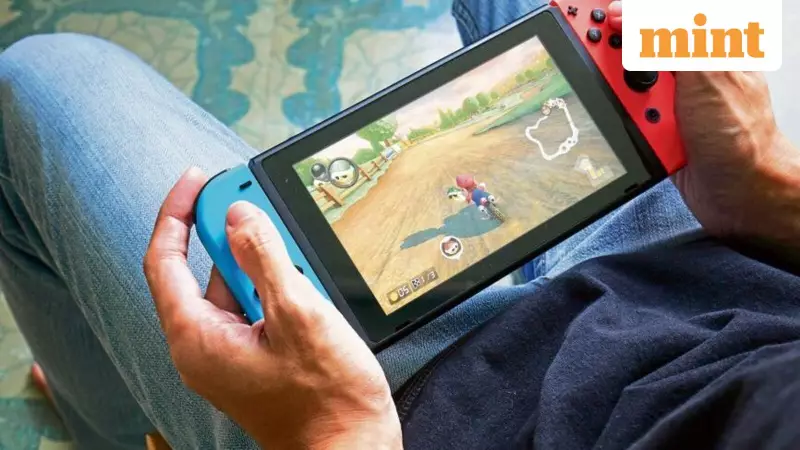
However, 2017 marked another turning point with Nintendo's Switch, a hybrid console functioning both as home system and portable device. This innovation allowed gamers to play complete versions of titles like Elder Scrolls V: Skyrim or Doom on the go, albeit with graphical compromises.
Laptop manufacturers recognized an opportunity. ASUS introduced its ROG Ally series in India, essentially compact laptops offering PC-level performance in handheld form. Arnold Su, Vice President of consumer and gaming PC business at ASUS India, observes: "India has one of the fastest-growing gaming populations globally. Gamers here are aspirational, tech-savvy, and quick to embrace new categories when they see value."
The Future: Cross-Platform Play and Community
The future of handheld gaming appears increasingly integrated. Both Microsoft and Sony are developing cloud gaming solutions that could eliminate hardware limitations, though requiring consistent internet connectivity. More significantly, developers are implementing cross-play and cross-save features, enabling seamless transitions between devices.

"This hybrid future means a gamer might start on a smartphone during commute and continue on a handheld PC at home, all within the same ecosystem," predicts Gaikwad. Su echoes this optimism: "We see handheld PCs as a complementary pillar in the portable gaming ecosystem. Smartphones offer accessibility, and cloud gaming brings convenience."
Ultimately, the technology serves human connection. Sally Rana's experience proves this perfectly: "The children in the park also tend to surround me when I start gaming and would ask if they could also play." Her story demonstrates that handheld gaming transcends hardware and software—it builds communities across generations, proving that in today's gaming landscape, there's truly a device and playing style for everyone.