

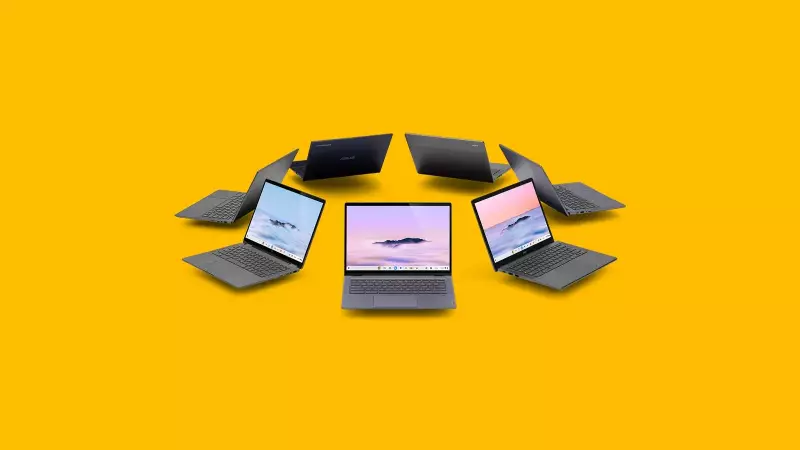
After years of struggling to gain a foothold in the personal computer space dominated by Microsoft Windows and Apple's macOS, Google is preparing a strategic counterattack. The tech giant is developing a new, unified desktop operating system codenamed Aluminium OS, which is set to launch in 2026. This move represents Google's most significant attempt yet to translate its mobile dominance into the PC arena.
The Genesis of a Unified Platform
Google's journey in the PC market has been marked by incremental efforts. While its Android OS rules the smartphone world, its forays into desktops with ChromeOS and tablets with Android have not achieved mainstream success. Chromebooks found a niche primarily in education and budget segments but were overshadowed by Windows laptops. The Pixel Slate, a ChromeOS tablet, was a commercial failure.
The new strategy, confirmed in 2025, is a fundamental shift: merging the technical foundations of ChromeOS and Android into a single, cohesive platform. At the Qualcomm Snapdragon Summit in Hawaii in September 2025, Google's hardware chief, Rick Osterloh, publicly detailed the plan. He described it as "bringing Android to the PC market" and announced a partnership with Qualcomm for the platform.

Osterloh explained that Google is building a common technical foundation for PCs, enabling the integration of its full AI stack—including Gemini models and Google Assistant—along with its vast app and developer ecosystem into the desktop space. Qualcomm CEO Cristiano Amon endorsed the vision, calling the seen product "incredible" and a realization of "convergence between mobile and PC."
What We Know About Aluminium OS
Aluminium OS is described as an "Android-based" operating system built with artificial intelligence at its core. A leaked job listing for a "senior product manager in Android, laptops, and tablets" revealed crucial details. The OS will power a wide range of form factors: laptops, detachable devices, tablets, and mini-PCs (referred to as "boxes").
The listing also mentioned three product tiers: "AL Entry," "AL Mass Premium," and "AL Premium." This indicates a key departure from the Chromebook strategy, as Aluminium OS will target multiple price points, including the premium segment where Apple's MacBooks, especially the MacBook Air, currently thrive. Google's earlier attempt at premium Chromebooks, the Chromebook Plus program launched in 2023, failed to gain consumer traction.
Interestingly, Google has clarified that ChromeOS will not disappear. Android chief Sameer Samat stated at the Snapdragon Summit that the company remains "super committed" to the ChromeOS experience, but its underlying technology will shift to run on Android. This suggests Chromebooks may coexist with new Aluminium OS devices in the market.
The AI-Centric Vision and Unanswered Questions
Google's defining pitch for Aluminium OS is its deep AI integration. The company has stated the OS is "AI-ready from the ground up." Gemini, Google's AI assistant, is expected to drive novel user experiences, potentially reimagining features like virtual desktops and moving beyond simply running Android apps on a larger screen.
A glimpse into this AI-first approach can be seen in Google's experimental Disco AI browser, powered by Gemini. It allows users to create "GenTabs"—interactive web apps generated from browsing activity via written prompts. This proactive, task-oriented functionality could be foundational to the Aluminium OS experience.
However, significant questions remain. The exact user interface is unknown—will it resemble Windows, macOS, or something entirely new? Its performance capabilities and how it will differentiate itself from existing Android on tablets or ChromeOS are also unclear. Google faces the challenge of blending the best of Android's tablet experience with the productivity expectations of a traditional desktop OS, potentially learning from Apple's gradual feature-sharing between iPadOS and macOS.

The official unveiling of Aluminium OS is anticipated at Google I/O 2026, typically held in May, with a launch expected later that year. This sets the stage for a renewed battle in the PC operating system wars, with Google betting on AI and ecosystem convergence to finally crack a market that has long eluded it.





