The US State Department has issued a global directive to bring attention to what it describes as widespread efforts by Chinese companies, including AI startup DeepSeek, to steal intellectual property from American artificial intelligence laboratories. A cable sent on Friday to diplomatic and consular posts worldwide instructs staff to discuss with foreign counterparts concerns over adversaries' extraction and distillation of US AI models.
Understanding AI Model Distillation
Distillation is the process of training smaller AI models using outputs from larger, more expensive ones, aiming to reduce the costs of developing powerful new AI tools. This technique has become a focal point in the ongoing dispute between US and Chinese AI firms.
Anthropic's Allegations
The US government's order follows a complaint by Anthropic, a San Francisco-based AI company, which accused three prominent Chinese AI companies of using its Claude chatbot on a massive scale to secretly train rival models. In a blog post, Anthropic alleged that Chinese labs DeepSeek, Moonshot AI, and MiniMax violated corporate law by interacting with Claude, its market-reshaping vibe-coding tool.

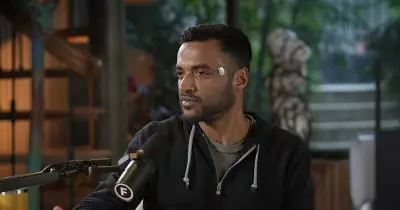
Notably, among the accused companies is Moonshot AI, whose CEO and founder Zhilin Yang recently spoke at Nvidia's GTC 2026 annual event, highlighting the company's prominence in the AI industry.
Details of Anthropic's Complaint
In its blog, Anthropic stated: "We have identified industrial-scale campaigns by three AI laboratories -- DeepSeek, Moonshot, and MiniMax -- to illicitly extract Claude's capabilities to improve their own models. These labs generated over 16 million exchanges with Claude through approximately 24,000 fraudulent accounts, in violation of our terms of service and regional access restrictions."
The complaint described the techniques used by Moonshot AI in detail: "The three distillation campaigns followed a similar playbook, using fraudulent accounts and proxy services to access Claude at scale while evading detection. The volume, structure, and focus of the prompts were distinct from normal usage patterns, reflecting deliberate capability extraction rather than legitimate use."
Moonshot AI's Operations
According to Anthropic, Moonshot AI's campaign involved over 3.4 million exchanges targeting specific capabilities:
- Agentic reasoning and tool use
- Coding and data analysis
- Computer-use agent development
- Computer vision
Moonshot (Kimi models) employed hundreds of fraudulent accounts spanning multiple access pathways. Varied account types made the campaign harder to detect as a coordinated operation. Anthropic attributed the campaign through request metadata, which matched the public profiles of senior Moonshot staff. In a later phase, Moonshot used a more targeted approach, attempting to extract and reconstruct Claude's reasoning traces.