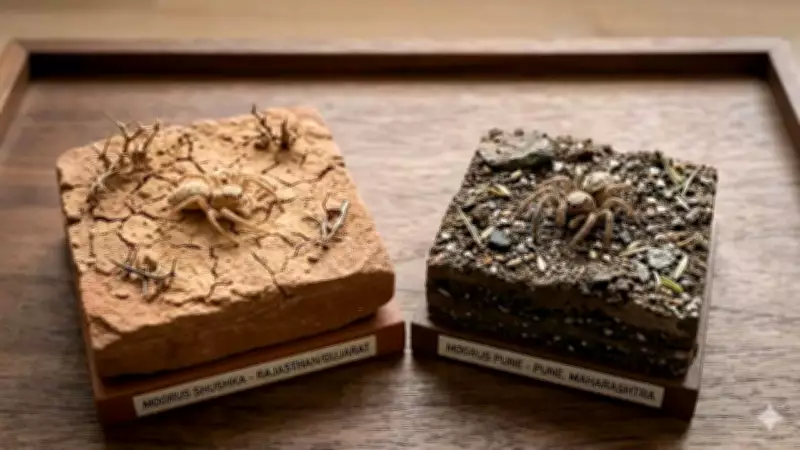
India has two new species of jumping spiders that were recently discovered. Researchers have found these species in both dryland and urban park habitats, showing that there are still many unknown forms of life to be found even in habitats we think we know well, such as deserts or city parks.
Discovery Details
The area where these species were found includes current field surveys of semi-arid areas and urban vegetation. These spiders were found as they were seen moving around on the ground and climbing up and down grass and tree branches. This discovery emphasises that small, very active organisms like jumping spiders can be tough to find, even though so much work has been put into finding them in the past.
Species Identification Study
The identification of these spiders was confirmed through detailed scientific research. The European Journal of Taxonomy published “Discoveries of two new Mogrus species (Araneae: Salticidae) and notable records from India” confirms the names of the two species are Mogrus shushka and Mogrus pune. Through the examination of microscopic characteristics, primarily reproductive structures, researchers differentiated between very closely related spider species, Mogrus. The differentiation allows researchers to verify that both species belong in the genus Mogrus; however, they are considered two separate species.

Where the New Jumping Spider Species Were Found
Both species were found in very diverse environments, showing how flexible these spiders can be. Mogrus shushka was collected from the dry, barren region of Rajasthan and Gujarat; both of these regions are infamously known for their high temperatures and lack of moisture. Mogrus pune, on the other hand, was collected from the urban green spaces biodiversity park in Maharashtra. This indicates that even if there are very small green spaces or protected areas within the urban environment, they can still provide a habitat for unique wildlife.
Jumping Spider Species Characteristics and Differences
Though these two types of spiders come from the same family, upon a closer look, they are actually very different in their physical appearance. They are able to be distinguished from each other primarily by their reproductive structures, which differ in both shape and function within each species. The male reproductive organ of one species is shaped like a triangle, and the male reproductive organ of the second species is curved or heart-shaped. These distinguishing features of the males are important. Since both of these types of spiders have a similar external appearance, it is necessary for them to be examined very closely to distinguish between them.
Importance of Jumping Spider Discovery for Biodiversity
Discovery of these two species indicates that there is still much to discover with respect to biodiversity, not only in places where it is not usually looked for but also in well-explored places. This discovery serves to indicate how useful fieldwork and scientific study can be in discovering species unknown until now. These studies also point out how essential it is that the little ecosystems, such as urban parks, can help to conserve biodiversity.