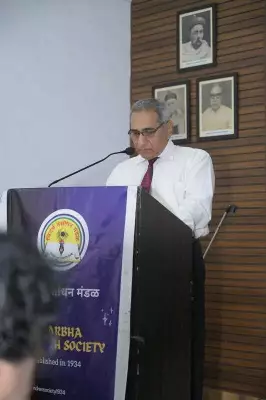
The nature of warfare is undergoing a fundamental shift, with space emerging as the most critical domain for shaping future conflicts, according to Dr. Samir V. Kamat, Chairman of the Defence Research and Development Organisation (DRDO). Speaking at the 4th Indian DefSpace Symposium at Manekshaw Centre in New Delhi on Thursday, Kamat underscored the urgent need for India to accelerate its capabilities in military space, warning that bridging the gap with global rivals will be a 'Herculean challenge' without a coordinated national effort.
DRDO's Expanding Role in Military Space
While the Indian Space Research Organisation (ISRO) continues to lead India’s civilian space programme, Kamat said DRDO has been tasked with addressing the military dimensions of space following the creation of the Defence Space Agency. He noted that although space remains a relatively small part of DRDO’s broader mandate, its importance is growing rapidly. 'It needs to grow much more if we have to keep pace with our rivals,' he said.
Collaboration Key to Closing Capability Gaps
To fast-track progress, DRDO is increasingly relying on collaboration with startups, MSMEs, and academic institutions. The organisation has already established Industry Academia Centres of Excellence, with space identified as a priority area in several of them. 'There is a lot of interest among academia and startups to contribute to the defence part of the space programme,' Kamat said, expressing confidence that India will gain momentum in developing sovereign capabilities in critical technologies in the coming years.

Focus on Surveillance, Navigation and Missile Detection
Kamat highlighted that while some technologies can still be sourced globally, several critical areas remain restricted and must be developed indigenously. DRDO is currently focusing on space situational awareness to safeguard India’s orbital assets, enhancing the restricted military service of NAVIC, and advancing space-based surveillance and imaging radar systems. The organisation is also working on early missile launch detection capabilities—an area flagged as crucial by senior military leadership. He stressed that civil-military integration will be vital, particularly in dual-use technologies such as imaging radar, where both sectors overlap significantly.
Need for Higher R&D Investment
Kamat pointed out that India’s current spending on research and development is insufficient to sustain the required pace of advancement. At present, the country allocates only 0.65% of its GDP to R&D, with just 5% of the defence budget earmarked for it. 'We definitely need to scale this up if we have to catch up with our rivals,' he said. However, he noted a positive development, stating that the defence minister has committed to increasing defence R&D spending to 10% of the overall defence budget over the next five years. This, he said, would unlock greater opportunities not only for government agencies but also for private players, including startups and MSMEs.
Kamat emphasised that India’s long-term goal is to build sovereign capabilities in critical space technologies that cannot be imported and to ensure the security and resilience of its space-based assets in contested environments. He made it clear that achieving this objective will require more than just institutional effort. 'It needs to grow much more if we have to keep pace with our rivals,' he reiterated, stressing that success will depend on coordinated action across government, industry, and academia.