California Startup's Space Mirror Plan to Brighten Nights Raises Concerns Among Scientists
The concept appears straightforward when stripped down to its core principles. Position reflective surfaces in orbit and redirect sunlight back to Earth after sunset. A California-based startup is preparing to test this idea with a small satellite launch, presenting it as a method to prolong daylight, cut energy consumption, and explore novel space-based infrastructure. However, this proposal emerges at a moment when Earth's near space is already congested and competitive.
Reflect Orbital's Ambitious Vision
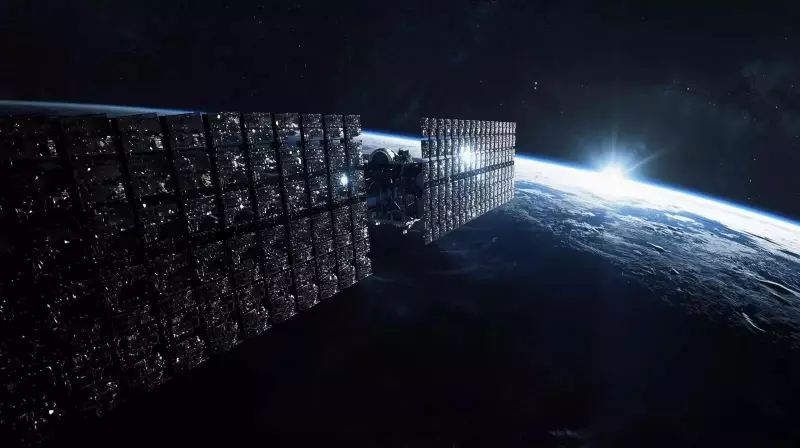
Reflect Orbital, the company behind the initiative, aims to make nights brighter by reflecting sunlight to Earth from space. The plan involves deploying thousands of large mirrors, each approximately 55 meters wide, into low Earth orbit. This could fundamentally change how darkness appears from the ground. The company states its objective is to eliminate nighttime constraints on solar power and essential infrastructure, with its first test satellite slated for launch in April 2026.
If fully implemented, the system might include up to 4,000 mirrors orbiting the planet. These satellites would travel in a sun-synchronous orbit, remaining near the boundary between day and night to continuously capture sunlight as Earth rotates below.

How the Space Mirrors Would Function
Unlike lasers or spotlights, the mirrors would not emit a concentrated beam. Sunlight is naturally dispersed across a broad area in space, and when reflected, it stays diffused. Consequently, the light reaching Earth would be softer than direct sunlight but still sufficiently bright to be perceptible.
Reflect Orbital contends this diffused glow could assist solar farms in generating power for extended durations or offer temporary illumination during emergencies and natural disasters. The firm argues that managed reflection might lessen dependence on fossil fuel backup systems at night.
Scientific and Environmental Apprehensions
Even before the test launch, the idea has sparked worry among astronomers, environmental groups, and sleep researchers. Their concerns are not exaggerated but pragmatic, focusing on light pollution, orbital clutter, and the potential erosion of natural darkness.
Astronomers highlight that bright satellites already disrupt ground-based astronomy. For instance, early Starlink satellites were visible to the naked eye, creating bright streaks in telescope images that can ruin observations or introduce noise that degrades scientific data. Wide-field observatories are especially at risk. Even with current satellite numbers, a significant portion of twilight images already show interference. Attempts to darken satellites have aided casual skywatchers but provided little relief for professional astronomy, where even faint trails are problematic.
Impact on Twilight Observations and Space Telescopes
Research indicates that satellites are most visible shortly after sunset and before sunrise, coinciding with crucial scientific activities like tracking near-Earth asteroids. Halting observations during these times avoids some disruption but leaves gaps that are hard to fill. Satellites at higher altitudes may remain visible longer, potentially causing constant background contamination instead of sporadic interference.
Attention has often centered on ground-based observatories, but space telescopes are not immune. Images from the Hubble Space Telescope already display satellite trails in a notable fraction of observations. Future missions, such as SPHEREx, Xuntian, and proposed European telescopes, operate in or near the same orbital ranges as many satellite constellations. Simulations suggest that if planned deployments proceed, most exposures from some space telescopes would contain at least one satellite trail, shifting from rare to routine obstruction.

Unique Challenges Posed by Orbiting Mirrors
Orbiting mirrors introduce a distinct concern. Unlike communication satellites, they are specifically designed to reflect light. Even small test systems could modify local night conditions, adding glare that worries astronomers. The brightness of satellite trails depends on factors like speed, size, orientation, and lighting conditions, with sunlit satellites leaving the most pronounced marks. Current understanding of satellite materials and shapes is limited, making accurate predictions difficult, but it is evident that even slight increases in reflective area can elevate background light levels in sensitive instruments.
In summary, while Reflect Orbital's space mirror plan offers innovative possibilities for energy and infrastructure, it arrives amid growing challenges in Earth's orbital environment. The practical objections from scientists underscore the need for careful consideration of how such technologies might affect darkness, scientific research, and the natural world.