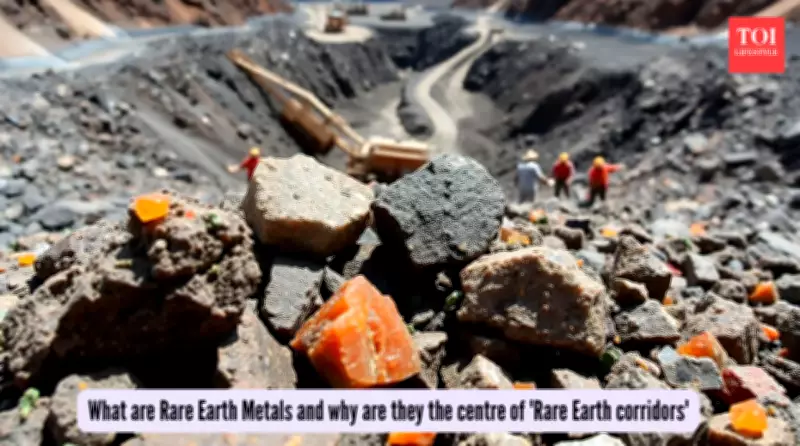
Beneath the surface of our daily lives lies a hidden world of essential minerals that power modern technology. While often overlooked, these resources are crucial for everything from electric vehicles and renewable energy to smartphones and defense systems. India's extensive coastline holds particularly valuable deposits of these materials, yet their potential remains largely untapped.
Budget 2026 Spotlights Rare Earth Corridors Initiative
During her Union Budget 2026 presentation, Finance Minister Nirmala Sitharaman unveiled a significant strategic move: the creation of dedicated rare earth corridors across four Indian states. This initiative marks a decisive shift toward developing domestic mineral resources rather than relying on foreign imports for critical materials.
The selected states—Odisha, Kerala, Andhra Pradesh, and Tamil Nadu—will host these specialized corridors designed to support comprehensive mineral development. The plan encompasses the entire value chain, from initial mining operations through processing facilities to advanced research centers and manufacturing units.

Understanding Rare Earth Metals and Their Importance
Rare earth elements comprise seventeen distinct metals with complex names like neodymium, dysprosium, cerium, and lanthanum. Despite their "rare" designation, these minerals are relatively abundant in nature but present significant extraction and purification challenges.
These metals serve as essential components in numerous advanced technologies:
- Electric vehicle motors and batteries
- Wind turbine generators
- Smartphone speakers and vibration motors
- Military equipment and defense systems
- Various electronics and industrial applications
Strategic Shift in Mineral Policy
The corridor concept represents more than just transportation infrastructure. These will function as integrated economic zones where mining operations, processing facilities, research laboratories, and manufacturing plants operate in close proximity. This clustering approach aims to create efficiency and synergy throughout the production chain.
The four selected states possess coastal sands rich in monazite, a primary source of rare earth elements. Historically, India has exported these raw materials at relatively low prices while missing opportunities in higher-value processing and manufacturing stages.
Building on Previous Initiatives
This new announcement extends the government's November 2025 initiative to establish domestic production of rare earth permanent magnets. That earlier scheme allocated substantial funding to support manufacturing plants capable of producing these magnets at scale.
The corridor strategy aims to ensure consistent domestic supply of raw materials, reducing dependence on international sources for industries including electric vehicles, renewable energy, and electronics manufacturing.
Geopolitical Context and Market Dynamics
The urgency behind this initiative stems largely from global supply chain vulnerabilities, particularly concerning China's dominant position in rare earth markets. China currently controls most global mining operations and nearly all processing capacity for these critical minerals.
Recent Chinese export restrictions on certain heavy rare earth elements disrupted international supply chains, causing price volatility and prompting nations worldwide to seek alternative sources. This situation has accelerated discussions about "friend-shoring"—diversifying supply chains among trusted partner nations.
India's Strategic Positioning
India's corridor initiative represents an ambitious attempt to move beyond basic mineral extraction toward establishing complete domestic processing and manufacturing capabilities. This approach mirrors strategies adopted by countries like Australia and Sweden, which are developing their own rare earth value chains.

Previous challenges included regulatory uncertainty and limited private investment, but Budget 2026 signals renewed commitment through substantial funding allocations. Combined with parallel investments in semiconductor and electronics manufacturing, this initiative demonstrates India's determination to participate in higher-value segments of global technology supply chains rather than remaining merely a raw material supplier.
The rare earth corridors initiative reflects a broader economic vision where India leverages its natural resources to build advanced manufacturing capabilities, reduce import dependence, and secure strategic positions in critical technology sectors.