India's AI Conversation Evolves: From Capability to Sustainable Deployment
India's artificial intelligence dialogue has undergone a fundamental transformation. The central question is no longer whether AI technology can function effectively. Instead, the focus has shifted to whether AI systems can maintain integrity, reliability, and trustworthiness once integrated into real-world environments: public service delivery mechanisms, enterprise operational workflows, and national-scale infrastructure projects. When artificial intelligence becomes deployable at massive scale, responsibility ceases to be a peripheral consideration and transforms into an intrinsic component of system performance.
The Mint Sovereign AI Summit 2026: A Working Session on Population-Scale AI
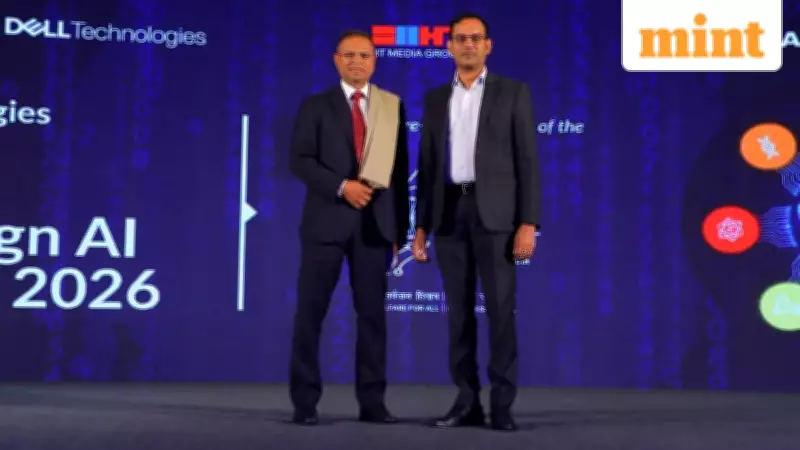
This evolution formed the foundational premise for the Mint Sovereign AI Summit 2026, presented by Dell Technologies, which convened in New Delhi on January 23rd. Functioning as an officially aligned pre-summit forum ahead of the broader India AI Impact Summit, the afternoon gathering was deliberately structured not as a technological showcase but as an intensive working session. Participants engaged in concentrated efforts to clarify what sovereign artificial intelligence truly requires when the ultimate ambition involves deployment at population scale across India's diverse landscape.
Alokesh Bhattacharya, Deputy Managing Editor at Mint, established the context during opening remarks by identifying the paradigm shift that has brought these operational questions to the forefront. "After navigating multiple cycles of technological promise followed by practical disappointment, something fundamentally changed during recent years," he observed. "AI became genuinely usable at scale. It transitioned from research laboratories into everyday life and work environments—into hospitals, classrooms, agricultural fields, corporate enterprises, public service delivery systems, government operations, and media platforms, particularly across social and digital channels. This transformation naturally presents enormous opportunities. However, it simultaneously raises more complex and challenging questions."

These more challenging questions—centering on trust establishment, governance frameworks, inclusive design, and operational control—shaped the remainder of the day's discussions and working sessions.
Sovereign AI as Execution Challenge, Not Mere Aspiration
During the welcome keynote address, Manish Gupta, President and Managing Director at Dell Technologies India, framed sovereign artificial intelligence as a rigorous test of execution capability rather than mere intent. The central question becomes whether India can successfully convert its current technological momentum into sustainable systems that endure once exposed to real-world complexities and operational pressures. His argument rested on a straightforward premise: if AI is to be authentically designed for India's unique realities, it must clear a substantially higher bar than experimental or pilot-stage implementations.
"The objective is to transform India's AI momentum into something durable, into something genuinely scalable and specifically designed for India's distinctive realities," Gupta emphasized. "When we articulate the vision of AI by India, for India, it must embody three particular elements. First and foremost, it must function effectively at India's characteristic scale."
He stressed that this scale cannot be partial or selective. Systems must operate reliably across population-sized deployments, not merely within controlled laboratory environments. However, scale alone proves insufficient. The second critical requirement involves trust—not as a marketing slogan but as an architectural principle embedded directly into infrastructure design and foundational model development. This necessitates clear accountability mechanisms for data handling procedures, responsible model utilization practices, and system security protocols that produce outcomes reliably over extended periods.

The third requirement, he contended, is genuine inclusion. India's user base does not represent a single, homogeneous segment. AI systems must function effectively across multiple languages, varying access conditions, and uneven levels of digital literacy if they are to operate as true public capabilities rather than gated advantages available only to certain segments.
"If artificial intelligence cannot meet people where they actually are, it will fail to deliver authentic public capability. It will persist as a privilege accessible only to some," Gupta cautioned. "From Dell Technologies' perspective, this is precisely where the conversation about sovereign AI becomes tangible and operational. Sovereignty does not merely concern where a model is developed. It concerns whether an organization or nation can operate AI systems with genuine control, with resilience, and with confidence."
This definition—sovereignty as operational control and systemic resilience—became a recurring reference point that resonated throughout subsequent sessions and discussions.
Connecting Sovereign AI to India's Public Digital Infrastructure
Akhil Kumar, Managing Director and Chief Executive Officer of Digital India Corporation (MeitY), utilized a special address to connect sovereign artificial intelligence with institutional frameworks already under development: Digital Public Infrastructure initiatives, the IndiaAI Mission, and governance structures being constructed around data management and deployment protocols.
He framed sovereign AI as continuous with national self-reliance thinking, shaped by global supply chain disruptions and geopolitical volatility, while simultaneously resisting the notion that "sovereign" implies closed or isolationist systems. "When we discuss anything sovereign, that does not imply exclusivity for Indian citizens alone. It will serve the global community. It will represent a global public good that remains inclusive and universally accessible," Kumar clarified.
This distinction proved significant because it reframed the day's central premise: sovereign AI does not represent an inward turn. Rather, it constitutes a capability development strategy—built specifically for Indian realities but exportable precisely because it functions effectively under constrained conditions.
Identifying System Vulnerabilities When AI Meets Real Scale
The plenary conversation titled "From Adoption to Advantage: Scaling AI in India with Trust, Speed and Inclusion" represented where the summit transitioned from conceptual framing to practical friction points. A shared diagnosis emerged repeatedly: model capability no longer represents the primary constraint. The more significant limitation involves whether existing systems can absorb artificial intelligence integration without compromising reliability, eroding trust, or losing operational control.
Deepak Bagla, Mission Director of the Atal Innovation Mission at NITI Aayog, Government of India, argued that India's distinctive advantage lies in adoption velocity: when systems function effectively, the country scales them rapidly. "I believe India's greatest strength, and that of every Indian individual, involves the capacity to adopt and adapt to new technologies. We adopt and we adapt. Consider real-time digital transactions. In 2021, India processed 41% of global transactions. By 2024, that figure reached 188 billion. India moves with exceptional speed," he noted. However, he clarified that speed alone cannot guarantee sustainable advantage. It only compounds value when innovation pathways remain broad-based rather than concentrated within limited pockets.
Suresh Khadakbhavi, CEO of Digiyatra, provided a concrete example of what "trust as design" resembles when deployed at scale. Digiyatra's architectural approach, he explained, completely avoids centralized data accumulation. "We do not possess any data from our 20 million user base—passenger information resides entirely on individual phones. If we maintain no centralized data repository, what exactly would hackers target? To access personally identifiable information through Digiyatra, someone would need to hack 20 million individual phones because that's where credentials are stored!" The crucial point extended beyond privacy to governance: designing systems so that failure modes remain contained rather than amplified.
Tarun Dua, Founder of E2E Networks Ltd., brought infrastructure considerations into clearer view: sovereign AI, he argued, must be buildable by learners and developers, not merely consumed by large enterprises. "AI labs as a service function as a thin layer we've created, enabling any learner or developer to launch Jupyter notebooks and commence AI learning rapidly without struggling for GPU access or constructing workstations," he described. His broader principle emphasized that compute strategy must originate from actual usage realities. "AI computing does not concern what computers require. AI computing entirely concerns what users need."
Kapil Bardeja, CEO and Founder of Vehant Technologies, spoke from the perspective of AI systems deployed into environments that cannot tolerate fragility. At Vehant's operational scale, AI is evaluated by throughput and uptime metrics, not theoretical elegance. "The architecture designed for, say, a 5,000-camera system presents entirely different challenges when scaled to 100,000 cameras or beyond. Architectural scalability becomes profoundly challenging. Therefore, we ensure system complexity is addressed during the design phase itself," he explained. His point was succinct: once AI systems reach this deployment level, architectural shortcuts taken initially become significant liabilities later.
Neeraj Arora, Field CTO for Conglomerates at Dell Technologies, distilled the systemic challenge into a single constraint spanning both technology and governance domains. "For sovereign AI, from a technological perspective, the foremost priority involves considering sovereign-controlled data pipelines. Data cannot flow like an uncontrolled river; it must be properly channeled and managed," he asserted. At scale, sovereignty is exercised through control over data movement patterns, where accumulation is permitted, and how tightly data is governed as systems evolve.
Collectively, the plenary session clarified one essential reality: the moment artificial intelligence transitions from pilot projects to production environments, progress ceases to be driven solely by model advancements. The genuine work becomes orchestration—aligning stakeholders, data streams, infrastructure components, and governance guardrails so systems can scale without compromising trust.
Lessons from Digital Public Infrastructure on Trust at Scale
The fireside conversation titled "Building Sovereign AI: What Happens Next" brought discussions closer to national infrastructure core, using the Unique Identification Authority of India (UIDAI) as a reference point for what trusted scale resembles in practice.
Bhuvnesh Kumar, CEO of UIDAI, challenged assumptions that population-scale systems necessitate expansive data capture. Aadhaar, he argued, achieves massive reach while maintaining deliberately lean data retention. "All 140 crore Indians possess an Aadhaar identity. However, regarding data management, we operate as an exceptionally lean organization. Examining your Aadhaar reveals it is generated based on biometrics captured once for generation and deduplication purposes, then secured permanently. Beyond that, only four fields exist: name, date of birth, gender, and address. Mobile numbers and email addresses remain optional. That constitutes our entire data holding," he detailed.
The implication, though subtle, proved significant. At scale, trust is often achieved not by collecting more information but by limiting what must be collected, securing it rigorously, and maintaining system intelligibility for those who depend upon it.
During the same session, Manish Gupta returned to operational definitions of sovereign AI, outlining underlying conditions required for durability. "What represent sovereign AI's key tenets? Infrastructure and data must reside within national borders—all elements must remain within sovereignty. Second, alignment with local ethos, values, and particularly local laws and governance frameworks rather than default global governance," he specified.
He connected these tenets directly to execution risk, arguing that sovereign AI cannot be constructed upon outdated foundations. "Legacy systems will not support requirements when everything must operate on unified platforms." Modernizing digital backbones and clarifying governance structures early, he suggested, enables systems to scale without repeated resets once dependencies solidify.
Together, the fireside conversation sharpened a theme developing throughout the day: sovereignty concerns not only scale or control but sequencing. Early choices regarding data minimization, infrastructure modernization, and governance alignment determine whether AI systems can accelerate later or stall under their own accumulated weight.
Sovereign AI as Operational Discipline and Guarantee
While Masterclass Part I focused on infrastructure decisions, Masterclass Part II addressed a different question: what operational capabilities are required once AI systems are deployed, evolving, and becoming relied upon.
Rishi Bal, CEO of BharatGen, framed sovereign AI not as a label but as a set of guarantees that only matter over extended durations. "What constitutes sovereignty? Sovereignty represents the guarantee that AI will be available whenever needed. Sovereignty means understanding everything incorporated into your AI systems. Third, possessing the guarantee that you can service your own AI independently," he defined. In this context, sovereignty isn't tested at launch but when systems require maintenance, upgrades, audits, or adaptation to new conditions.
This emphasis on serviceability led directly to capability questions. For Rishi Bal, sovereign AI cannot be sustained if a country remains dependent on external expertise to comprehend or modify its own systems. "We're not merely interested in creating AI; we're interested in creating AI creators," he stated. "Because when these hundred students graduate from respective colleges, they will already possess training in AI creation methodologies."
The point extended beyond workforce development for its own sake to continuity concerns. Systems can only remain transparent and governable if sufficient individuals within the ecosystem understand how they were constructed and how they behave operationally.
The masterclass reinforced that at scale, trust is not static. It must be actively operated—through system availability, visibility into components, and ability to service AI without external dependence. These guarantees rest equally on human capability as on infrastructure and policy frameworks.
Transforming AI Momentum into Sustainable Methodology
The most valuable outcome of the afternoon summit did not materialize as a singular announcement but rather as a clearer, more disciplined understanding of what sovereign AI genuinely demands once ambition yields to execution.
The opening premise held firm: artificial intelligence is now usable at scale, fundamentally altering the challenge's nature. By the day's conclusion, conversations had narrowed into more exacting territory. Sovereign AI does not represent a model milestone or policy declaration. It constitutes an operating discipline—control over data movement, infrastructure choices matching real workloads, governance embedded sufficiently early to accelerate rather than stall progress, and inclusion treated as design constraint rather than downstream fix.
What the summit rendered visible is that these choices are already being made, whether explicitly or by default. Systems are being deployed. Dependencies are forming. Architectural decisions are hardening into long-term pathways.
If India's sovereign AI narrative is to be written as genuine capability rather than aspiration, the decisive factor will involve not momentum alone but method. Alignment between public digital rails and enterprise execution. Balance between speed and trust. Harmony between the scale India can achieve—and the systems it can sustain once arriving there.