

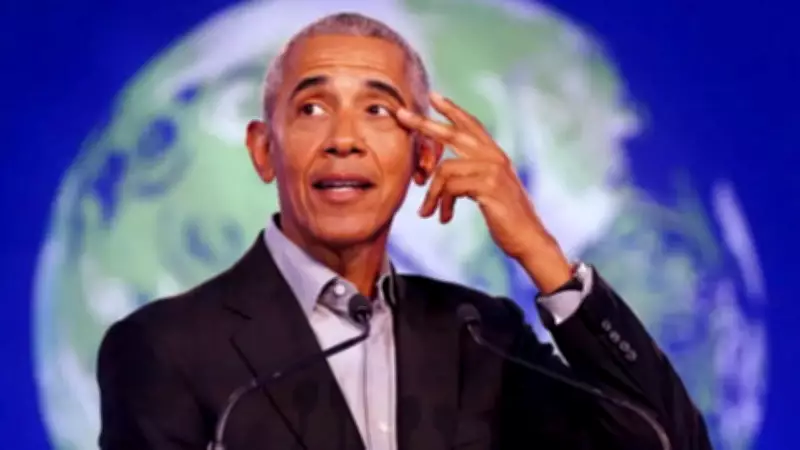
A quote often attributed to Barack Obama frequently appears in leadership articles, interviews, and motivational content, particularly in discussions about setbacks and recovery. It is not framed as dramatic or abstract but rather as a reflection of experience, where failure is treated as a natural part of working or trying new things. Obama has often spoken about reflection and learning in public life, and this quote aligns with that direction. The focus is not on failure itself but on what follows after it, emphasizing that what matters is not the mistake in isolation but the adjustment that comes after initial reactions settle and thinking clears.
Quote of the Day by Barack Obama
"You can't let your failures define you – you have to let them teach you. You have to let them show you what to do differently next time."
Understanding the Meaning Behind the Quote
The central idea is straightforward: failure is not a final label on a person but an event that can either halt progress or contribute to it, depending on how it is handled. The quote presents a clear dichotomy in how experience is framed. On one side, failure becomes something that sticks to identity and limits confidence. On the other, it becomes material to work with, carrying information about what went wrong. The difference lies not in the event itself but in the interpretation afterwards.

This shift is crucial because it moves attention from judgment to adjustment. The quote assumes that mistakes are unavoidable in any action-oriented process. What distinguishes outcomes is what people change after recognizing those mistakes clearly.
Failure as a Normal Part of Repetition in Real Life
In practice, most endeavors do not succeed perfectly on the first attempt. Work projects change direction, plans require revision, and decisions are often adjusted after results become apparent. Failure, in this sense, is not unusual—it is part of the process of repetition. The quote acknowledges this reality without treating failure as exceptional; it belongs to the process of trying. What matters more is what happens next. If nothing changes after a mistake, the same outcome tends to repeat. If something is adjusted, even slightly, the next attempt often yields different results. This simple cycle is what the quote points toward without technical jargon.
The Learning Moment Usually Comes After the Reaction
When something goes wrong, the initial response is rarely reflection. It is more immediate—emotional, sometimes quick, sometimes quiet, but rarely with full clarity in the moment. The quote indirectly acknowledges this gap. It does not demand instant insight but points to what happens after the initial reaction fades, making the situation easier to analyze. That is when details start to separate: what actually failed, what part worked, and what needs to change become more visible. Learning resides in that space, not inside the moment of failure itself but slightly after it.
Identity Is Shaped More by Response Than Outcome
One of the subtler ideas in the quote is how identity forms around experience. A single failure does not have to define ability, but it can if treated as final. If a person stops at failure, it begins to feel like a limit. If they move past it and adjust, it becomes part of their experience instead. The same event leads to a different internal outcome depending on the response. Over time, this difference accumulates. People who treat setbacks as material for adjustment tend to build a different relationship with risk. They are not free from failure but are less controlled by it.
Work Environments Rely on This Kind of Adjustment
In most work settings, especially those involving problem-solving, outcomes are rarely perfect on the first attempt. Things are tested, reviewed, and corrected—a normal pattern rather than an exception. The idea in the quote fits into this structure. Progress often depends less on avoiding mistakes and more on how quickly those mistakes are recognized and adjusted. Teams and individuals that function well in such environments are usually not those that never fail but those that change direction when information shows something is not working.

The Quote Is About Direction, Not Positivity
It is easy to read this statement as general motivation, but the tone is more practical than uplifting. It does not claim failure is good or desirable but says failure contains useful direction if not ignored. This distinction matters. The focus is not on making failure feel positive but on preventing it from becoming final. There is no suggestion that learning is automatic; it requires attention after the fact. Without that attention, the same patterns tend to repeat.
Why This Idea Stays Relevant in Everyday Life
This way of thinking appears in both small and large decisions. In work, education, and personal planning, most progress happens through adjustment rather than perfect execution. A decision that does not work often leads to a revised version. A plan that fails once is usually reshaped and tried again in a different form. Over time, this process builds experience. The quote reflects that pattern simply, without describing a system, but by pointing to what people already see when looking back at their own decisions.
Other Famous Quotes by Barack Obama
- "The best way to not feel hopeless is to get up and do something."
- "Change will not come if we wait for some other person or some other time."
- "We are the ones we've been waiting for."
- "If you're walking down the right path and you're willing to keep walking, you'll make progress."
- "The future rewards those who press on."
About the Author: TOI World Desk. At TOI World Desk, our dedicated team of seasoned journalists and passionate writers tirelessly sifts through global events to bring you the latest news and diverse perspectives round the clock. With an unwavering commitment to accuracy, depth, and timeliness, we strive to keep you informed about the ever-evolving world, delivering a nuanced understanding of international affairs to our readers.





