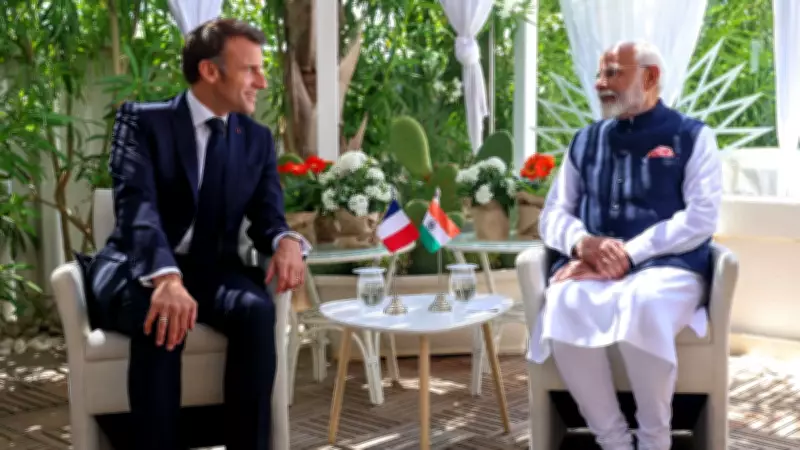
Prime Minister Narendra Modi's visit to Nice marks a significant milestone in the enduring strategic partnership between India and France, as both nations seek to deepen their long-standing ties. The relationship, rooted in shared values and mutual interests, has evolved into a comprehensive alliance spanning defence, nuclear energy, space exploration, and emerging technologies.
Historical Foundation
India and France have maintained close relations since India's independence in 1947. The landmark Strategic Partnership, launched on 26 January 1998, was a historic first—India's first strategic partnership with a Western nation and France's first with a non-Western country. This framework reflects their shared vision of enhancing strategic autonomy through deep bilateral cooperation.
Core Pillars of Cooperation
The partnership rests on strong foundations in defence and security, civil nuclear collaboration, and space. Over the years, it has broadened significantly to include artificial intelligence, science and technology, innovation, blue economy, environment, renewable energy, sustainable development, and trilateral cooperation, with a strong focus on the Indo-Pacific region.

Defence Partnership Deepens
India and France share a robust defence partnership that has steadily expanded across military, industrial, and strategic domains, with a growing emphasis on Atmanirbhar Bharat (self-reliant India). The sixth Annual Defence Dialogue, co-chaired by Defence Minister Rajnath Singh and French Armed Forces Minister Catherine Vautrin in Bengaluru on 17 February 2026, renewed the 10-year defence cooperation agreement and announced reciprocal officer deployments at each other's army establishments—signaling deeper institutional integration.
High-level military exchanges have been frequent, with visits by senior chiefs from both sides, including the French Navy Chief's participation in the Indian Ocean Naval Symposium and the Indian Air Chief's visit to France in June 2026. Major milestones include the commissioning of the sixth Scorpene submarine in January 2025 and the delivery of 36 Rafale jets in 2022. Further, the 2025 agreement for 26 Rafale-M aircraft for the Indian Navy incorporates technology transfer, indigenous weapons integration, and establishment of fuselage production and MRO facilities in India.
Industrial Cooperation Accelerates
Industrial cooperation has accelerated, highlighted by Safran's Hyderabad-based deep-level aircraft engine MRO centre inaugurated in November 2025, capable of servicing 300 LEAP engines annually. Safran has also announced an M88 engine MRO shop and partnered with Bharat Electronics Limited to manufacture Hammer air-to-surface weapons. The M88 engine is used on the Rafale fighter aircraft. Additionally, the H125 helicopter assembly line was inaugurated in Karnataka in February 2026.
Operational Cooperation and Exercises
Operational cooperation between the armed forces of the two nations is equally strong. The three services of both countries hold individual exercises with each other annually: Exercise Shakti for the army, Exercise Garuda for the air forces, and Exercise Varuna for the navies. Over the years, these wargames have grown in scale and are complemented by participation in multilateral drills like Milan and La Perouse. Maritime cooperation is further reinforced through regular port calls. India's participation in France's AsterX space exercises reflects expanding defence-space collaboration.
Future Outlook
The partnership continues to evolve, with both nations committed to deepening cooperation in strategic autonomy, defence industrialisation, and emerging technologies. PM Modi's visit to Nice underscores the shared commitment to a free, open, and inclusive Indo-Pacific region and the desire to build a resilient and technologically advanced partnership for the 21st century.