

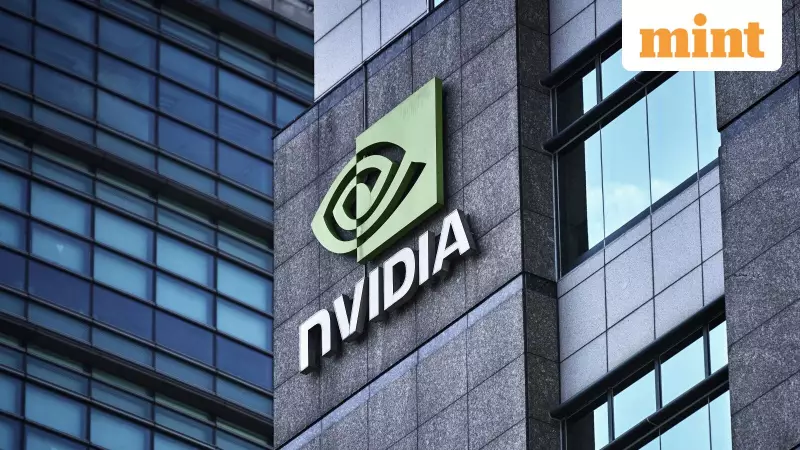
American chipmaking powerhouse Nvidia Corporation has formally challenged investor Michael Burry's claims comparing the current artificial intelligence investment boom to the dot-com bubble of the 1990s. In a detailed seven-page memo response obtained by CNBC, the technology giant refuted multiple allegations made by the famous 'Big Short' investor.
Nvidia's Detailed Rebuttal to Burry's Claims
According to reports, Nvidia distributed its comprehensive response to Wall Street analysts to counter Burry's criticisms regarding the company's stock-based compensation practices and the depreciation timeline of its GPU chips. The exchange highlights the growing debate about whether the AI sector is experiencing unsustainable growth similar to the technology bubble that burst in the early 2000s.
Michael Burry, who gained fame for accurately predicting and profiting from the 2008 housing market collapse, has turned his attention to what he perceives as another market bubble forming around artificial intelligence investments. After dissolving his hedge fund Scion Asset Management, Burry has been vocal about his concerns regarding AI stock valuations.

The Stock Compensation Dispute
Nvidia specifically addressed Burry's claim that the company had repurchased $112.5 billion worth of shares since 2018. The chipmaker clarified that the actual figure was $91 billion, stating that Burry had incorrectly included Restricted Stock Units (RSUs) in his calculations.
"NVIDIA repurchased $91B shares since 2018, not $112.5B; Mr. Burry appears to have incorrectly included RSU taxes," the company stated in its memo. Nvidia further emphasized that employee equity grants should not be combined with the performance of its repurchase program, noting that its compensation practices align with industry standards.
GPU Depreciation Timeline Debate
Another key point of contention involved the depreciation period for Nvidia's GPU chips. Burry had suggested these chips have shorter useful lives, but Nvidia countered that customers typically depreciate GPUs over four to six years based on real-world usage patterns and longevity.
The company provided evidence that older GPU models like the A100s, released in 2020, continue to operate at high utilization rates and retain significant economic value beyond the two-to-three year lifespan suggested by critics. This challenges the notion that AI hardware becomes obsolete quickly.
Historical Parallels: Nvidia vs Cisco
Burry drew direct comparisons between Nvidia and Cisco Systems, a company that reached extraordinary valuations during the dot-com bubble before collapsing by more than 85% when the bubble burst. "I stand by my analysis. I am not claiming Nvidia is Enron. It is clearly Cisco," Burry stated in his Substack post referenced in the CNBC report.
During the late 1990s, Cisco became one of the world's most valuable companies by manufacturing essential internet infrastructure equipment. However, when the technology bubble burst, the company's stock price plummeted dramatically, similar to many other tech companies of that era.
Nvidia also rejected Burry's allegation that the company uses "circular financing," stating that its strategic investments represent only a small fraction of revenue and that AI startups primarily raise capital from external investors rather than depending on Nvidia's financing.
The Broader AI Investment Context
This debate occurs amid growing concerns that Nvidia's massive growth is fueling an AI investment bubble. Companies worldwide are pouring billions into artificial intelligence development, with Nvidia's chips becoming the essential hardware powering this revolution.
Interestingly, Nvidia CEO Jensen Huang recently commented that the stock market placed the company in a "no-win" situation regarding its July-September quarter results. Huang noted that if Nvidia delivered poor results, it would be seen as evidence of an AI bubble, while strong results would be interpreted as fueling the bubble further.

The ongoing exchange between one of Wall Street's most famous contrarian investors and the world's leading AI chip manufacturer underscores the significant divide in how experts view the sustainability of current artificial intelligence investments and whether history might be repeating itself in the technology sector.





