Nvidia CEO Jensen Huang Declares Artificial General Intelligence Has Arrived
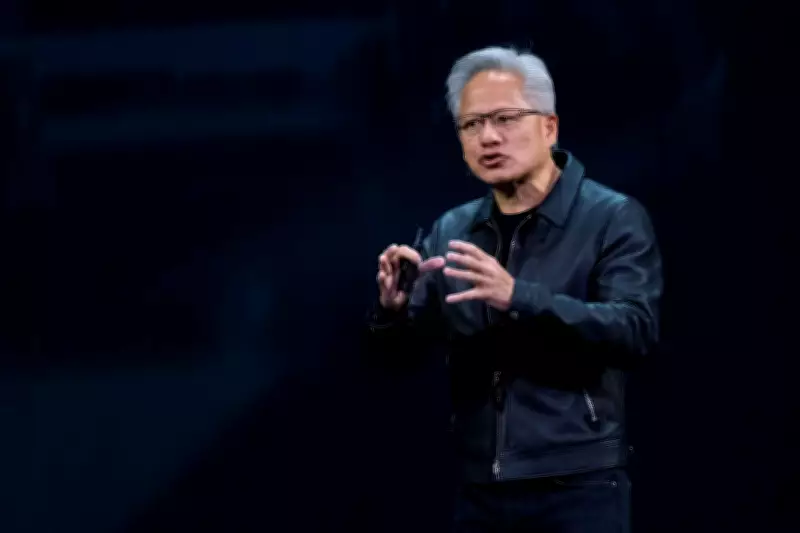
In a statement that has sent shockwaves through the technology sector, Nvidia CEO Jensen Huang has claimed that Artificial General Intelligence (AGI) is no longer a future prospect but a present reality. Speaking on a recent podcast episode hosted by Lex Fridman, Huang made the bold declaration, stating, "I think we've achieved AGI."
Defining the Milestone: What Is AGI?
Artificial General Intelligence refers to AI systems that match or surpass human intelligence across a wide range of cognitive tasks. This milestone has long been described by OpenAI CEO Sam Altman as his company's "biggest goal." During the podcast, Fridman defined AGI as an AI system capable of "essentially doing your job," such as starting, growing, and running a billion-dollar tech company.
When asked if AGI was five, ten, or twenty years away, Huang responded definitively: "I think it's now." His statement has immediately sparked both excitement and intense debate across the global tech community, raising fundamental questions about the current state of AI development.

Evidence and Limitations: Huang's Perspective
Explaining his viewpoint, Huang pointed to the viral success of OpenClaw, an open-source AI agent platform, as concrete evidence of AGI's arrival. He noted that people are already utilizing AI agents for diverse and complex tasks, ranging from creating digital influencers to managing sophisticated social applications.
However, Huang tempered his claim by acknowledging significant limitations. He stated, "The odds of 100,000 of those agents building Nvidia is zero percent." This admission highlights that while AI systems may demonstrate remarkable capabilities, they still fall short in certain areas of human-like creativity and organizational leadership.
Broader Implications for the AI Industry
Huang's comments underscore both the rapid progress in generative AI technologies and the ongoing uncertainty surrounding how to define intelligence itself. For Altman and OpenAI, this claim emphasizes how close the industry may be to realizing what was once considered a distant, almost science-fiction ambition.
Whether AGI has truly been achieved remains hotly debated among experts. Some argue that current AI systems, while advanced, still lack genuine understanding and consciousness, while others believe Huang's assessment marks a pivotal turning point in technological history.
Huang's Message to Nvidia Engineers: Embrace AI Tools
In related developments, a recent online report revealed that Huang has delivered a strong message to Nvidia's engineering team. He stated that engineers who do not make extensive use of AI tools are not being productive. Huang expressed concern about highly paid engineers not utilizing significant computational resources.
He presented a thought experiment: "Let's say you have a software engineer or AI researcher, and you pay them $500,000 a year. At the end of the year, I'm going to ask him how much did you spend in tokens. And [if] that person said $5,000, I will go ape something else. If that $500,000 engineer did not consume at least $250,000 worth of tokens, I am going to be deeply alarmed."
Huang compared avoiding AI tools to rejecting standard industry software, suggesting it would be akin to a chip designer choosing paper and pencil over modern computer-aided design tools. This stance reflects his belief that AI integration is essential for maintaining competitive advantage and innovation in today's technology landscape.
The Ongoing Debate and Future Outlook
The declaration about AGI's arrival continues to generate discussion about:
- The true definition and benchmarks for Artificial General Intelligence
- The practical applications and limitations of current AI systems
- The ethical and societal implications of advanced AI development
- The role of human engineers in an increasingly AI-driven world
As the technology community processes Huang's statements, one thing remains clear: the boundaries of artificial intelligence are being pushed further than ever before, with significant consequences for industries, economies, and daily life worldwide.