Brazilian Man's 105-Year-Old Clay House Defies Modernity in Hidrolândia
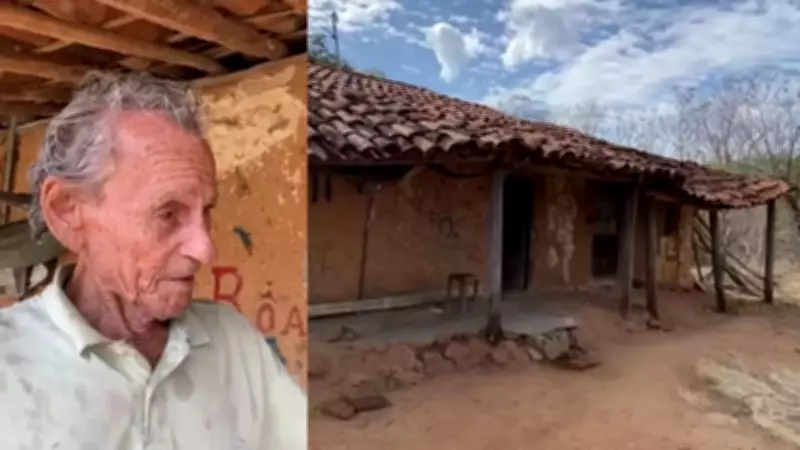
In the serene countryside of Hidrolândia, Brazil, life unfolds at a distinctly different pace. Francisco Matías, affectionately known locally as Seu Chiquinho, is an 80-year-old resident who has consciously chosen a path that many in today's fast-paced world would deem unconventional. He resides in a remarkable clay house constructed by his father in 1920, a structure that has stood resiliently for 105 years, embodying a legacy of simplicity and endurance.
A Testament to Traditional Architecture
The clay house itself is a marvel of traditional building techniques. It features thick clay walls and rustic wooden beams, creating an atmosphere of profound calm that envelops the space. Unlike modern constructions, it lacks contemporary reinforcements, yet it has withstood the test of time through careful maintenance. Experts note that such traditional buildings can endure for centuries when properly cared for, and Francisco has diligently upheld this practice. The house remains naturally cool even during Brazil's hottest months, a design feature his father likely incorporated intentionally. Every element, from the walls to the wooden shutters, carries layers of memory and history.
A Life of Deliberate Choices
Francisco's journey has not been one of isolation. He spent significant periods in Rio de Janeiro, immersed in the urban chaos of traffic, crowds, and constant noise. However, he ultimately returned to Hidrolândia, to the ancestral home where he grew up and the familiar land he knows intimately. This return represents a deliberate step away from what society often labels as progress, embracing instead the values of quietude, community, and the rhythmic pace of rural existence.

Daily Rhythms and Community Bonds
Daily life for Francisco is characterized by quiet simplicity and comforting routines. He draws water weekly from a nearby well, storing it in traditional clay pots, and cooks on a wood-burning stove, which he believes enhances the flavor of meals despite taking longer. While experts might highlight the physical demands of this lifestyle, it is also reportedly deeply connected to nature and conducive to mental well-being. Francisco naturally embodies this balance without conscious effort.
Although he lives alone, Seu Chiquinho is far from isolated. Locals frequently visit his home for impromptu chats, reinforcing a strong sense of community. "There's always someone who comes by," he remarks. These unscheduled interactions foster genuine human connections, offering a richness often missing in today's digital-dominated world. The house regularly echoes with laughter, conversation, and simple companionship, keeping it vibrantly alive.
Preserving Heritage in a Modernizing World
This clay house is more than just a dwelling; it is a living testament to history and heritage. Francisco expresses a desire to restore it carefully, ensuring that any renovations do not compromise its original charm. He is acutely aware that excessive changes could erase the very essence that makes the house special. In a country like Brazil, which is rapidly modernizing with expanding cities and widespread technology, preserving such traditions is a significant challenge. As people move on, homes are replaced, and customs fade, Francisco's commitment stands as a poignant reminder of the value of continuity.
For now, the 105-year-old clay house endures, symbolizing resilience, history, and a chosen way of life that prioritizes simplicity over speed, and community over convenience.