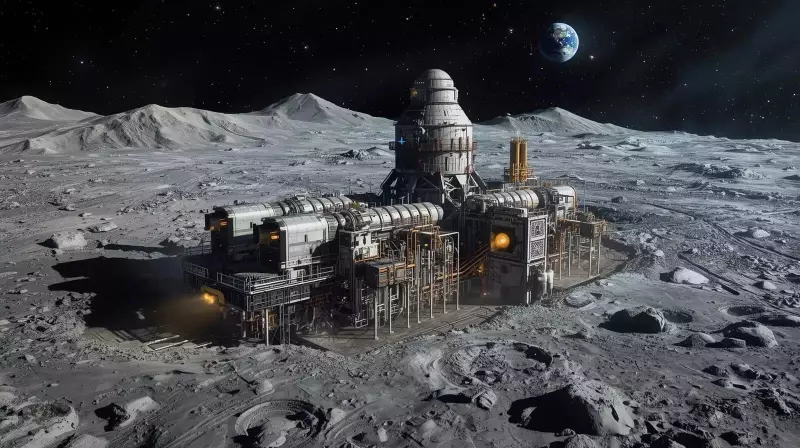
NASA and the United States Department of Energy announced a renewed partnership on Tuesday. The agencies confirmed they are continuing their joint efforts to research and develop a fission surface power system for use on the Moon. A newly signed memorandum of understanding formalises this collaboration.
Lunar Reactor Goal Set for 2030
The agreement specifically supports the development of a lunar surface reactor. Officials stated the goal is deployment by 2030. The announcement came without detailed technical diagrams or specific timelines. Instead, it focused on the broader partnership renewal.
NASA Administrator Jared Isaacman emphasised the importance of this work. He said the national space policy commits the United States to building infrastructure on the Moon. These investments are needed for future missions to Mars and beyond. Isaacman stated that achieving this future requires the use of nuclear power.

Power for Long-Term Missions
The planned fission surface power system would provide safe, efficient, and plentiful electrical power. The system is expected to operate for years without refuelling. This capability is essential for sustained lunar missions.
The agencies emphasised that the reactor would provide continuous power. It would operate regardless of sunlight or temperature conditions on the lunar surface. No further operational details were provided in the announcement.
Artemis and Mars Connections
The lunar reactor project is positioned within NASA's Artemis campaign. The agency stated that the effort also supports future missions to Mars. The announcement framed the reactor as part of the infrastructure required to return to the Moon and remain there.
NASA's Artemis campaign and future Mars missions tie this work together. The focus remains on power generation that can support long-term missions beyond Earth.
Building on Five Decades of Collaboration
The memorandum of understanding reinforces a partnership that has existed for more than five decades. NASA and the Department of Energy have worked together previously on space exploration, technology development, and national security efforts.
This agreement outlines cooperation in research, development, authorisation, and readiness for the launch of a lunar surface reactor. According to the agencies, the agreement aligns with President Trump's national space policy.
America First Space Policy Framework
US Secretary of Energy Chris Wright described the agreement as a continuation of historical collaboration in American science and innovation. He referenced past efforts such as the Manhattan Project and the Apollo Mission as examples of national leadership.
Wright said the department is proud to work with NASA and the commercial space industry on developing the lunar reactor. He described the project as a major technical achievement in nuclear energy and space exploration.
The agencies stated that the joint effort builds on more than 50 years of collaboration. The announcement concluded by reaffirming shared goals around exploration, technology development, and national security.
The national space policy includes plans to deploy nuclear reactors on the Moon and in orbit. The stated objective is to ensure the United States leads in space exploration and commerce. The document does not outline specific technical milestones but confirms shared responsibilities between the two agencies.
Officials described the effort as part of a broader national space policy. The agencies presented the announcement as a continuation rather than a departure from previous work.