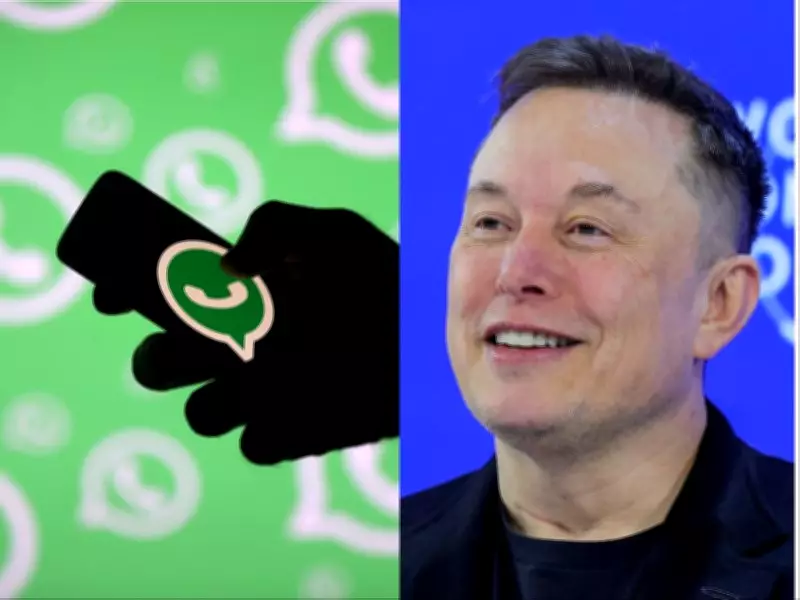
Tech Titans Clash Over WhatsApp's Trustworthiness
In a dramatic escalation of the ongoing messaging app wars, billionaire entrepreneur Elon Musk and Telegram CEO Pavel Durov have launched a scathing public attack on the trustworthiness of Meta's WhatsApp. The criticism, which centers on privacy and security concerns, has drawn a swift and forceful rebuttal from Meta, with the company dismissing the claims as "absurd" and defending its platform's integrity.
High-Profile Accusations from Musk and Durov
Elon Musk, the CEO of Tesla and SpaceX and owner of X (formerly Twitter), took to his social media platform to express deep skepticism about WhatsApp's security protocols. Musk specifically questioned the reliability of the app's end-to-end encryption, suggesting that users should be wary of potential vulnerabilities or backdoor access that could compromise private communications.
Simultaneously, Pavel Durov, the founder and CEO of the rival messaging service Telegram, echoed and amplified these concerns. Durov has long positioned Telegram as a more secure and privacy-focused alternative to WhatsApp, and he used this opportunity to reiterate his platform's commitment to user data protection, implicitly casting doubt on Meta's practices.

Meta's Forceful Defense and Counterattack
Meta, the parent company of WhatsApp, responded aggressively to the allegations. A company spokesperson issued a statement categorically rejecting the criticisms, labeling them as "absurd" and "baseless." The spokesperson emphasized that WhatsApp employs robust end-to-end encryption by default for all personal messages and calls, ensuring that only the sender and recipient can access the content.
Meta further argued that these attacks are commercially motivated, aimed at undermining a competitor in a highly contested market. The company pointed to its long-standing transparency reports and independent security audits as evidence of its commitment to user privacy, challenging the accusers to provide concrete proof for their claims.
Broader Implications for User Trust and Market Competition
This public feud highlights the intense competition in the global messaging app landscape, where trust and security are paramount selling points. With billions of users worldwide, WhatsApp's reputation is critical to Meta's business, making such high-profile accusations a significant threat.
The controversy also raises important questions for consumers about digital privacy. As users become increasingly aware of data security issues, the debate between tech leaders could influence public perception and app adoption trends. Industry analysts suggest that while encryption standards are a technical matter, the battle is equally about narrative and brand loyalty in a crowded marketplace.
Ultimately, this clash underscores the ongoing tension between major tech platforms over user trust, with security claims becoming a key battleground for market dominance. The outcome may hinge on independent verification and user experiences, as both sides vie to convince the public of their superior commitment to privacy.