Elon Musk Advocates for Government-Backed 'Universal High Income' Amid AI Job Concerns
In a significant development highlighting the economic implications of artificial intelligence, tech billionaire Elon Musk has reignited discussions about a government-supported income system to mitigate potential job losses caused by AI and robotics. Musk's proposal, which he terms "Universal HIGH INCOME," involves federal government checks to assist individuals facing unemployment due to technological advancements.
Musk's Vision for Economic Stability in the AI Era
Elon Musk elaborated on his concept through a recent post on X, the social media platform formerly known as Twitter. He argued that as AI and robotics enhance productivity, the production of goods and services could outpace the growth of the money supply, making such government payments financially sustainable without triggering inflation.
"Universal HIGH INCOME via checks issued by the Federal government is the best way to deal with unemployment caused by AI," Musk wrote. He further explained, "AI/robotics will produce goods & services far in excess of the increase in the money supply, so there will not be inflation."

This marks a refinement of Musk's long-standing support for Universal Basic Income (UBI), now rebranded as "universal high income" to reflect a scenario where AI could generate unprecedented economic prosperity.
Rare Alignment with OpenAI's Sam Altman
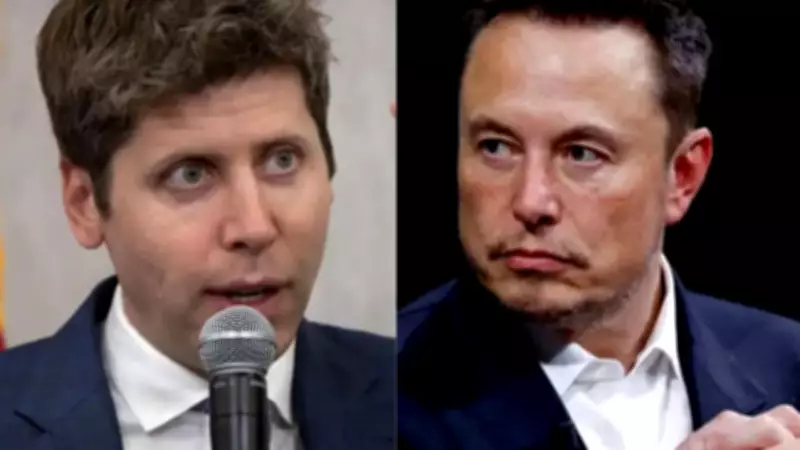
Interestingly, Musk's comments emerge shortly after OpenAI, led by CEO Sam Altman, released a comprehensive policy proposal addressing the societal impacts of advanced AI systems. While Altman's plan does not explicitly endorse UBI, it suggests establishing a public wealth fund that would grant citizens financial stakes in AI companies and infrastructure.
The OpenAI proposal also includes measures such as higher corporate taxes and levies on firms that replace human workers with AI, indicating a shared concern with Musk about the economic disruptions AI may cause.
Criticism and Opposition to Income-Based Solutions
Not all leaders and experts agree with income-based approaches to AI-driven unemployment. Critics argue that such systems could diminish work incentives or overburden governments.
- Venture capitalist Marc Andreesen has voiced strong opposition, stating, "We believe a Universal Basic Income would turn people into zoo animals to be farmed by the state. Man was not meant to be farmed; man was meant to be useful, to be productive, to be proud."
- Former White House AI Czar David Sack criticized the idea on X last year, noting, "The future of AI has become a Rorschach test where everyone sees what they want... The Left envisions a post-economic order in which people stop working and instead receive government benefits. In other words, everyone on welfare. This is their fantasy; it's not going to happen."
Economist Joseph Stiglitz has warned that without appropriate policies, AI could exacerbate inequality, a view echoed by some tech investors who deem universal income models unrealistic.
The Broader Context of AI and Employment
The debate over universal income highlights growing anxieties about AI's potential to displace human workers across various industries. As AI technologies advance, discussions around economic safety nets and government intervention are becoming increasingly urgent.
Musk's proposal, alongside Altman's policy suggestions, underscores a rare convergence of thought among tech leaders on the need for proactive measures to address AI's societal impacts. However, the divergence in opinions among critics reflects the complexity of implementing such solutions in practice.