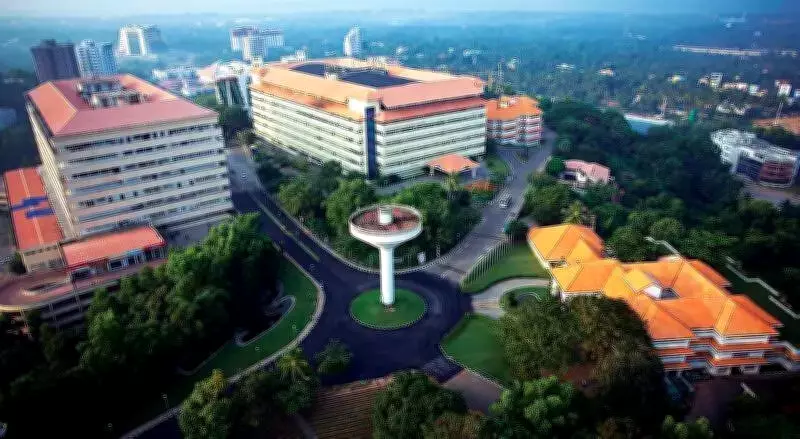
The much-anticipated Emerging Technology Startup Hub at Technopark Phase IV has entered a crucial execution stage with the submission of a revised detailed project report (DPR) to the state government last week. The revised proposal introduces two key structural components — a not-for-profit foundation company and a dedicated commercial investment arm — to drive the ambitious Rs 700-crore project.
Revised DPR and New PPP Framework
The revised proposal, prepared by the Kerala Startup Mission (KSUM), outlines a new public-private partnership (PPP) framework centred on the creation of Emerging Tech Hub Foundation (ETH), a Section 8 company, and Apex Investment Holdings Kerala Pvt Ltd, the project's for-profit investment vehicle. The new government, which is likely to take over next week, is expected to approve the project.
Emerging Tech Hub Foundation
Emerging Tech Hub Foundation will function as the mission-driven core of the project, holding and managing government-backed assets including land, buildings, laboratories and technical infrastructure. It will also act as the channel for grants from the state government, central agencies, CSR funds and philanthropic sources, while overseeing incubation and research support programmes through specialised technology advancement centres (TACs).

Apex Investment Holdings Kerala
Apex Investment Holdings Kerala, the second major component, is envisaged as the hub's commercial engine. Jointly owned by the foundation and private investors, it will aggregate capital and deploy funds into start-ups across high-growth sectors such as space technology, digital media, healthcare and life sciences, food and agriculture, clean energy, artificial intelligence, Internet of Things and communications technology.
Project Cost and Infrastructure
Sources said the cost of the project has now been revised to around Rs 700 crore following escalation, while the original investment framework estimated the overall capex and operational expenditure at more than Rs 1,000 crore over a five-year period. The hub is proposed to come up over nearly 7 lakh sq ft, comprising two blocks with seven floors each, making it one of the largest start-up infrastructure projects planned in the state.
The facility is expected to serve as a dedicated cluster for emerging technologies, combining research labs, start-up incubation spaces, corporate innovation centres and high-end technical testing facilities under one roof.
Ownership Structure
The revised DPR proposes a 51:49 ownership structure, with the Emerging Tech Hub Foundation holding a majority stake and private investors holding the remaining share through Apex. Officials said this model has been designed to ensure that public assets and policy priorities remain protected while leveraging private capital for faster ecosystem growth.
KSUM CEO's Statement
KSUM CEO Anoop Ambika said the revised model marks a significant shift in how start-up infrastructure is conceived in the state. "The revised DPR introduces a future-ready PPP framework that combines institutional governance through the Foundation with strong investment capability through Apex. This model is designed not merely as an infrastructure project but as a sustainable innovation and investment ecosystem for Kerala's next generation of technology start-ups," Ambika told TOI.
Revenue Generation
The hub is expected to generate returns through multiple channels, including equity exits from start-ups, corporate innovation partnerships, intellectual property licensing, consulting services and revenue-sharing models with scale-ups.