Karnataka's Education Pipeline Fails to Match State's AI Vision
Karnataka, often hailed as India's technology hub, is facing a significant disconnect between its ambitious artificial intelligence policy and the reality within its classrooms. Despite the state's forward-looking stance on AI innovation, the education pipeline remains inadequately aligned with these technological aspirations.
The Growing Gap Between Policy and Practice
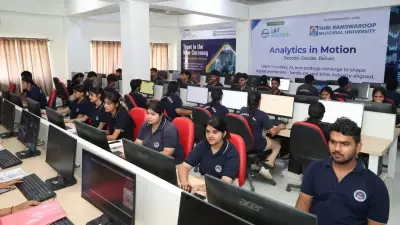
While Karnataka has positioned itself at the forefront of India's AI revolution with comprehensive technology policies, its educational institutions are struggling to keep pace. Classrooms across the state lack the necessary infrastructure, updated curricula, and trained educators to effectively integrate artificial intelligence concepts into learning environments.
This misalignment creates a concerning scenario where students graduate without the skills required to participate in the AI-driven economy that Karnataka aims to build. The state's technology ambitions require a workforce proficient in AI fundamentals, yet the current education system fails to provide this foundational knowledge at scale.

Infrastructure and Curriculum Challenges
Several critical factors contribute to this educational lag:
- Outdated learning materials that don't reflect current AI technologies and applications
- Insufficient digital infrastructure in many schools, particularly in rural areas
- Limited teacher training programs focused on artificial intelligence concepts
- Curriculum gaps where AI education should begin at earlier grade levels
The situation highlights a broader challenge facing India's education-technology integration. While policies may be developed at the state level, implementation at the classroom level requires substantial investment in both physical infrastructure and human capital development.
The Path Forward for Karnataka's AI Education
Addressing this gap requires coordinated efforts across multiple fronts. Educational institutions need updated facilities equipped with modern computing resources. Teachers require specialized training to effectively deliver AI-related content. Curriculum developers must work closely with technology experts to create age-appropriate learning materials that build AI literacy from primary through higher education levels.
Without these interventions, Karnataka risks creating a generation of students unprepared for the technological landscape the state is actively cultivating. The disconnect between policy ambition and educational reality represents not just an implementation challenge, but a potential threat to Karnataka's position as India's premier technology destination.
As artificial intelligence continues to transform industries and economies globally, the urgency of aligning education with technology policy becomes increasingly critical. Karnataka's experience serves as a cautionary tale for other Indian states pursuing similar technological ambitions without corresponding educational reforms.