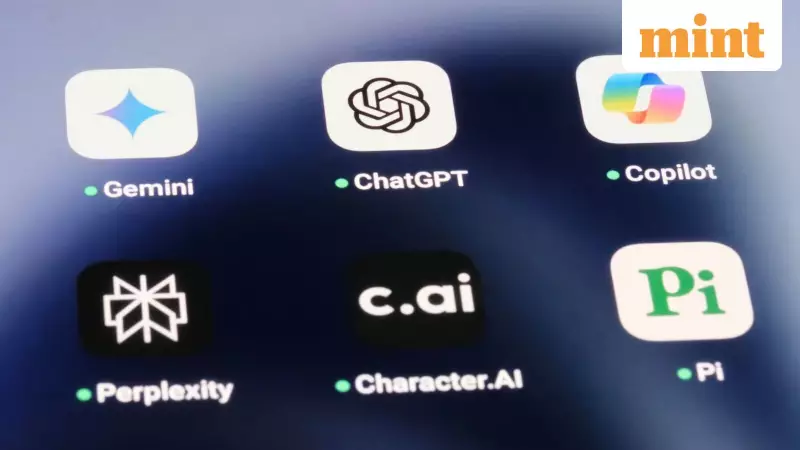
New data suggests India's emerging market for artificial intelligence chatbots is fiercely competitive, challenging the global dominance of OpenAI's ChatGPT. A recent analysis indicates Indian users are showing a strong preference for rival platforms like Google's Gemini and Perplexity AI, raising questions about whether the industry will see a single winner-take-all outcome.
Indian Users Buck the Global Trend
According to a November report from Bank of America Securities, India's chatbot usage patterns stand out globally. While the country accounts for a significant 16% of ChatGPT's estimated 850-900 million global monthly active users, its share is even higher for competitors. India makes up 31% of Google Gemini's user base (300-350 million) and a striking 38% of Perplexity's 50 million users.
This disproportionate draw towards alternatives suggests the Indian market is far from settled. While telecom bundles might influence some choices, the data clearly shows a fragmented and well-contested landscape where no single player has achieved overwhelming dominance as of December 2025.

The Cost Factor: A Barrier to Monopoly
Beyond user preference, a fundamental economic reason argues against a market monopoly. Unlike social media platforms, which benefited from near-zero variable costs and powerful network effects, AI chatbots incur significant expenses for every response generated.
Each query guzzles computational power and electricity, leading to substantial variable costs. This necessity for service pricing or careful scaling acts as a natural constraint. It means a company's edge in managing power bills and computational efficiency could become a critical competitive advantage, potentially reshaping the rivalry and preventing a single platform from crushing all others through sheer spending power alone.
The Specter of a Monopoly Remains
Despite these encouraging signs for a competitive market, the possibility of a future monopoly cannot be ruled out. The potential payoff for achieving global dominance in AI is so profound that spectacular sums of money are being invested in the race.
The hope is that India's unique adoption pattern and the industry's punishing cost dynamics will foster a healthy, multi-player ecosystem. This would contrast sharply with the social media experience, where a handful of Meta and X platforms came to control major formats. The coming years will reveal whether the AI chatbot space can avoid a similar fate and sustain its current competitive diversity.