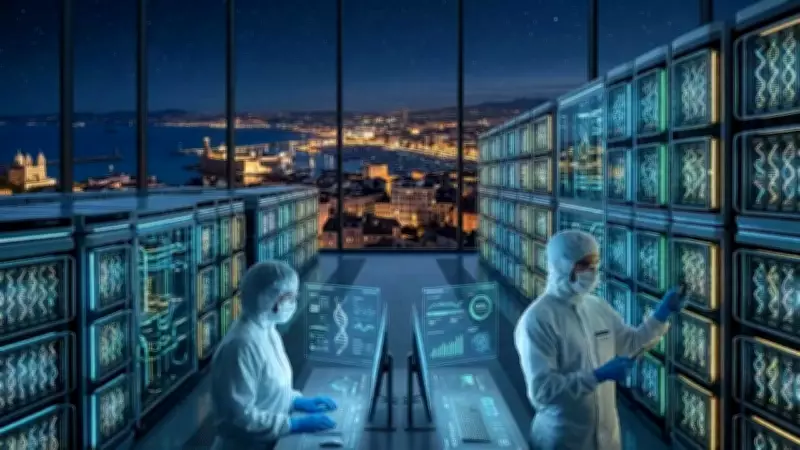
Synthetic DNA Transforms Neuromorphic Computing for Sustainable AI
The integration of synthetic DNA into electronic systems is fundamentally altering the methodology of neuromorphic computing, presenting a novel solution to the escalating energy costs associated with contemporary Artificial Intelligence. By molecularly engineering DNA sequences and combining them with quasi-2D perovskite semiconductor materials, scientists are pioneering the development of advanced 'memristors'—memory resistors that emulate the brain's synaptic plasticity for creating new memories.
DNA-Enhanced Memristors: Merging Processing and Memory
DNA offers an extraordinary data density, capable of storing up to 215 petabytes of information per gram. Devices constructed through DNA hybridization and synthesized using ultra-low voltages—less than 0.1 volts—achieve both processing capability and memory on a single platform. This integration results in a substantial reduction in energy usage, estimated at 100 times less than conventional systems, establishing a robust and scalable model for next-generation, energy-efficient supercomputers with high capacity.
Overcoming Thermodynamic Limits with Programmable Nanomaterials
As standard computing approaches a 'thermodynamic limit,' synthetic DNA emerges as a programmable nanomaterial poised to address this challenge. According to research published in the Wiley Online Library, doping silver ions with synthetic DNA in conjunction with perovskite creates stable conductive pathways ideal for high-density storage. These DNA-based memristors can retain memory data similarly to neurons in biological systems, functioning without the need for continuous power.

The Imperative for Sustainable Computing in the AI Era
With the relentless expansion of artificial intelligence, the energy required to transfer data on traditional chips is becoming prohibitively high. Studies funded by the National Science Foundation (NSF) highlight that biological systems possess inherent advantages over modern chip architectures in parallel processing. DNA-enhanced computing enables multiple input processing with approximately 90 percent less energy overhead compared to conventional non-volatile memory, paving the way for more sustainable technological advancements.
Unparalleled Data Density and Thermal Resilience
One of the most significant advantages of DNA is its spatial efficiency. As cited in NIH studies, DNA has the potential to store data at a density millions of times greater than silicon. This capability will profoundly impact future supercomputers by reducing the physical footprint of data centers while enhancing the reliability of long-term cold data storage through the chemical stability of synthetic DNA strands.
Furthermore, bioelectronics often face performance limitations due to fragility. Recent research reveals that composites of synthetic DNA and perovskites can endure extreme temperatures up to 121 degrees Celsius (250 degrees Fahrenheit). This thermal resilience enables the design of DNA-powered electronics capable of withstanding the demands of high-performance supercomputers, offering a viable alternative to the current semiconductor industry.