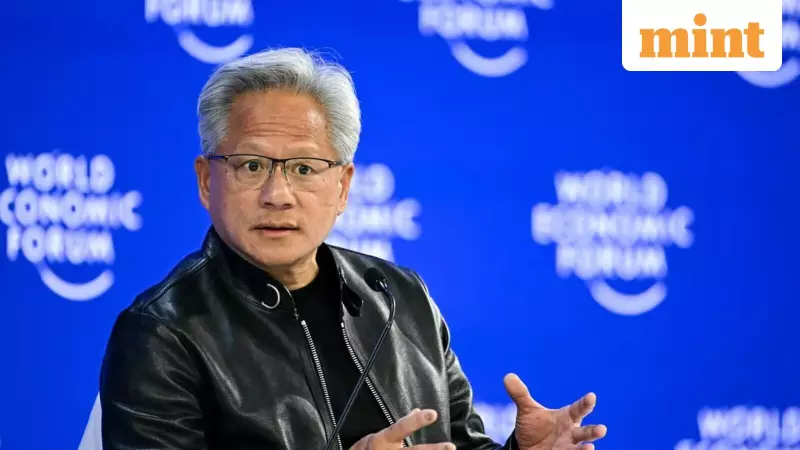
Davos 2026: Tech Executives Express Unprecedented Optimism on AI's Trajectory
Amidst geopolitical tensions and market volatility dominating discussions at the World Economic Forum in Davos this week, a clear and bullish narrative emerged from the technology sector regarding artificial intelligence. Top CEOs and executives from leading firms used the global platform to extol AI's transformative potential, both for enterprise applications and societal betterment, while pushing back against growing concerns of an AI bubble.
Four Key Insights from Davos on the State of Artificial Intelligence
From speeches and interviews at the prestigious gathering, several critical themes have crystallized about the current and future landscape of AI development and deployment.
"What AI Bubble?" Nvidia's Jensen Huang Questions the Narrative
Nvidia founder and CEO Jensen Huang delivered a particularly optimistic assessment, stating that the global AI infrastructure buildout remains in its "early innings." He characterized the trend as initiating "the largest infrastructure buildout in human history," noting that current investments of a few hundred billion dollars represent just the beginning of what will eventually become trillions in spending.

To counter bubble concerns, Huang pointed to tangible market indicators: rising rental prices for Nvidia GPUs, including older models, and extreme difficulty in securing cloud-based GPU rentals. "If you try to rent an Nvidia GPU these days, it is so incredibly hard. The spot price of GPU rentals is going up," he emphasized, suggesting these supply-demand dynamics contradict bubble theories.
Sustained and Unprecedented Demand for AI Compute Resources
Amazon CEO Andy Jassy reinforced this perspective in a CNBC interview from Davos, highlighting that demand for AI computing resources remains exceptionally strong. "It is so unprecedented how much compute is being consumed right now," Jassy remarked, with Amazon Web Services continuing to serve as the world's largest cloud computing provider for startups and corporations alike.
Microsoft CEO Satya Nadella added to the positive outlook, expressing growing confidence that AI will prove beneficial for society. He predicted that AI technology would build upon existing cloud and mobile infrastructure, diffuse rapidly across sectors, and significantly enhance productivity curves.
AI as a Catalyst for Job Creation Rather Than Elimination
Addressing common fears about automation-induced job losses, Huang presented a counterargument focused on employment generation. He cited the construction jobs required to build AI infrastructure and provided the example of radiology, where AI advancements in image analysis have actually led to increased hiring of radiologists who now spend more time on diagnosis and patient care.
Rapid Enterprise Adoption and Business Model Evolution
OpenAI Chief Financial Officer Sarah Friar revealed significant strides in enterprise adoption during her Davos appearance. She reported that over one million businesses already utilize OpenAI's tools, with the company's business mix expected to shift dramatically by year-end from 70% consumer and 30% enterprise to an even 50-50 split.
Navigating Macroeconomic Uncertainties with Strong Fundamentals
While geopolitical concerns, including potential trade conflicts between the U.S. and Europe over Greenland's sovereignty, have created market volatility, tech leaders advised focusing on underlying AI fundamentals. The consensus suggests that despite short-term macroeconomic noise, the structural drivers of AI adoption—technological advancement, enterprise integration, and infrastructure investment—remain robust and promising for long-term growth.