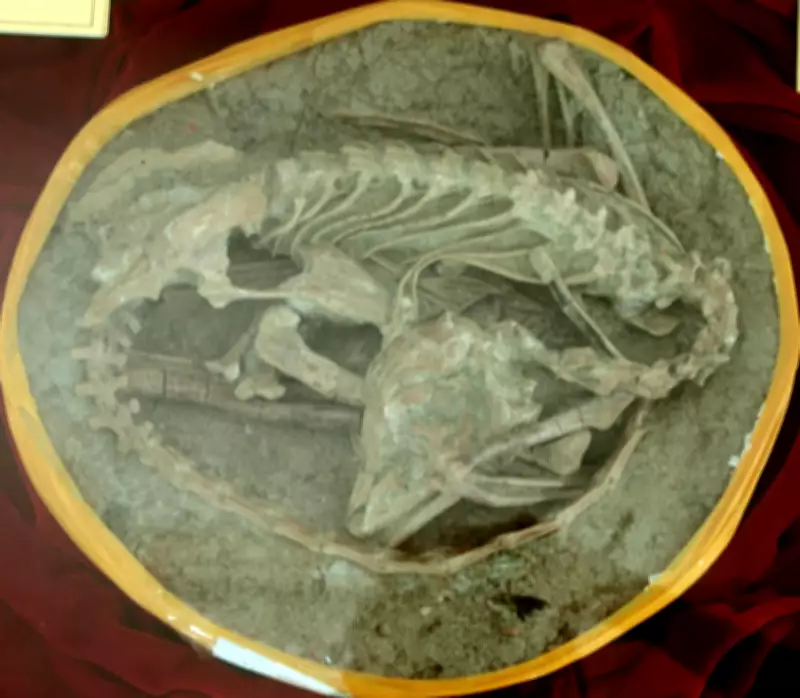
The serenity of a prehistoric forest was shattered by a massive volcanic eruption in what is now northeastern China. This cataclysmic event produced a deadly mixture of ash, gas, and burning rocks that engulfed everything in its path. While Pompeii in Italy has long been the classic example of nature's fury, paleontologists are now uncovering an older, Mesozoic version of this tragedy. Millions of years before humans existed, dinosaur communities were instantly entombed by volcanic ash, preserving their final moments.
The Discovery of the 'Chinese Pompeii'
These findings come from the Yixian Formation in Liaoning Province, also known as the 'Jehol Biota'. Unlike typical fossil sites where only bone fragments are found, this site yields fully formed, well-preserved skeletons. The most striking aspect is the realistic positions of the animals frozen in time—many appear to be sleeping peacefully.
Physics of Prehistoric Preservation
How such incredible preservation occurs has been a scientific debate. A study published in Nature Communications analyzed volcanic deposits containing prehistoric creatures to reveal the physics behind the process. The research team determined that rapidly moving pyroclastic density currents—flows of finely powdered volcanic rocks—overwhelmed the organisms. During the Early Cretaceous period, intense flows of hot ash and debris covered rivers and lakes, trapping dinosaurs in airless pockets. This prevented scavengers and natural forces from destroying their remains, preserving articulations intact for hundreds of millions of years.

Frozen Behavior Patterns
The diversity of trapped creatures offers unique insights into Early Cretaceous behavior. One common victim is Psittacosaurus, a dog-sized horned dinosaur that moved in herds. Scientists have recovered complete family groups locked in clusters, suggesting they grouped for protection or social interaction. More moving is the find of Mei long, meaning 'sleeping dragon'. This small, bird-like theropod was preserved with its tail curled around its body and head tucked under its front limb—exactly how modern birds sleep. Previously thought to have died from malnutrition or illness, geology now shows that lethal ash flows were so swift and silent that the sleeping dragon never woke up.
Implications for Paleontology
As international teams study the Jehol Biota, it becomes clear that this volcanic event created a natural time capsule. Instead of leaving only ashes, it captured creatures in their natural interactions, removing clinical detachment and providing a vivid glimpse of the past.