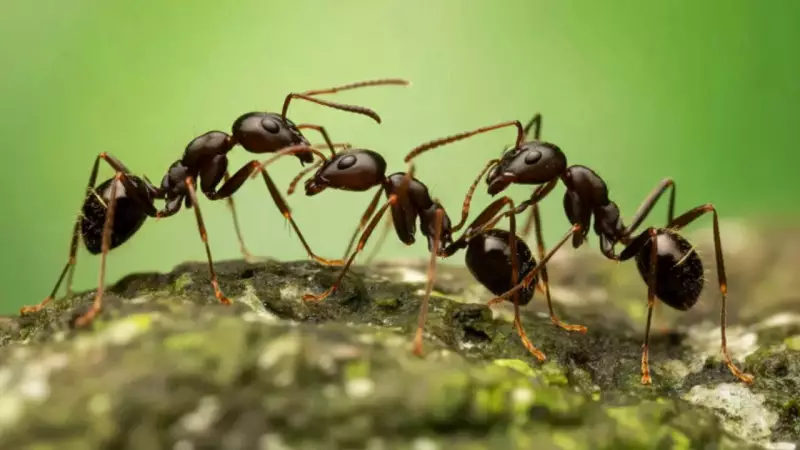
Ants Defy Nuclear Radiation: Nature's Remarkable Survivors
In the face of extreme environmental stressors like nuclear radiation, ants demonstrate a resilience that far surpasses human capabilities. While radiation exposure poses severe health risks to humans, including illness and genetic damage, these tiny insects appear largely unaffected by conditions that would be lethal to our species.
The Stark Contrast Between Human and Ant Responses
Human beings are particularly vulnerable to radiation's harmful effects due to our biological complexity. When exposed to significant radiation doses, our cells sustain molecular damage, especially to DNA, leading to mutations, various diseases, and potentially death. Historical incidents at Fukushima and Chernobyl tragically illustrate how radiation devastates human health and large animal populations.
In striking contrast, certain ant species, particularly the black garden ant (Lasius niger), exhibit remarkable radioresistance. Studies show these insects survive radiation exposure with minimal impact, a feat impossible for humans under similar conditions.
Biological Advantages Behind Ant Radiation Resistance
Several key biological factors contribute to ants' superior radiation tolerance:
- Compact Size and Simple Anatomy: Their small physical dimensions mean radiation-induced damage affects limited tissue areas.
- Rapid Cell Cycles: Many insect species have faster cell reproduction rates than mammals, potentially enabling quicker recovery from radiation stress.
- Efficient DNA Repair Systems: Certain ant colonies appear to possess enhanced mechanisms for repairing genetic damage caused by radiation.
- Social Structure Benefits: Ant colonies can rapidly identify and remove compromised members, preventing stress or infection spread throughout the community.
Nature's Extreme Survivors: Beyond Ants
Ants aren't alone in possessing extraordinary survival capabilities. Other microscopic organisms demonstrate similar resilience:
- Tardigrades (Water Bears): These microscopic creatures withstand space vacuums and intense radiation exposure.
- Radiation-Tolerant Bacteria: Certain bacterial species thrive in highly radioactive environments like the Chernobyl exclusion zone.
These examples reveal diverse evolutionary strategies life has developed to endure conditions fatal to humans.
Scientific Implications and Future Applications
Understanding ant radiation resistance holds significant potential for human advancement:
- Medical Progress: Insights into their DNA repair mechanisms could revolutionize radiation therapy approaches for cancer treatment.
- Space Exploration: Studying how small organisms withstand nuclear radiation may enhance astronaut safety during extended space missions.
- Environmental Monitoring: Radiation-resistant species could serve as biological indicators for detecting radioactive contamination effects.
While humans won't transform into radiation-proof beings, the survival techniques evolved by ants and similar organisms might inspire future technologies protecting human health in extreme environments.
This fascinating research underscores nature's incredible adaptive power, demonstrating how even the smallest creatures have developed sophisticated survival mechanisms that continue to astonish and inspire scientific discovery.