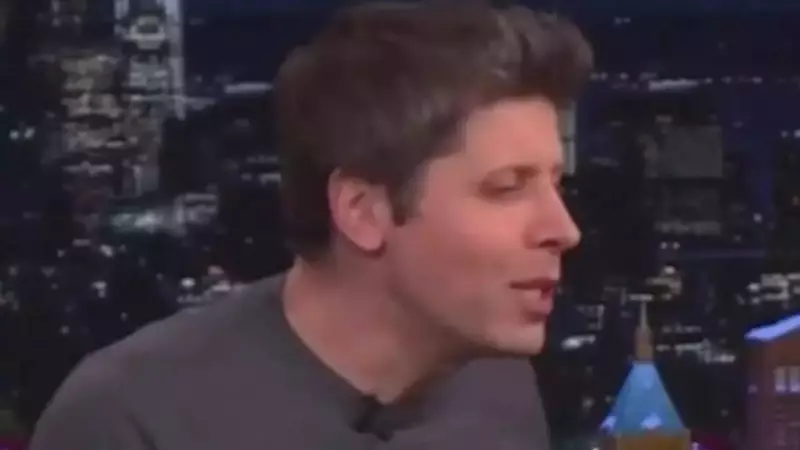
In a candid revelation, OpenAI's Chief Executive Officer Sam Altman has admitted that his company faced a significant existential threat from tech behemoth Google last year. Altman stated that had Google decided to focus its efforts directly on competing with OpenAI in 2023, the situation for the creators of ChatGPT would have been dire.
Google's Dominance: A Recognized Threat
Speaking on the Big Technology Podcast hosted by Alex Kantrowitz, Altman did not mince words. He explicitly labeled Google as a 'huge threat' in the artificial intelligence arena. The OpenAI CEO pointed to Google's vast resources, established power, and one of the strongest business models in the technology sector as formidable advantages.
'I think they would have just been able to smash us,' Altman conceded during the conversation. He acknowledged that it will take considerable time for OpenAI to build a business model capable of rivaling Google's established empire. This marks a shift from his previous public stance, where he had identified Apple as the ultimate rival.

Strategic Pivot and Internal 'Code Red'
Altman's latest comments come amidst a period of intense strategic recalibration at OpenAI. Earlier this month, the CEO issued an internal 'code red' directive to his employees. This memo, as reported, ordered a pause on various side projects—including the advanced Sora video generator—for eight weeks.
The goal of this dramatic move is to channel all efforts into improving and defending the core product, ChatGPT. This represents a significant shift from the company's original moonshot mission of achieving Artificial General Intelligence (AGI) to a more immediate focus on mass-market appeal and product dominance.
Rethinking AI Integration and Future Competition
Beyond the competitive landscape, Altman also shared his views on how AI should be integrated into existing platforms. He expressed skepticism about simply adding AI features to current systems like traditional web search. Instead, Altman advocated for a complete redesign with AI at the forefront, suggesting this approach would lead to greater success.
Furthermore, in a recent discussion with journalists in New York, Altman outlined a vision where the future of AI competition will be won through devices, not just software. He argued that today's smartphones are not inherently built for seamless AI companion experiences, hinting at a new frontier for tech rivalry.
These series of statements from the OpenAI CEO paint a picture of a company acutely aware of the giants it challenges. While celebrating its own successes with ChatGPT, OpenAI is simultaneously scrambling to fortify its position against deep-pocketed and deeply entrenched competitors like Google, all while redefining its own strategic path forward.