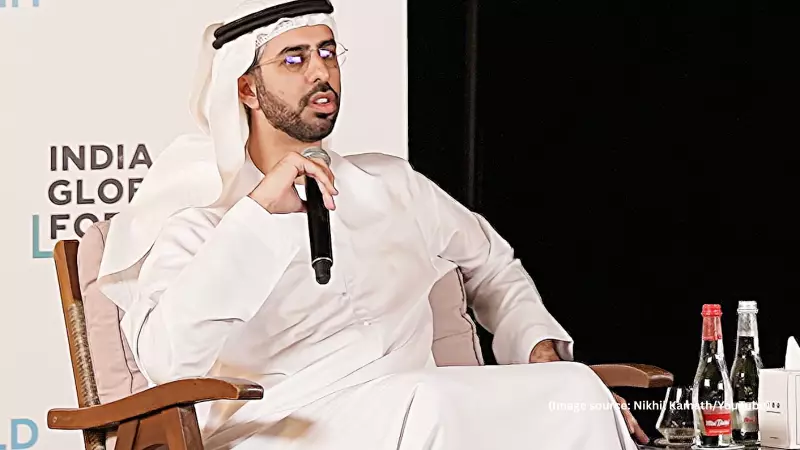
In a compelling discussion at the India Global Forum in Dubai, the world's first dedicated Minister for Artificial Intelligence offered a surprising perspective on which generation is best positioned to thrive in the age of AI. Omar Sultan Al Olama, the United Arab Emirates' AI Minister, highlighted the unique advantages held by individuals currently aged between 40 and 60 years.
The 'Best Generation' with a Cognitive Balance
During his conversation with Zerodha co-founder Nikhil Kamath on January 11, 2026, Minister Al Olama made a strong case for the generation that straddles the pre- and post-internet eras. He described people in the 40-60 age bracket as "the best generation" because they possess a rare cognitive balance. This group experienced life before the dominance of the internet and modern AI tools, yet adapted to them later in life.
"We lost something called the breadth of intelligence that people had to get by and to live their daily lives in the past," Al Olama reflected. He argued that this generation is "better, maybe, because the technology came in later in our lives," granting them a wider, more experiential form of intelligence that younger, digitally-native cohorts often lack.

The Peril of Hyper-Specialisation in an AI World
Shifting focus to the current workforce, the minister issued a stark warning about the risks of excessive specialisation. He explained that in today's hyper-focused professional landscape, artificial intelligence is poised to outperform humans in narrow, specialised tasks.
"With this hyper-focused and specialised world that we are living in today, because of technology, unfortunately, AI is going to beat us to the target," Al Olama stated. His message was clear: "If we have to be hyper-specialised, AI can do better than us." He pointed to a time when broad, practical knowledge led to monumental success, noting, "People who were uneducated could build billion-dollar companies," thanks to their hands-on, wide-ranging understanding.
Embracing 'Broad Intelligence': Advice for the Future
For younger generations navigating a future shaped by AI, Minister Al Olama's advice was to cultivate versatility. He urged a shift "from intelligence-specific to broad intelligence." To underscore his point, he referenced a famous quote by Shakespeare, often cited incompletely.
"A jack of all trades is a master of none," he began, reminding the audience of the common saying. However, he highlighted the crucial, often-omitted second line: "But oftentimes better than a master of one." This, according to the AI minister, encapsulates the mindset needed to complement and compete with artificial intelligence—valuing adaptable, generalist knowledge over narrow expertise.
The insights from the UAE's pioneering AI minister present a powerful reframing of generational value. They suggest that in the race against intelligent machines, the human edge may lie not in deep specialisation, but in the broad, integrative intelligence forged by experiencing a world both with and without pervasive digital technology.