AI Industry Titans Clash Over US Chip Sales to China
A major public disagreement has erupted between two of the most powerful leaders in the artificial intelligence sector, highlighting a profound split in Silicon Valley over national security and commercial interests. The controversy centers on U.S. exports of advanced semiconductor chips to China, with Anthropic CEO Dario Amodei and Nvidia CEO Jensen Huang taking diametrically opposed positions.
Amodei's Explosive Nuclear Weapons Analogy
In a recently resurfaced essay titled "The Adolescence of Technology" from January, Anthropic CEO Dario Amodei made a provocative comparison that ignited the firestorm. Amodei argued that selling sophisticated AI chips to China during this critical developmental phase would provide the country with "a giant boost" it doesn't require. He wrote explicitly: "It's like selling nuclear weapons to North Korea and then bragging that the missile casings are made by Boeing."
While Amodei did not mention Nvidia by name, industry observers widely interpreted his criticism as targeting CEO Jensen Huang, who has been a vocal advocate for maintaining U.S. chip sales to the Chinese market. Amodei has emerged as one of the most prominent voices calling for restrictions on these exports, contending that China remains several years behind in producing cutting-edge frontier chips. He believes limiting access is essential for preserving America's technological advantage in the global AI race.

Huang's Furious 'Lunacy' Response
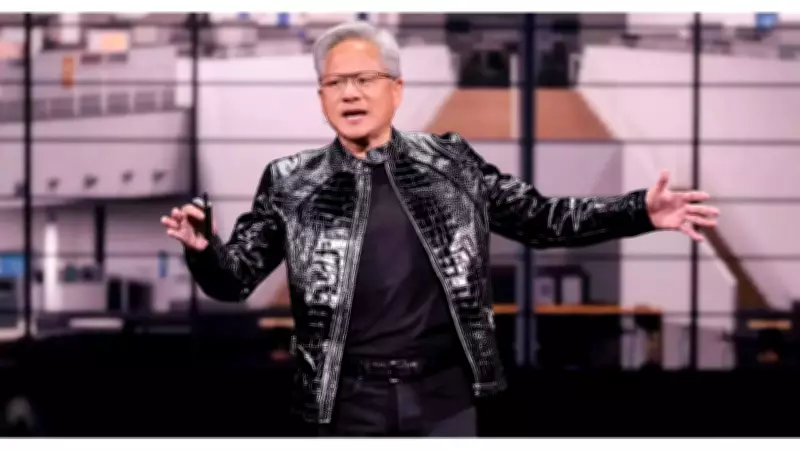
Nvidia CEO Jensen Huang responded with visible anger during a recent appearance on the Dwarkesh Podcast, where Amodei's comments were discussed. Huang dismissed the nuclear weapons analogy outright, declaring: "Comparing AI to anything that you just mentioned is lunacy." He insisted that Nvidia's semiconductor products are commercial goods, not "enriched uranium," and emphasized that China possesses the capability to eventually manufacture similar chips domestically.
Huang vigorously defended the economic rationale for continuing chip sales to China, estimating they could generate approximately $50 billion annually for Nvidia. More significantly, he warned of severe consequences from cutting off access, predicting it would fracture the global AI ecosystem into two separate camps. "That would be a horrible outcome for the United States," Huang stated, envisioning a future where open-source models thrive in China while closed-source models dominate in the U.S.
Broader Silicon Valley Divide on China Strategy
This heated exchange between Amodei and Huang exposes a growing and fundamental division within the technology industry regarding how to approach China. On one side, figures like Amodei prioritize national security concerns, advocating for restrictions to maintain U.S. technological supremacy. On the other, executives like Huang emphasize commercial engagement, arguing that abandoning the world's second-largest market would be economically damaging and strategically unwise.
The debate extends beyond just chip sales, reflecting deeper anxieties about technological decoupling and the future structure of global AI development. Huang's position represents a belief in continued interdependence, while Amodei's stance suggests a move toward greater technological separation for security purposes.
Huang Addresses Competitive Threats from Tech Giants
During the extensive podcast discussion, Huang also addressed what many perceive as mounting competitive threats to Nvidia's dominance. He dismissed concerns about initiatives from major companies like Google developing TPUs, Meta creating its MTIA chips, Anthropic securing multi-gigawatt compute deals, Amazon's Trainium4 chips, and OpenAI's Broadcom silicon projects.
Huang argued that these developments are being misinterpreted as a "five-alarm fire" for Nvidia. He characterized Anthropic's massive pivot to Google TPUs—a deal securing roughly 3.5 gigawatts of computing capacity through 2031—as an isolated case rather than an industry trend. "Anthropic is a unique instance, not a trend," Huang told host Dwarkesh Patel. "Without Anthropic, why would there be any TPU growth at all? It's 100% Anthropic."

He maintained that what appears to be customer defection is actually more nuanced, with most companies continuing to rely heavily on Nvidia's ecosystem despite their internal chip development efforts.
This clash between two of AI's most influential voices underscores the complex balancing act facing the technology industry: navigating between lucrative commercial opportunities in China and legitimate national security considerations. As AI development accelerates, this debate over chip exports is likely to intensify, with significant implications for global technological leadership and international relations.