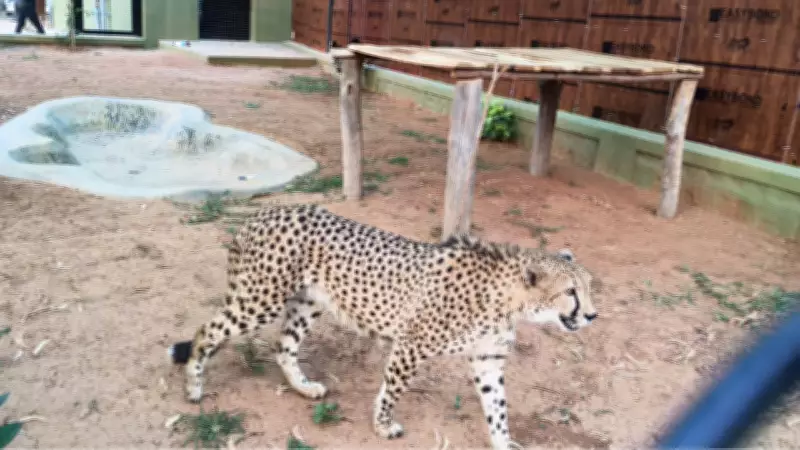
Karnataka Joins National Cheetah Revival Movement with Historic Arrival
India's ambitious cheetah conservation narrative received a significant boost on Saturday as Karnataka officially joined the national movement to revive the population of these majestic big cats, which were declared extinct in the country decades ago. In a landmark development, four cheetahs (Acinonyx jubatus) arrived at Bannerghatta in the early hours of Saturday from South Africa through an approved animal exchange program, initiating a fresh conservation chapter in Bengaluru.
Distinct Conservation Approach: Ex-Situ vs. In-Situ
Unlike the cheetahs at Kuno National Park in Madhya Pradesh, which are part of an in-situ conservation effort aimed at reintroducing them into the wild, the latest arrivals from Induna Primate and Parrot Park in South Africa represent an ex-situ conservation program. This initiative involves two males and two females of the world's fastest land mammal, who will be housed in a controlled zoological environment rather than released into natural habitats.
The two pairs were received at the cargo terminal of Kempegowda International Airport (KIA) at 1:15 AM on Saturday by Karnataka Forest Minister Eshwar Khandre, accompanied by officials from the Zoo Authority of Karnataka (ZAK) led by Dr. Sunil Panwar, IFS, the member secretary of ZAK.

Historical Significance and Ministerial Remarks
Describing the arrival as a momentous occasion, Minister Khandre highlighted the historical context, stating, "Once, cheetahs roamed freely across the Indian landscape, and in Karnataka, they were locally known as 'Sivangi.' Tragically, they vanished due to excessive hunting and habitat degradation over the years. Bringing them back and assisting in their adaptation to our ecosystem is indeed a significant achievement."
He emphasized that the presence of cheetahs in Bengaluru will offer visitors a rare opportunity to witness a species that had long disappeared from India but is now slowly reclaiming a place in the nation's conservation landscape.
Rigorous Health Protocols and Quarantine Measures
The successful import followed extensive health screening and an initial quarantine period in South Africa, along with all necessary regulatory clearances under the Wild Life (Protection) Act, 1972, and approvals from animal quarantine authorities in India. Minister Khandre announced that all four cheetahs will be moved to specially prepared enclosures for public viewing at Bannerghatta Biological Park (BBP) after a mandatory 30-day quarantine period.
He has instructed BBP veterinarians and forest officials to ensure stringent quarantine protocols, continuous health monitoring, and adherence to prescribed dietary regimens during the acclimatization phase to guarantee the well-being of the animals.
Complementing National Conservation Efforts
Although the cheetahs in Bengaluru are part of an ex-situ conservation initiative within a zoological setting and not a wild reintroduction project, ZAK officials clarified that this move complements India's broader conservation strategies. It aims to promote public awareness, support scientific research, and contribute to the genetic management of captive populations, thereby enhancing the overall framework for cheetah preservation.
Enhancing Bannerghatta's Zoological Profile
The addition of four cheetahs to BBP marks a notable diversification of its faunal collection, as the park is already recognized as one of the few establishments in India with one of the highest densities of carnivore populations. A ZAK official remarked, "Already known for housing a wide range of native and exotic species, the inclusion of cheetahs elevates the park's profile as a premier zoological institution and strengthens its role in ex-situ conservation at the national level."
This initiative not only underscores Karnataka's commitment to wildlife conservation but also aligns with India's ongoing efforts to restore ecological balance and biodiversity, offering hope for the future of cheetahs in the country.