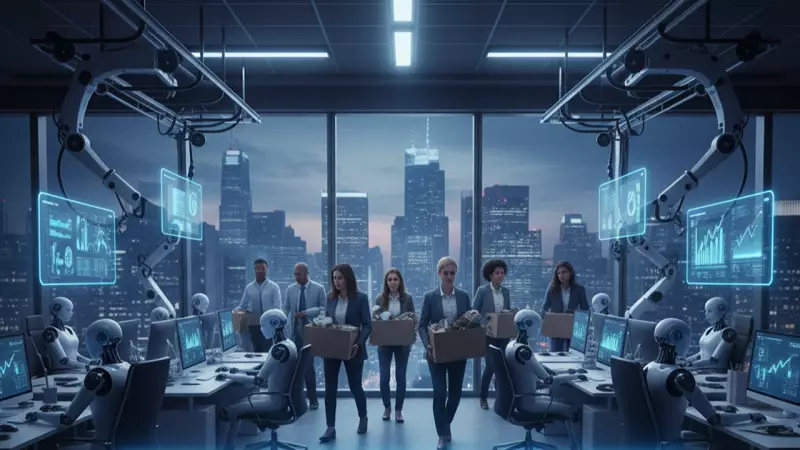
The AI Layoff Narrative Faces Scrutiny
Headlines constantly discuss layoffs at America's so-called "dream companies." This trend clearly shows our definition of these ideal employers is changing. New names are emerging as workers rethink what job security really means.
Research Challenges the AI Automation Story
People have debated endlessly about how many jobs artificial intelligence will eliminate. Everyone wonders where this technological shift will lead us. However, recent research suggests companies might be using AI as a convenient cover story for layoffs.
Every new wave of job cuts quickly brings mentions of automation, AI, and the "future of work." This creates an impression that machines replacing humans is inevitable. Yet recent studies indicate this narrative doesn't tell the complete story.

A January 2026 report from Oxford Economics questions claims that AI drives mass unemployment. The firm found macroeconomic evidence pointing toward a structural shift in employment patterns instead. Layoffs aren't new to our vocabulary because of AI. They've always existed, but each era dresses them in different explanations.
Traditional Economic Factors Still Dominate
Most layoffs continue to originate from conventional economic pressures. These include cyclical downturns, weaker consumer demand, and post-pandemic over-hiring. Data from Challenger, Gray & Christmas confirms AI-related cuts represent only a small portion of overall job losses.
The numbers show approximately 55,000 AI-related layoffs occurred during the first eleven months of 2025. This contrasts sharply with 1.5 to 1.8 million monthly displacements across the broader labor market. Productivity trends further suggest AI adoption remains uneven. There are no signs yet of widespread labor replacement by machines.
Perhaps AI serves as a useful scapegoat for companies wanting to obscure less flattering reasons for eliminating positions. In today's climate, employees increasingly cling to organizations that feel "safe" from such disruptions.
Where Americans Feel Most Secure in Their Jobs
Amid growing AI anxieties, workers keep asking one crucial question: which companies offer the greatest protection from automation? Resume.io surveyed 3,036 employees across all fifty states. Their research reveals surprising patterns about industries, employers, and even regional identities that inspire confidence.
According to the survey, these are the top-rated companies Americans trust most:
- Ben & Jerry's (Vermont)
- Coca-Cola (Georgia)
- Four Seasons Hotel and Resorts (Hawaii)
- BlueCross BlueShield of Illinois (Illinois)
- Johns Hopkins Medicine (Maryland)
Healthcare Stands Apart from AI Anxiety
When Americans consider jobs that technology cannot easily hollow out, they consistently return to healthcare. Treating patients, making judgment calls, handling grief, offering reassurance, and managing urgency—these aren't tasks people imagine handing over to software anytime soon. Even desk-based healthcare roles benefit from being part of systems built around human vulnerability.
Universities Maintain Quiet Confidence
Higher education doesn't dominate the list, but it holds its ground firmly. Respondents associate universities with continuity. These are institutions that outlast market cycles and technological fads. Teaching, mentoring, research, and stewardship remain viewed as human crafts, even as online tools expand their reach. People assume machines may assist, but they won't run these places entirely.
Familiarity and Roots Build Trust
State-by-state choices reveal something emotional rather than purely strategic. Workers repeatedly leaned toward employers that feel stitched into local life. These companies and institutions represent home, history, and shared identity. In uncertain times, familiarity becomes a powerful form of security. These aren't just employers; they're community landmarks.

Hands-On Industries Earn Unexpected Respect
Transportation and aviation emerged as steadier than many might expect. Jobs involving moving people, coordinating complex systems, and making real-time decisions still feel human at their core. Respondents recognized that some errors prove too costly, and some responsibilities too immediate, for full automation.
Even Tech Capitals Show Caution
Perhaps the most interesting pattern emerged from states heavily dominated by technology. Workers in these regions didn't incline toward AI leaders or software giants. Instead, they placed trust in public institutions, healthcare systems, and mission-driven organizations. Innovation receives applause, but perhaps not enough trust for long-term employment security.
Manufacturing Reassures When Humans Stay Essential
Where factory work made the list, it was never anonymous or mass-produced. Respondents favored employers where skill, precision, and accountability still sit with people, not machines. The message came through subtly but consistently: automation becomes acceptable when it assists craftsmanship, not when it replaces it entirely.
Service and Public Roles Retain Their Safety
In states dependent on tourism or public infrastructure, workers leaned toward employers built around daily human interaction. These jobs rely on presence, empathy, and trust—qualities respondents don't believe technology can replicate at scale.
Finance Earns Trust Through Local Connections
Large, global financial institutions were largely absent from trusted lists. Instead, people gravitated toward regional banks and insurers known for steady, unglamorous work. Stability clearly mattered more than status in these uncertain times.