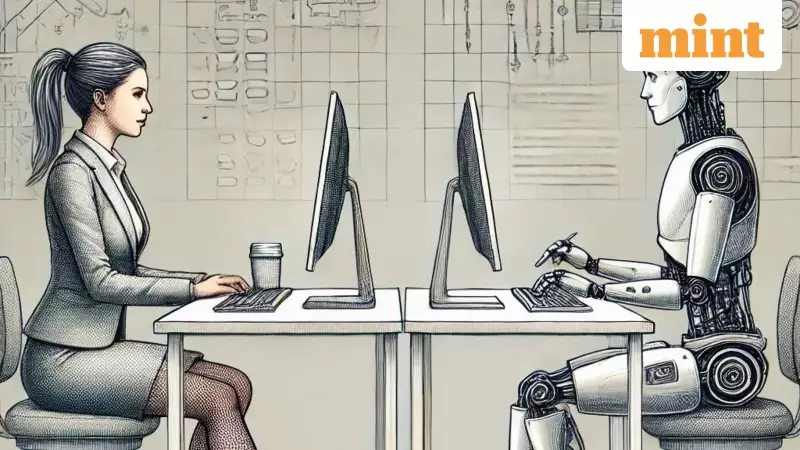
In a surprising shift within India's employment landscape, artificial intelligence is not just conducting job interviews but is increasingly becoming a preferred choice for some candidates. This trend challenges conventional recruitment methods and raises important questions about the future of hiring.
The Human Experience with AI Interviewers
A 58-year-old chartered accountant from Mumbai recently made a startling confession after experiencing both human and AI-led interviews. Having faced 27 interviews throughout her career—25 with human panels and 2 with AI systems—she unexpectedly declared, "I don't think I want to be interviewed by a human again."
Her journey with AI interviews began with apprehension. During her first AI interview experience, an American-accented artificial voice posed such a complex, multi-layered question that she felt overwhelmed and ultimately logged out, never completing that particular assessment despite reminder emails from the company.

However, her perspective transformed during a second AI interview for a quality and audit position. Staring at a screensaver while responding to the voice-generated questions felt "oddly comforting," she recounted. The absence of facial expressions, changing tones, or interpretable sighs created an unexpectedly reassuring environment.
How AI is Changing Interview Dynamics
The chartered accountant noted a particularly surprising benefit: after each response, the AI bot summarized what she had said. "In a few questions, I fumbled. But the way the bot summarized my answers, it sounded right. It seemed like I had given the correct answer even if I hadn't. No human interviewer would do that," she explained.
This experience highlights a fundamental shift in interview psychology. Without human interviewers to read or potentially misread, candidates might feel less pressure to perform perfectly. The AI's consistent, non-judgmental approach—even when candidates stumble—creates a different kind of interview dynamic that some find preferable.
Why Companies Are Embracing AI Interviews
Recruiters are turning to AI interviews for multiple reasons, including significant cost reduction, time savings, and risk mitigation regarding bad hires. For junior roles where specific competencies matter most, AI offers efficient screening capabilities that can process high volumes of applications that would overwhelm human resources departments.
India's corporate sector maintains that middle and senior-level positions requiring collaborative and leadership skills will still involve human interviewers. However, as AI technology advances, even this distinction might blur. A senior partner at one of the top three global headhunting firms revealed that sophisticated AI systems will eventually analyze candidates more thoroughly than human bosses, conducting detailed personality assessments and providing predictive insights about hiring risks and opportunities.
The executive admitted concerns that a critical aspect of his firm's recruitment role might eventually become obsolete, especially considering that companies sometimes take six to eight months to finalize CXO-level hires.
The Bias-Free Promise and Recruitment Realities
Perhaps the most significant advantage of AI-driven recruitment lies in its potential to eliminate human bias—a challenge deeper than many Indian companies openly acknowledge. The classic Bollywood film "Gol Maal" humorously illustrated how job seekers often mold themselves to match interviewers' preferences, from adopting fake mustaches to hiding personal interests.
While the film presented these situations as comedy, they reflected genuine workplace biases that affect hiring decisions. Unless trained on biased data, AI systems could potentially rise above these prejudices, evaluating candidates purely on merit and relevant qualifications rather than unconscious preferences.
As businesses navigate this technological transformation, the fundamental question remains: Are recruiters relinquishing their crucial role in selecting candidates who simply "feel right" for a position—a nuanced judgment that might involve sensing whether someone will bring fresh perspectives, regardless of their specific answers?

With AI interviews becoming more sophisticated and widespread, India's job market stands at a crossroads where technology might not only change how we hire but transform what both companies and candidates expect from the recruitment process itself.