

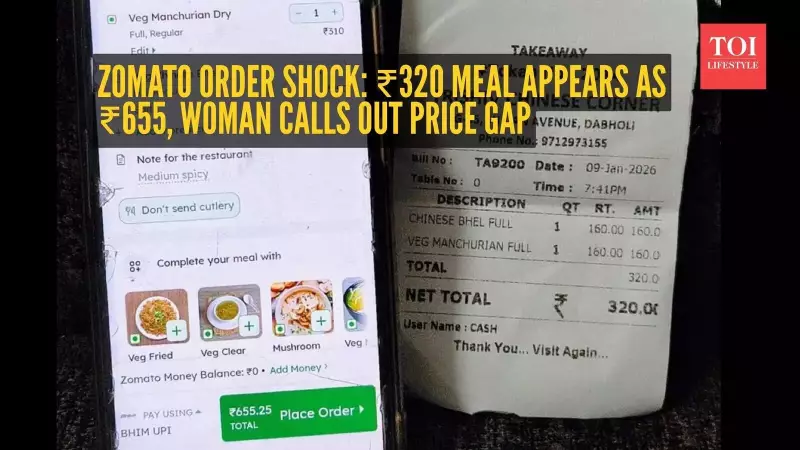
A routine food delivery order has exploded into a major online controversy, putting the spotlight on the often opaque pricing models of popular food delivery apps in India. What started as a simple takeaway purchase turned into a viral exposé of a significant price discrepancy, leaving netizens divided over who is responsible.
The Viral Complaint That Started It All
The issue came to light when a user named Nalini Unagar took to social media platform X to share her shocking discovery. She posted side-by-side screenshots of two bills for the same food order. The bill directly from the restaurant showed a total of ₹320. However, the very same order displayed on the Zomato app was priced at a staggering ₹655.
In her post, Unagar expressed her disbelief, stating that even after applying available discounts on the platform, the final amount she was asked to pay was ₹550. She accused the platform of blatantly overcharging customers, calling the ₹335 difference "absolutely insane." Her post quickly captured public attention, amassing over four lakh views and sparking widespread discussion.

Zomato's Response and The Blame Game
Faced with the viral backlash, Zomato's official customer care handle responded to Unagar's complaint. The company's defense shifted the responsibility away from itself. In its reply, Zomato clarified that it acts solely as an intermediary and that menu prices on its platform are set entirely by its restaurant partners.
"Hi Nalini, the prices on our platform are determined solely by our restaurant partners, as Zomato acts only as an intermediary between customers and restaurants," the company stated. They assured the user that her feedback would be passed on to the restaurant and offered further assistance.
Netizens Weigh In: Convenience vs. Fair Pricing
The viral post ignited a heated debate among social media users, revealing a clear split in public opinion. One camp strongly defended the platforms and the price markup.
Many argued that the higher cost is justified by the ecosystem that delivery apps sustain. Comments pointed out that customers are not just paying for food, but for a suite of services including delivery, platform maintenance, and payment processing. "This is done to support gig workers," one user commented. Another bluntly stated, "Zomato is not a charity. They have to pay delivery partners, staff, and handle operational costs. If you want restaurant pricing, go and pick it up yourself."
Others framed it as a simple trade-off, noting, "You're paying for comfort and time saved. You always have the option to order directly from the restaurant."
However, the opposing view held that such a massive markup, even after accounting for delivery fees and commissions, is exploitative and lacks transparency. Critics demanded clearer breakdowns of costs so customers understand what they are paying for beyond the food itself.
This incident serves as a stark reminder for Indian consumers to be vigilant. While food delivery apps offer undeniable convenience, the final price on the app can be significantly inflated compared to direct restaurant prices. The debate underscores the need for greater transparency in how final costs are calculated, ensuring customers can make fully informed choices between convenience and cost.






