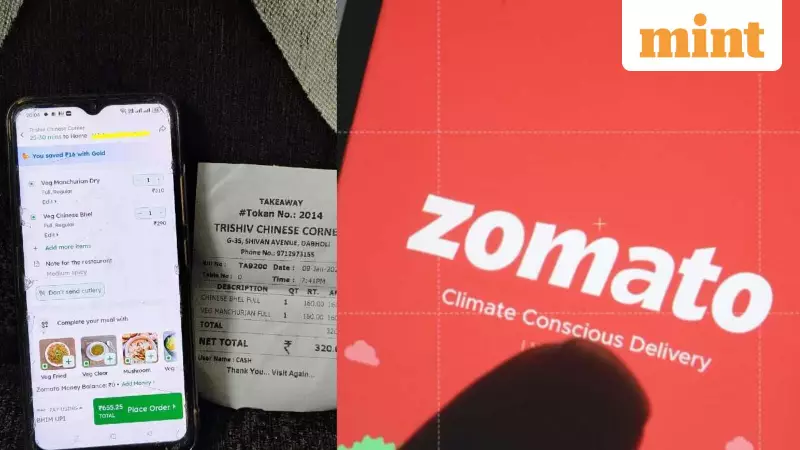
A social media firestorm has erupted against food delivery giant Zomato after a user alleged being massively overcharged for a simple order. The controversy began when a user named Nalini Unagar took to X (formerly Twitter) to call out the platform for a glaring price discrepancy.
The Spark: A Customer's Viral Complaint
In her post, Nalini Unagar claimed she was "blatantly overcharged" by Zomato. She stated that while the actual price of her food order was only ₹320, the platform showed the total as ₹655. Even after applying available discounts, the final amount she had to pay was ₹550. She tagged Zomato directly, calling the price difference "absolutely insane" and accusing the platform of overcharging customers.
Zomato's official customer support handle, Zomato Care, responded to the complaint by shifting responsibility to its restaurant partners. The company stated, "the prices on our platform are determined solely by our restaurant partners, as Zomato acts only as an intermediary." They assured Nalini they would relay her feedback to the restaurant but firmly placed the onus of pricing on the eateries.

Social Media Backlash and Demands for Transparency
Zomato's standard reply did little to quell the anger. Instead, it fueled a wider discussion about the opaque economics of food delivery platforms. Many users slammed the response as inadequate and demanded greater transparency.
One user accused Zomato of being a "fraud," suggesting that if restaurants publicized the high commissions and fees charged by the app for visibility and placement, customers would abandon the platforms and order directly. The core question raised by multiple users was about the commission structure. They challenged Zomato to make public the percentage it charges restaurants per order, including commissions, advertising fees, and payment processing charges.
Commenters argued that restaurants inflate menu prices on delivery apps to offset these platform costs. They pointed out that calling itself an 'intermediary' does not absolve Zomato of responsibility when its business model directly influences end prices for consumers. Specific allegations surfaced, with one user claiming Zomato takes a cut of 35% on the order value, forcing restaurants to hike prices. Another speculated that Zomato might even encourage higher prices to increase its own profit share.
The thread became a forum for shared grievances. Another user shared a personal ordeal, stating they paid ₹350 for an item actually worth ₹140 when they were unwell and reliant on delivery. Others cited examples like an apple pie costing ₹110 in-store but ₹148 on Zomato, before additional delivery charges, claiming items are often 50% higher on the app.
Delivery Partner Also Raises Voice
Amidst the customer outrage, a delivery partner also voiced a complaint on the same thread. The partner claimed they did not receive their incentive income of ₹500 for the period from 23rd December to 1st January, despite raising multiple support tickets. Zomato Care responded to this separately, promising to look into the issue.
The incident highlights growing scrutiny over the practices of food delivery platforms in India. While they offer convenience, customers and restaurant partners are increasingly questioning the cost structures and lack of transparency that ultimately impact the final price paid by the consumer. The debate puts the spotlight on whether these platforms are merely intermediaries or active players in price setting.