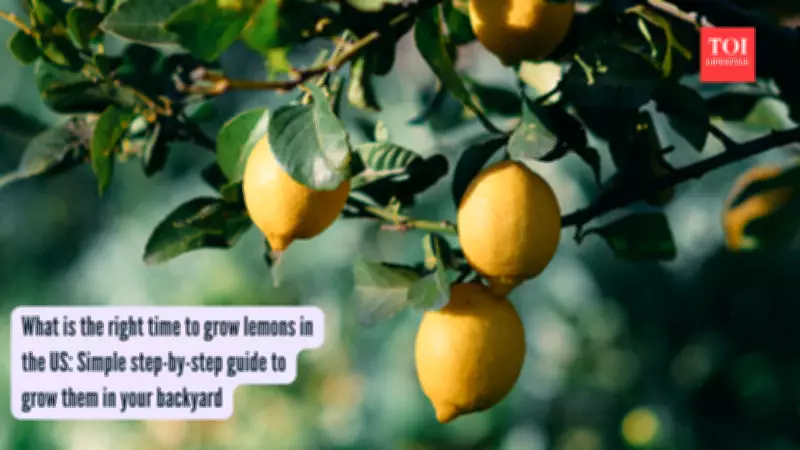
Growing lemons in your backyard can feel like capturing a little piece of sunshine right at home. These yellow citrusy spheres add just the right freshness and rejuvenation to drinks and marinades, and they make perfect toppings for salads. Having one of these trees in the backyard can be a real treasure without using pesticides! With the right timing and simple care, anyone can do it.
In the US, where lemons can survive in warm climates like California, Florida, and Arizona, backyard citrus growing has become increasingly popular among home gardeners seeking fresh produce without pesticides.
What Is the Right Time to Grow Lemons in the US?
Timing is everything for lemon trees. In California and Arizona, lemons are planted in spring during March to May to dodge late frosts while giving roots time to settle before summer heat. Florida gardeners usually plant between February and April. Check your USDA hardiness zone; zones 9 to 11 are ideal. Avoid planting when soil temperatures are below 50 degrees Fahrenheit. This timing helps young trees focus energy on growth rather than survival.

Easy Steps to Grow Lemons in Your Backyard
Choose Grafted Nursery Trees
Skip taking seeds; they take 7 to 15 years to fruit. Buy grafted nursery trees. These produce lemons in 2 to 4 years and resist diseases. Look for 2 to 3 year old trees, preferably 2 to 3 feet tall with healthy roots, to choose your graft. Dwarf varieties work great for pots or small yards, fitting patios perfectly.
Choose the Right Spot for Planting the Tree
Lemons need proper sunlight for optimal growth, making it to around 8 or more hours daily, well drained soil with pH 6 to 7.5, and protection from wind. Dig a hole twice as wide as the root ball, amending with compost. Space trees 12 to 15 feet apart. For containers, use 15 to 20 gallon pots with citrus mix. Ensure good drainage to prevent root rot, and elevated mounds help in heavy clay soils.
Plant with Care
Water the potted tree well before planting. Set it in the ground so the top of the roots sits level with the soil. Gently fill dirt around it, pressing lightly to remove air gaps. Water deeply right after. Add 2 to 3 inches of mulch around the base, but keep it away from the trunk. Put a stake in if it is windy. For pots, make sure the saucer drains extra water so roots do not stay too wet.
Water Regularly and Maintain for the First Fruit
Water once a week, about 1 to 2 inches deep, or more often during hot weather. Feed the tree citrus fertilizer 3 times a year, using a nitrogen rich formula in February, May, and August. Trim lightly after picking fruit to maintain its shape. Check for bugs like aphids and spray neem oil if needed. Cover it during rare cold snaps. You will see flowers in 1 to 2 years and first lemons by year 3. Keep at it, and your tree will keep giving fruit for years!
Disclaimer: Growing lemons depends on your local climate and soil conditions. Results vary by region, so consult your local agricultural extension service for specific advice. This guide uses general best practices. Trees may not thrive everywhere in the US. Lemon trees need consistent care and there is no guarantee of fruit yield or tree health. Use proper gardening practices and disease prevention.