Pakistan's Risky T20 World Cup Gambit: Boycotting India Match Creates Zero Margin for Error
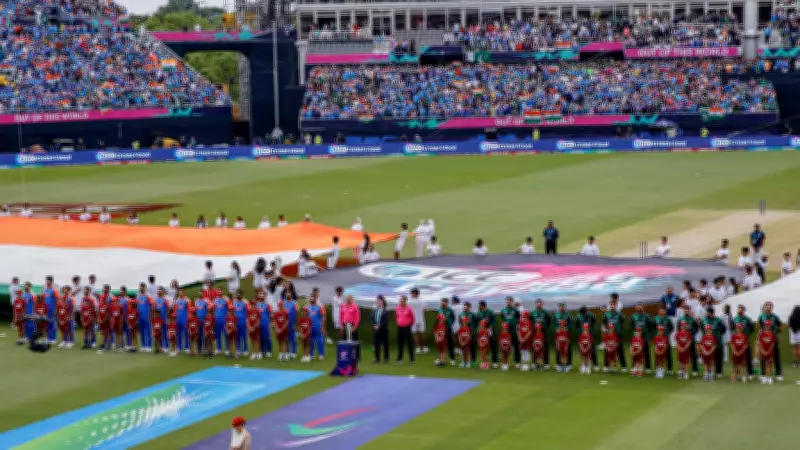
In a dramatic development that has sent shockwaves through the cricketing world, the Pakistan government announced on Sunday its decision to boycott the upcoming T20 World Cup group stage match against arch-rivals India. This unprecedented move, while politically motivated, has thrown Pakistan's path to the Super 8s and subsequent knockout stages into serious jeopardy.
The Forfeited Points Conundrum
By willfully forfeiting the February 15 contest scheduled in Colombo, Pakistan has essentially gifted two crucial points to India while simultaneously creating a scenario where they must win all three of their remaining group-stage matches. The forfeiture means Pakistan now has absolutely no room for error or slip-ups in what should theoretically be straightforward encounters against lower-ranked opponents.
The remaining fixtures see Pakistan facing Namibia (ranked 15th), Netherlands (13th), and the United States (18th) in Group A. While on paper these appear to be comfortable victories for the sixth-ranked T20I side, recent history suggests complacency could prove disastrous.

Historical Ghosts and Present Dangers
The specter of the 2024 T20 World Cup looms large over Pakistan's current predicament. In that tournament, the United States—then considered minnows—stunned Pakistan with a Super Over victory that ultimately contributed to their early elimination. This painful memory serves as a stark warning that underestimation could prove catastrophic in their must-win scenario.
Pakistan's next encounter against the USA on February 10 in Colombo now carries extraordinary significance. What should have been a routine group match has transformed into a potential banana skin that could derail their entire tournament campaign before it properly begins.
Tournament Structure and Qualification Dynamics
The 2026 T20 World Cup, the tenth edition of the tournament, replicates the format used in 2024. Twenty teams are divided into four groups of five, with the top two from each group progressing to the Super 8 stage. The tournament features nine of the top ten-ranked T20I sides, with Bangladesh notably absent after refusing to travel to India for group games amid political tensions.
The group compositions reveal interesting dynamics:
- Group A: India (1), Pakistan (6), Netherlands (13), Namibia (15), USA (18)
- Group B: Australia (2), Ireland (11), Oman (20), Sri Lanka (8), Zimbabwe (12)
- Group C: England (3), Italy (27), Nepal (16), Scotland (14), West Indies (7)
- Group D: New Zealand (4), South Africa (5), Afghanistan (10), Canada (19), UAE (17)
Pre-Determined Super 8 Seedings and Their Implications
A unique aspect of this tournament format is the pre-determined nature of Super 8 seedings allocated by the International Cricket Council. Regardless of whether teams finish first or second in their groups, they enter predetermined Super 8 groupings:
- Group 1 comprises all X-coded teams: India (X1), Australia (X2), West Indies (X3), South Africa (X4)
- Group 2 consists of Y-coded teams: England (Y1), New Zealand (Y2), Pakistan (Y3), Sri Lanka (Y4)
This seeding system means there's little incentive for finishing atop the group stage, as qualification positions are essentially predetermined. However, history shows that upsets can and do occur—in the previous edition, unseeded Bangladesh and Afghanistan qualified for the Super 8s at the expense of Sri Lanka and New Zealand respectively.
Knockout Logistics and Venue Complexities
The knockout stage logistics add another layer of complexity to Pakistan's situation. Should they qualify, Pakistan would play their semi-final at Colombo's R Premadasa Stadium, regardless of whether they finish first or second in Group 2. Interestingly, Pakistan's progression to the final could potentially shift the title clash from Ahmedabad's Narendra Modi Stadium to Colombo within days.

An India-Pakistan semi-final remains a distinct possibility under the tournament format, which would also be hosted in Colombo. For India, their semi-final venue would be Mumbai's Wankhede Stadium if they face any team other than Pakistan.
The Broader Context: Cricket's Global Expansion
While the tournament format supports cricket's global expansion by including associate nations, it has created a group stage featuring numerous lopsided contests. The gap between established cricketing powerhouses and emerging nations remains substantial, as evidenced by matchups like England versus World Cup debutants Italy—separated by 23 places in the T20I rankings.
Yet, as Pakistan's experience with the USA demonstrated in 2024, and as Bangladesh and Afghanistan proved by toppling higher-ranked opponents in the previous tournament, cricket's traditional hierarchies are increasingly being challenged. This reality makes Pakistan's decision to forfeit points against India particularly risky in an era where upsets are becoming more frequent.
Pakistan's path to the Super 8s now hinges entirely on their ability to secure three consecutive victories against opponents they are expected to beat comfortably. The margin for error has evaporated, and the pressure to perform has intensified exponentially. As the cricketing world watches with bated breath, Pakistan's T20 World Cup campaign begins not with a match, but with a political statement that has transformed their entire tournament equation.