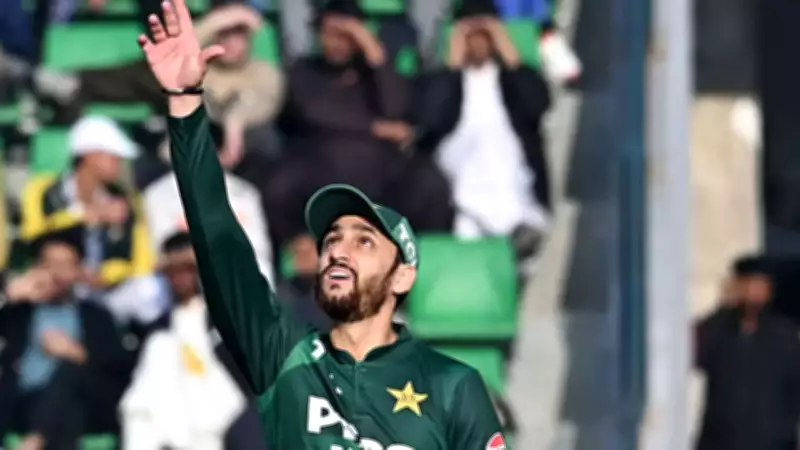
Pakistan cricket captain Salman Ali Agha has officially confirmed that the national team will adhere to the directives issued by the government and the Pakistan Cricket Board regarding the boycott of the highly anticipated T20 World Cup match against India scheduled for February 15 in Colombo.
Team Unity Behind Government Decision
Speaking to media representatives before the squad's departure from Lahore for Sri Lanka, Salman Ali Agha revealed that the team manager had informed all players about this significant decision on Sunday, immediately following their match against Australia. The captain emphasized the collective stance of the entire team, stating that as contracted players to the Board, they stand united with whatever decisions are made by their government and cricket administration.
Focus Remains on Tournament Performance
Salman further clarified that Pakistan's T20 World Cup campaign extends beyond the India fixture, with the team's primary objective being strong performances throughout the tournament. "We have three other group matches so we will try to win all of them and qualify for the next round," he asserted, redirecting attention to Pakistan's upcoming encounters against the Netherlands, USA, and Namibia.

Former Players Voice Support for Boycott
The decision has received substantial backing from several prominent former Pakistan cricketers, including legendary figures like Shahid Afridi, Muhammad Yousuf, and Rashid Latif, along with ex-players Moin Khan, Sarfaraz Ahmed, and Mohsin Khan. These cricket veterans have publicly expressed their support for the move to skip the India match.
Rashid Latif framed the boycott as a necessary stand against what he perceives as unfair treatment by the International Cricket Council, particularly referencing Bangladesh's exclusion from the tournament after declining to travel to India due to security concerns. "What the ICC did to Bangladesh or the way they have bowed before the Indian cricket board in recent years, it was time someone took a stand," Latif remarked.
Mixed Reactions from Cricket Community
Shahid Afridi, while expressing disappointment about missing the opportunity to play against India and reiterating his belief in keeping politics separate from sports, acknowledged understanding the reasoning behind Pakistan's decision. Meanwhile, Moin Khan called upon the ICC to clarify its position in the larger interests of world cricket, and Sarfaraz Ahmed indicated comprehension of why the PCB did not receive clearance for the India match.
Tournament Participation Continues
Despite the boycott announcement, the Pakistan squad has proceeded with their travel plans to Colombo to participate in their remaining matches in the tournament, which commences on February 7. The team is expected to arrive in the Sri Lankan capital later on Monday, maintaining their commitment to the competition.
A senior PCB source confirmed that the board would continue to follow government instructions should another meeting with India occur during the knockout stages of the tournament. This indicates that the boycott stance remains firm regardless of tournament progression.
Solidarity with Bangladesh
Pakistan's unexpected decision to skip the February 15 match is widely interpreted as a gesture of solidarity with Bangladesh, who faced exclusion from the tournament after declining to travel to India over security apprehensions. This move highlights the complex geopolitical dimensions influencing international cricket tournaments and the delicate balance between sporting events and diplomatic considerations.
The development marks a significant moment in cricket diplomacy, with potential implications for future ICC tournaments and bilateral cricket relations between the neighboring nations. As Pakistan prepares for their opening match against the Netherlands on February 7, the cricketing world watches closely how this decision will impact both the tournament dynamics and broader cricket governance.