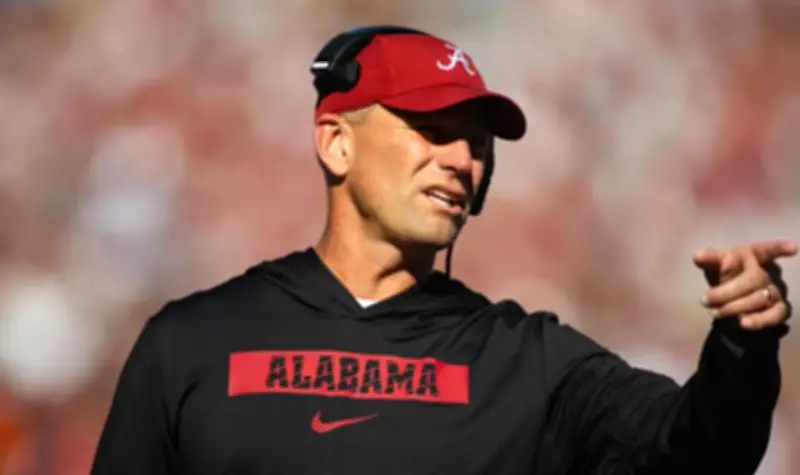
Alabama Football Faces Alumni Criticism Over New Recruiting Philosophy
Marquis Maze, a former Alabama Crimson Tide wide receiver with extensive collegiate football experience in the state, has publicly voiced strong criticism against head coach Kalen DeBoer's recruiting methods. Maze, who played under legendary coach Nick Saban in Tuscaloosa, expressed concerns that scholarship offers are being extended too rapidly and to athletes he perceives as not being top-tier prospects.
The Core of Maze's Criticism
Taking to social media platforms, Maze articulated his dissatisfaction with what he views as rushed evaluations in Alabama's current recruiting process. The former receiver suggested that the program is now offering opportunities to prospects who weren't even the primary options on their high school teams, admitting he's been unimpressed after reviewing film of recent recruits.
Despite his criticism, Maze emphasized his continued support for the Alabama program and expressed hope that the incoming players would succeed. However, he made it clear that he feels disappointed by the direction of certain recruiting decisions, highlighting a growing tension between traditional Alabama football values and the new approach being implemented.

Why DeBoer's Recruiting Strategy Differs Fundamentally
The disconnect between Maze's perspective and DeBoer's approach largely stems from significant changes in the NCAA landscape. DeBoer is operating under completely different parameters than his predecessor, including:
- A 105-scholarship model compared to Saban's traditional 85-scholarship limit
- Heavier reliance on early commitments and the transfer portal
- A faster, more numbers-driven approach designed to address immediate roster needs
This marks a sharp contrast from Saban's slower, development-focused methodology that emphasized long-term player growth over quick fixes.
Results Tell a Different Story
From a purely results-oriented standpoint, Alabama has maintained its elite recruiting status despite the philosophical shift. As of February 1, 2026, the Crimson Tide's 2026 recruiting class ranks fifth nationally according to Rivals, maintaining a strong average player rating that competes with the nation's best programs.
The coaching staff continues to recruit from powerhouse high school programs like IMG Academy and Mater Dei, where even depth players often project as high-level college contributors. Alabama has also secured clear blue-chip talent, most notably five-star running back Ezavier Crowell, who reclassified to enroll early and represents the caliber of athlete the program continues to attract.
The Transfer Portal Revolution
A second significant change under DeBoer has been the aggressive utilization of the transfer portal. After losing several offensive and defensive linemen from the Alabama roster, DeBoer was able to quickly bring in experienced players to fill those immediate needs rather than waiting for development over multiple seasons.
The coaching staff has also focused strategically on retaining veteran players who are crucial to program continuity, particularly at quarterback and secondary positions. This dual approach of portal acquisition and veteran retention represents a modern adaptation to college football's evolving landscape.
The Larger Conflict in College Football
Maze's criticism reflects a broader conflict between traditional football philosophies and contemporary advancements in how the sport operates today. While some alumni and traditionalists feel uncomfortable with the rapid changes occurring in Tuscaloosa, DeBoer has deliberately built his program around what he believes is necessary to win in today's college football environment.
The fundamental question remains whether this new system will produce championships at the level Alabama fans have come to expect. Only time will tell if these concerns dissipate as results materialize or grow louder if the program experiences setbacks. What's clear is that Alabama football, like the sport itself, is undergoing a significant transformation in how talent is identified, acquired, and developed.