Former PCB Chief Challenges ICC's Authority Over Pakistan's India Match Boycott
Ehsan Mani, the former chairman of the Pakistan Cricket Board (PCB), has made a significant statement regarding the ongoing controversy surrounding Pakistan's decision to boycott their scheduled match against India in the upcoming T20 World Cup 2026. Mani firmly believes that the International Cricket Council (ICC) does not possess the legal authority to impose any sanctions or punishments on Pakistan for this politically motivated decision.
Government Directive and ICC's Response
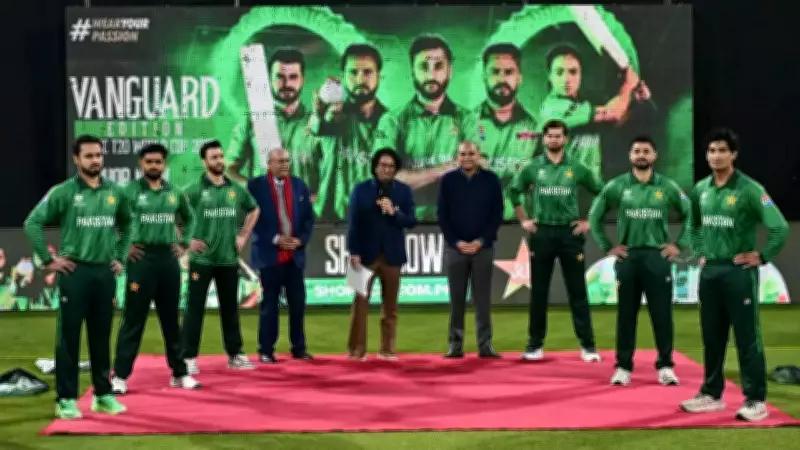
The Pakistan government has officially granted permission for the national cricket team to participate in the T20 World Cup 2026 tournament. However, in a clear and unambiguous directive, the government has explicitly stated that Pakistan will not compete against India in their scheduled match on February 15 in Colombo, Sri Lanka. While no official reason has been provided for this diplomatic decision, it has created substantial tension within international cricket circles.
Following this development, the ICC issued an official statement addressing the situation. The global cricket governing body urged the PCB to work toward finding a "mutually acceptable resolution" to the impasse. More significantly, the ICC warned Pakistan about potential long-term consequences that could arise from this boycott decision, hinting at possible sanctions or disciplinary actions.

Mani's Argument Against ICC's Position
Ehsan Mani has strongly disagreed with the ICC's stance on this matter. The former PCB chairman presented a compelling argument based on precedent and principle. He emphasized that the PCB is merely following government orders, which is a legitimate position for any national cricket board operating under governmental jurisdiction.
Mani pointed to a recent parallel situation involving India's cricket authorities. The Board of Control for Cricket in India (BCCI) decided not to send its team to Pakistan for the 2025 Champions Trophy tournament, a decision that originated from directives by the Indian government. Notably, the ICC did not impose any sanctions or punishments on India at that time, despite the similar nature of the government-led decision.
"There can't be any sanctions against Pakistan if it follows the government instructions," Mani told Sportstar. "That was the basis on which India refused to play its 2025 Champions Trophy matches in Pakistan. You can't have double standards."
Criticism of ICC's Handling of the Situation
Beyond the specific issue of sanctions, Mani also criticized the ICC for what he described as mishandling of the broader geopolitical tensions affecting cricket. He suggested that the ICC failed to address warning signs and potential conflicts proactively, instead adopting a passive approach to complex diplomatic situations.
"So, unfortunately, again I come back to the fact that instead of dealing with the problem, the ICC just stood there as a bystander," Mani added. "You left the door open for any country to get its government involved. And especially knowing that the chairman of the PCB is a serving minister of the government."
This reference to the dual role of the PCB chairman highlights the intricate relationship between cricket administration and government authority in Pakistan, further complicating the ICC's position in this matter.
The Broader Implications for International Cricket
The controversy raises significant questions about:
- The ICC's authority over member boards following government directives
- Consistency in applying rules and sanctions across different cricket nations
- The growing influence of geopolitical tensions on international cricket tournaments
- The balance between cricket administration and national sovereignty
As the T20 World Cup 2026 approaches, this dispute between Pakistan's cricket authorities and the ICC continues to develop, with potential ramifications for future international cricket relations and tournament scheduling. The situation underscores the complex intersection of sports, politics, and diplomacy in the modern cricket landscape.