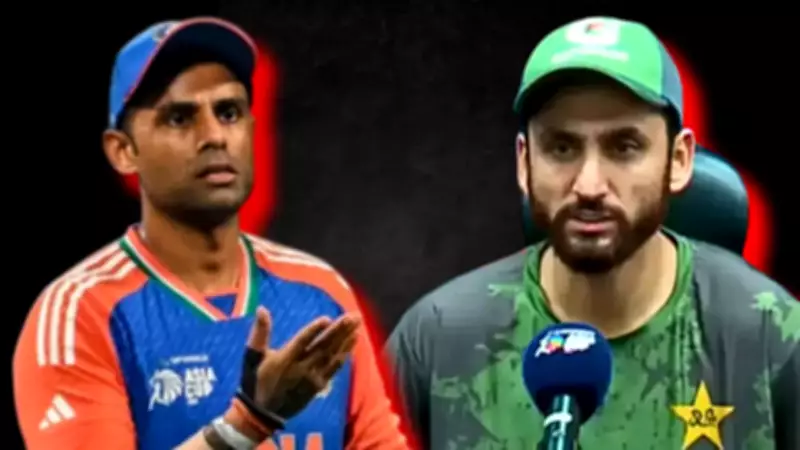
Former Pakistan Spinner Danish Kaneria Slams Boycott Decision
Former Pakistan leg-spinner Danish Kaneria has launched a scathing critique of the Pakistan government's directive for the national cricket team to boycott their T20 World Cup 2026 match against India. Kaneria believes this decision will inflict more damage on Pakistan cricket than any other party involved, projecting what he describes as a negative image of fear and avoidance.
Government Directive and Neutral Venue Accommodation
On Sunday, the Pakistan government granted clearance for the national team to participate in the ICC World T20 2026 tournament. However, it specifically instructed them not to take the field for the February 15 fixture against arch-rivals India. Kaneria pointed out the irony in this stance, reminding everyone that Pakistan's initial request to avoid traveling to India for matches had already been accepted by tournament organizers.
"Pakistan had earlier requested that they would not come to India to play, and that request was accepted, so their matches were arranged at a neutral venue," Kaneria explained. "In this World Cup, the India–Pakistan match was scheduled to be played in Sri Lanka."

Questioning the Logic and Highlighting Perceived Fear
The former cricketer expressed bewilderment at the boycott decision, given the accommodation already made. He argued that there is no logical justification for refusing to play a match that was already moved to a neutral country to address Pakistan's concerns.
"There is no logic in boycotting this match," Kaneria stated. "Pakistan seems to think that it is supporting Bangladesh, which has already been knocked out of the tournament. But they should focus on their own cricket and where they are taking it."
He warned that the global perception of this move would be damaging. "This sends a message that people will feel Pakistan are scared of facing India, which is why they are refusing to play," he added, emphasizing that such an image is detrimental to the sport's spirit and Pakistan's standing.
Strategic Blunder and Diminished Rivalry
Kaneria further elaborated on the practical consequences, calling the boycott a grave strategic miscalculation. He explained that by forfeiting the match, Pakistan has significantly complicated its own path to the knockout stages of the tournament, making qualification for the semifinals or finals much more difficult.
"With this decision, Pakistan has made its path to the semifinals or knockouts much more difficult," he said. "I think it’s a very, very wrong decision."
The former spinner also questioned the contemporary relevance of the famed India-Pakistan cricket rivalry in competitive terms. He noted India's consistent dominance in recent World Cup encounters across formats.
"If Pakistan believes that the India–Pakistan game is a revenue-generating cream, then that rivalry doesn’t really exist anymore, because Pakistan cricket is not playing brand cricket which India is playing," Kaneria argued. "India has beaten Pakistan at every stage of the World Cup, whether it’s the T20 World Cup or the 50-over World Cup."
Warning Against Emotional Decisions and Future Scenarios
Looking ahead, Kaneria issued a stern warning against making emotionally charged decisions without considering long-term implications. He posed a critical hypothetical question about potential future encounters in the tournament.
"Decisions like this increase the consequences. They did not think long-term, especially about Bangladesh," he cautioned. "Taking such decisions emotionally, without proper thought, is not right in my opinion. Decisions should be taken carefully and wisely."
"You didn’t play the first match, but if tomorrow you meet India in the semifinal or final, will you just hand over the trophy by saying you won’t play the final?" he questioned, highlighting the absurdity of the situation.
Kaneria advocated for a competitive spirit on the field. "You should come onto the ground, fight it out, and win from there—then it feels like you’ve taken revenge for everything. But boycotting like this doesn’t make any difference at all."

Player Sentiments and Concluding Remarks
In his concluding observations, Kaneria suggested that many current Pakistani cricketers might be privately upset with the boycott directive but feel constrained from expressing their opinions openly due to their positions.
"I think many Pakistani cricketers would be upset, but they are in a position where they cannot openly speak about it," he remarked, hinting at internal discontent within the team camp.
Danish Kaneria's strong critique underscores a significant controversy in international cricket, raising questions about sports diplomacy, competitive integrity, and the future of one of the game's most storied rivalries.